

The complete guide
How to Choose a Countertop Wine Rack That Actually Fits Your Kitchen
The bottles have to go somewhere
Here is the familiar scene. Someone brings a bottle to dinner, you open one of your own, a third one is already half in the pantry, and by Sunday there are five bottles standing in a cluster behind the kettle. Every time you reach for a mug you knock one. You cannot read the labels because they are all facing each other.
That is the whole problem a countertop wine rack solves. It is not about cellaring or collecting. It is about giving the handful of bottles that live in your house a proper, visible, stable home that takes up less room than the mess they currently make.
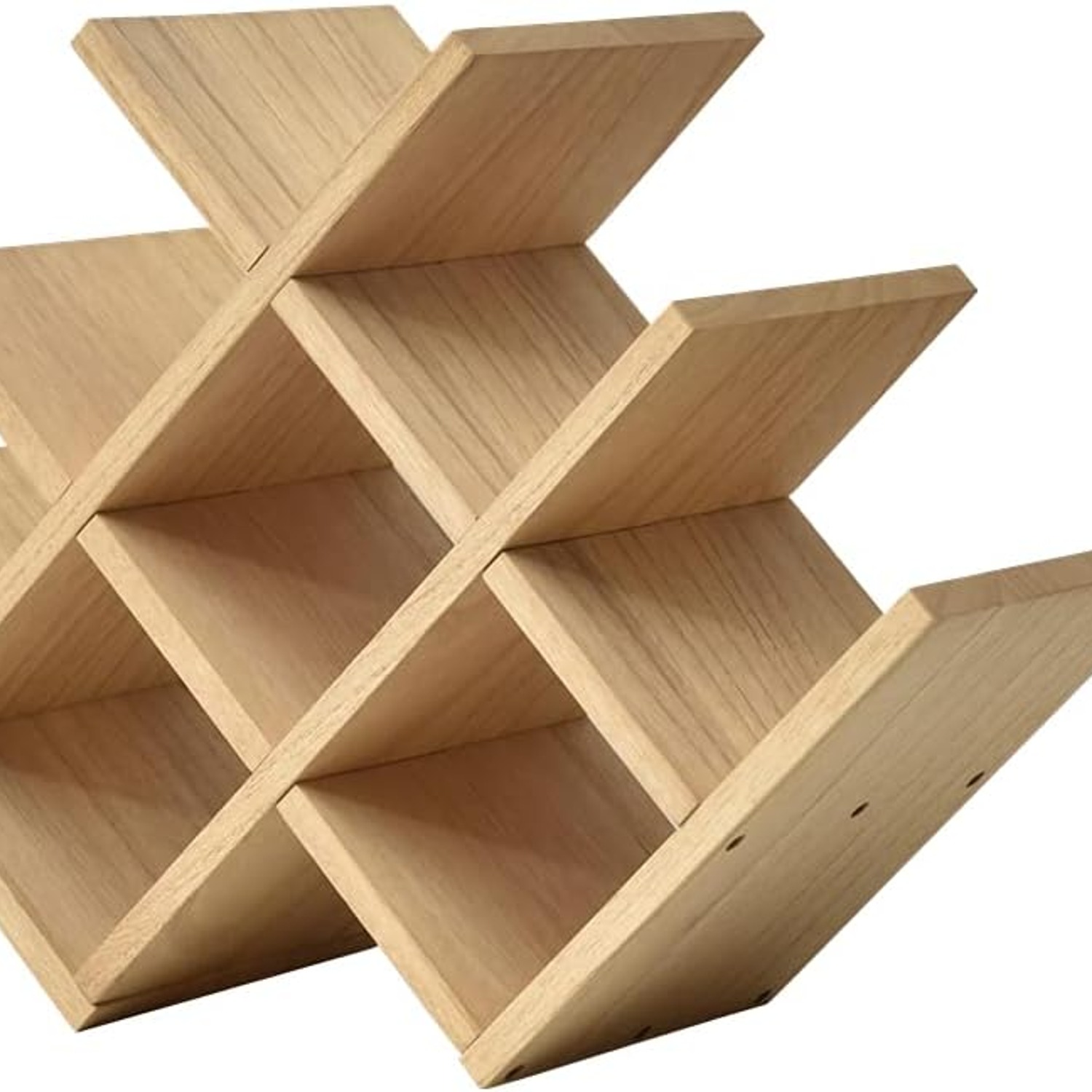
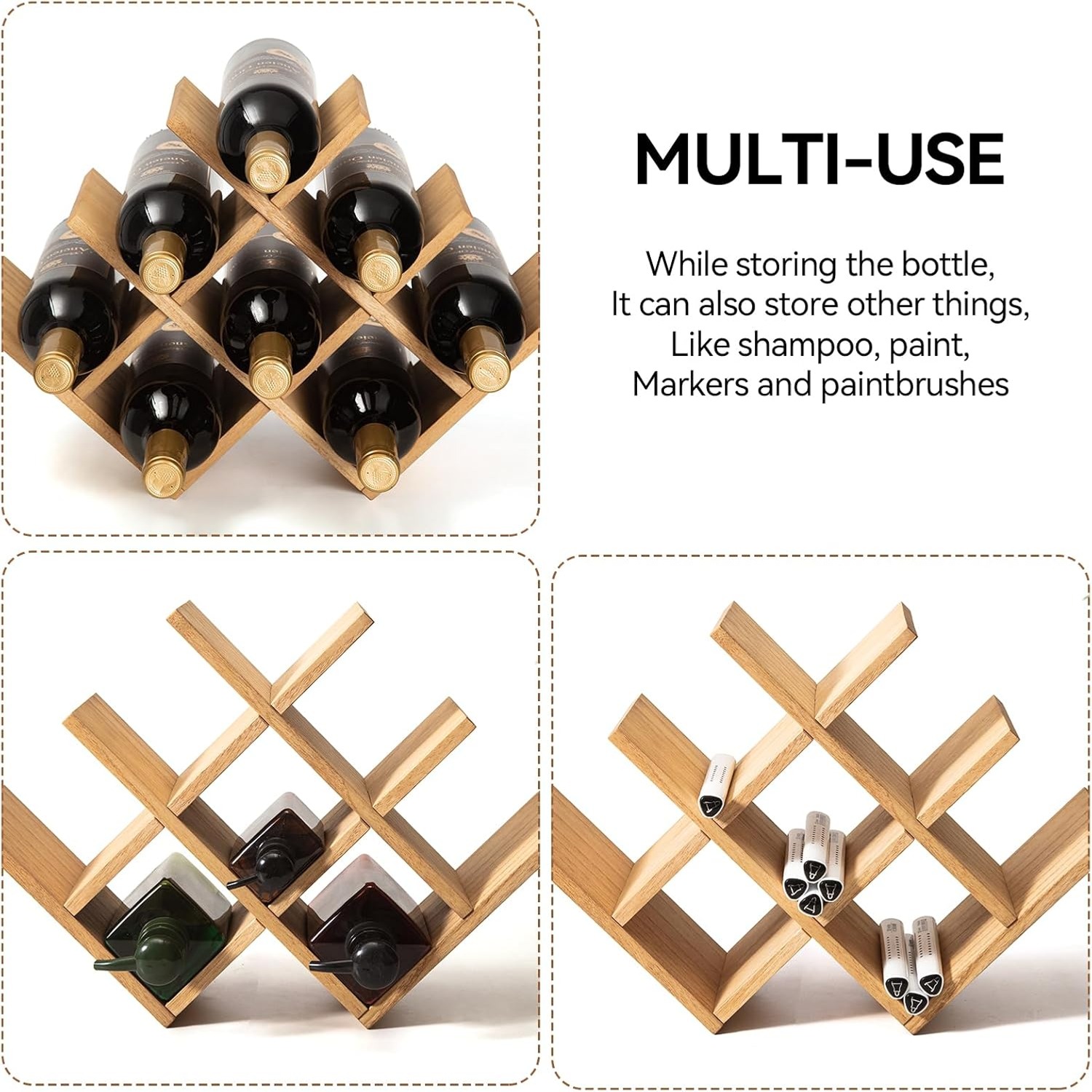
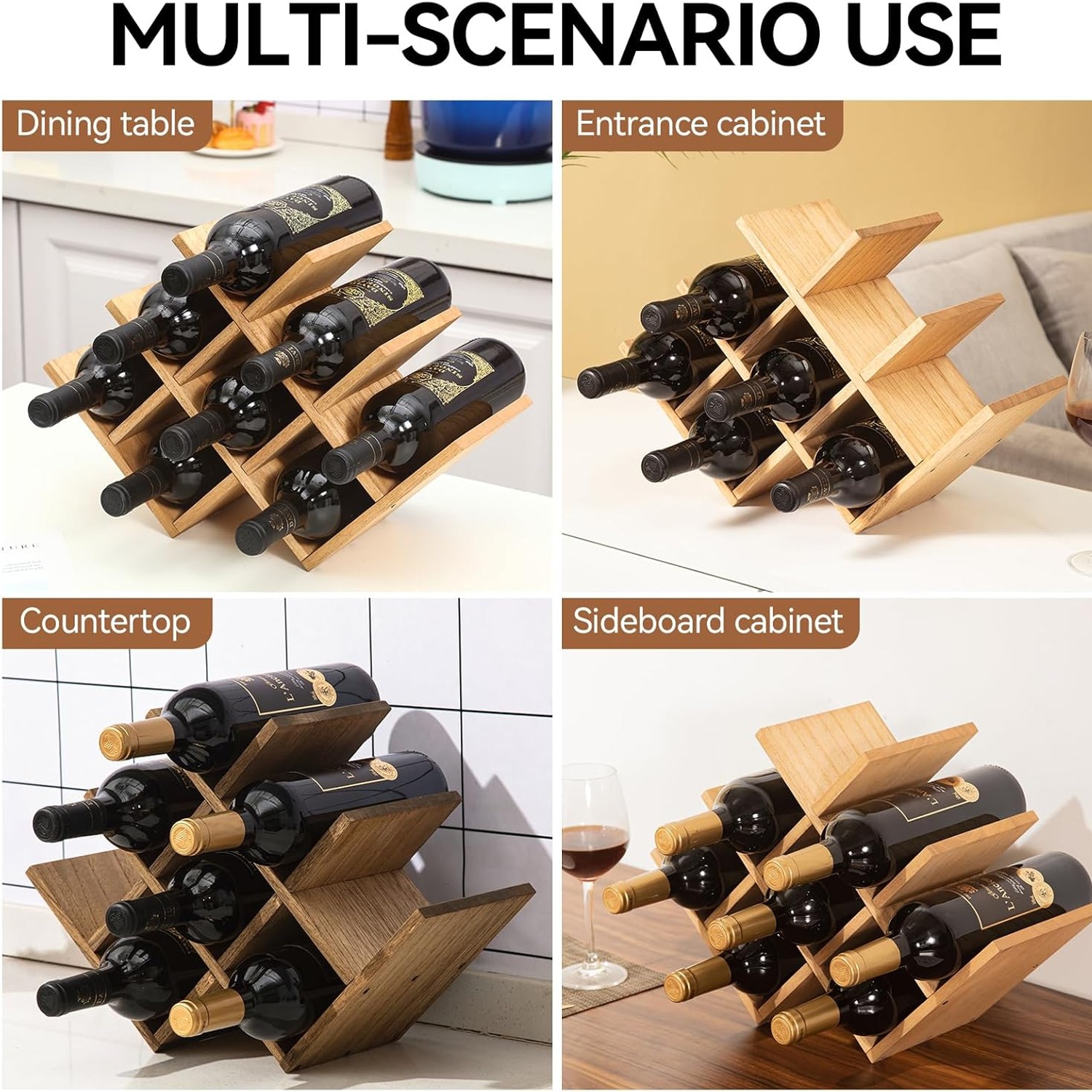
A three-tier wooden rack like this one holds up to eight standard bottles in a footprint of 42.5 cm by 15 cm. That is narrower than most dinner plates are wide. It replaces a sprawl with a shape.
How a horizontal rack works
Nearly every wine bottle holder worth owning lays bottles on their side, and there is a practical reason behind it.
Cork is porous. If a corked bottle stands upright for months, the cork slowly dries out, shrinks a little and lets air creep in. Air is what turns a good bottle into vinegar. Lying the bottle down keeps the wine in contact with the cork, the cork stays swollen, and the seal holds.
Screw caps do not need this. But horizontal storage still wins on space. Eight bottles standing up need a long stretch of worktop. Eight bottles lying in three stacked tiers need about as much room as a toaster.
The second benefit is purely practical. When bottles lie down with their bases facing out, you can see every label. No lifting, no spinning bottles around, no pulling four out to find the one you wanted.
Who this suits
This style of rack earns its spot in a few specific situations.
Apartment and small-kitchen dwellers get the most from it. There is no cellar, no garage, no spare cupboard. A compact rack on the worktop or inside a pantry turns dead corner space into organised storage.
People who drink what they buy also do well here. If your bottles turn over within a few weeks or months, you do not need climate control. You need visibility and order, which is exactly what a three-tier countertop rack gives.
It also works for anyone setting up a small home bar or a bar cart. Eight bottles is a sensible working supply, and the natural timber finish sits comfortably next to glassware and a decanter.
Who should look elsewhere? Serious collectors with fifty bottles and a long-term plan. If you are ageing wine for years, you want a cool, dark, temperature-stable space, not a kitchen worktop. A rack like this is a staging area, not a cellar.
Getting the measurements right
This is where most wine rack purchases go wrong, so it is worth two minutes.
Measure your worktop depth first. A rack 15 cm deep leaves plenty of working space on a standard 60 cm worktop. If you are putting it inside a cabinet, measure the internal depth and the internal height, not the door opening. The internal height needs to clear 28.3 cm.
Then measure your bottles. The lattice openings on this rack are listed at about 3.5 inches square, which comfortably suits standard 750 ml bottles. Champagne bottles, magnums and some heavy-shouldered reds are wider and may not slide in. If you buy a lot of sparkling, pull one out of the fridge and put a tape measure across the widest point before you order.
Finally, think about where it will actually live. Heat and light are wine's two enemies. Beside the oven is a bad spot. Directly under a west-facing window is a bad spot. A shaded corner of the worktop, a pantry shelf or a closed display cabinet are all good.
Assembly and setup
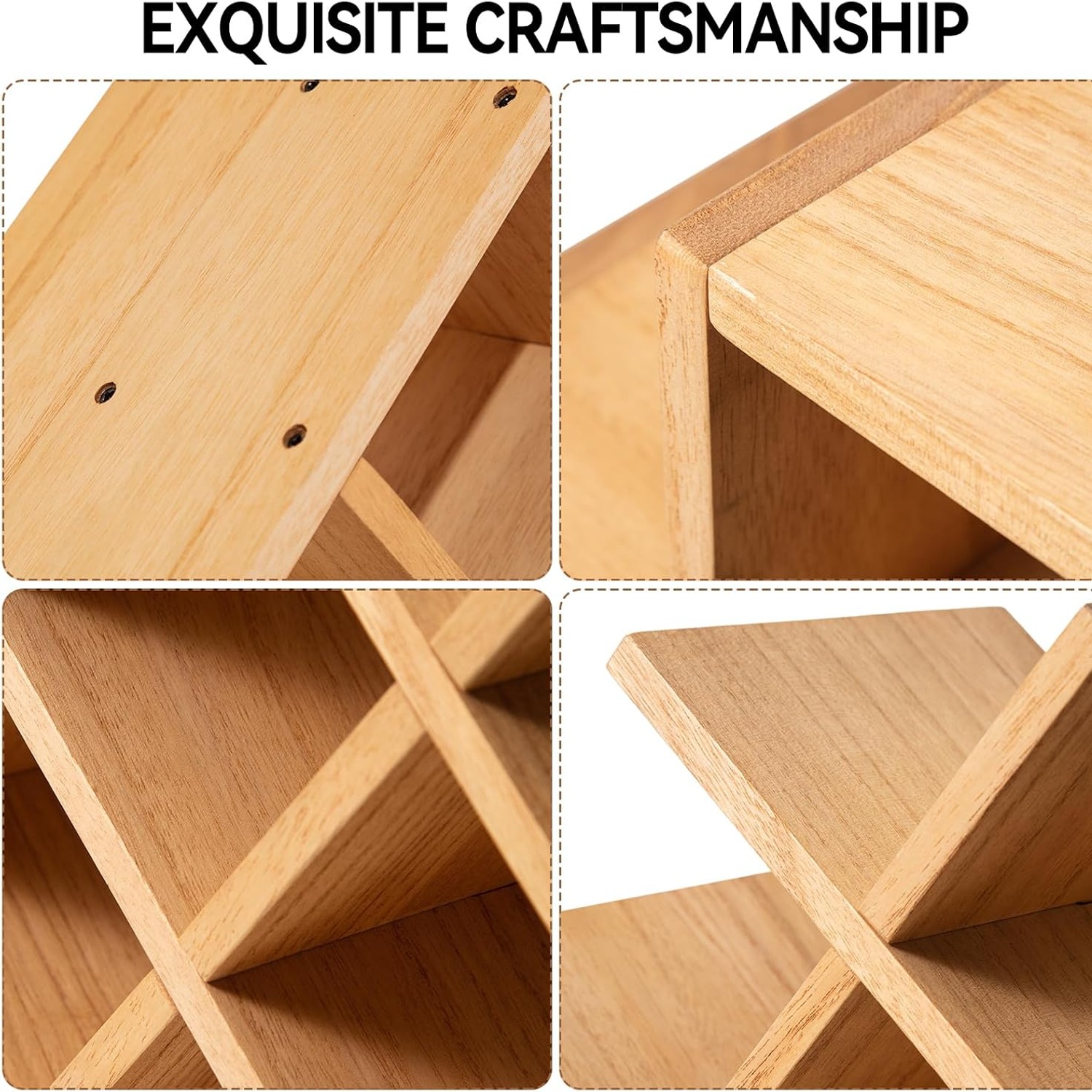
The rack ships flat. The package contents are listed as six wood boards, twelve screws with two spares and an instruction manual. Spare screws are a small thing but a welcome one, because there is nothing worse than losing a fixing on the floor halfway through.
Build it on a flat surface, not on carpet. Get all the screws started before you tighten any of them fully, which lets the frame settle square. Then go around and snug everything up evenly.
Once it is together, put it where it is going to live and load it. Do not carry a loaded rack. Timber frames are built for vertical load, not for the twisting that happens when you lift something awkward and heavy from one side.
A few months later, give the screws a quick check with a screwdriver. Timber moves a little with seasonal humidity, and a half-turn now and then keeps the frame tight.
Looking after a timber rack
Care here is genuinely simple. Wipe it with a dry cloth. That is the manufacturer's instruction and it is good advice for any stained timber.
Avoid wet cleaning sprays and never soak it. Water sitting on a stained surface will eventually lift or mark the finish. If a bottle drips, dry it straight away rather than leaving it.
Dust tends to collect along the top edges and in the corners of the lattice. A dry microfibre cloth or a soft brush gets into those spots without scratching.
Keep it out of persistent damp. A rack sitting next to a sink that gets splashed daily will not last as well as one a metre away. Small placement decisions make a real difference over a few years.
Thinking beyond wine
The open compartments are useful for more than bottles. People slide in olive oil and vinegar bottles, taper candles, rolled napkins, or craft markers and brushes. In a studio or a home office, the same frame works as a tidy holder for slim supplies.
The only caution is weight. This is a light timber rack designed for wine bottles. It is not a shelf for tinned goods or heavy tools. Stick to items in roughly the same weight class as a bottle and you will be fine.
Matching it to your kitchen
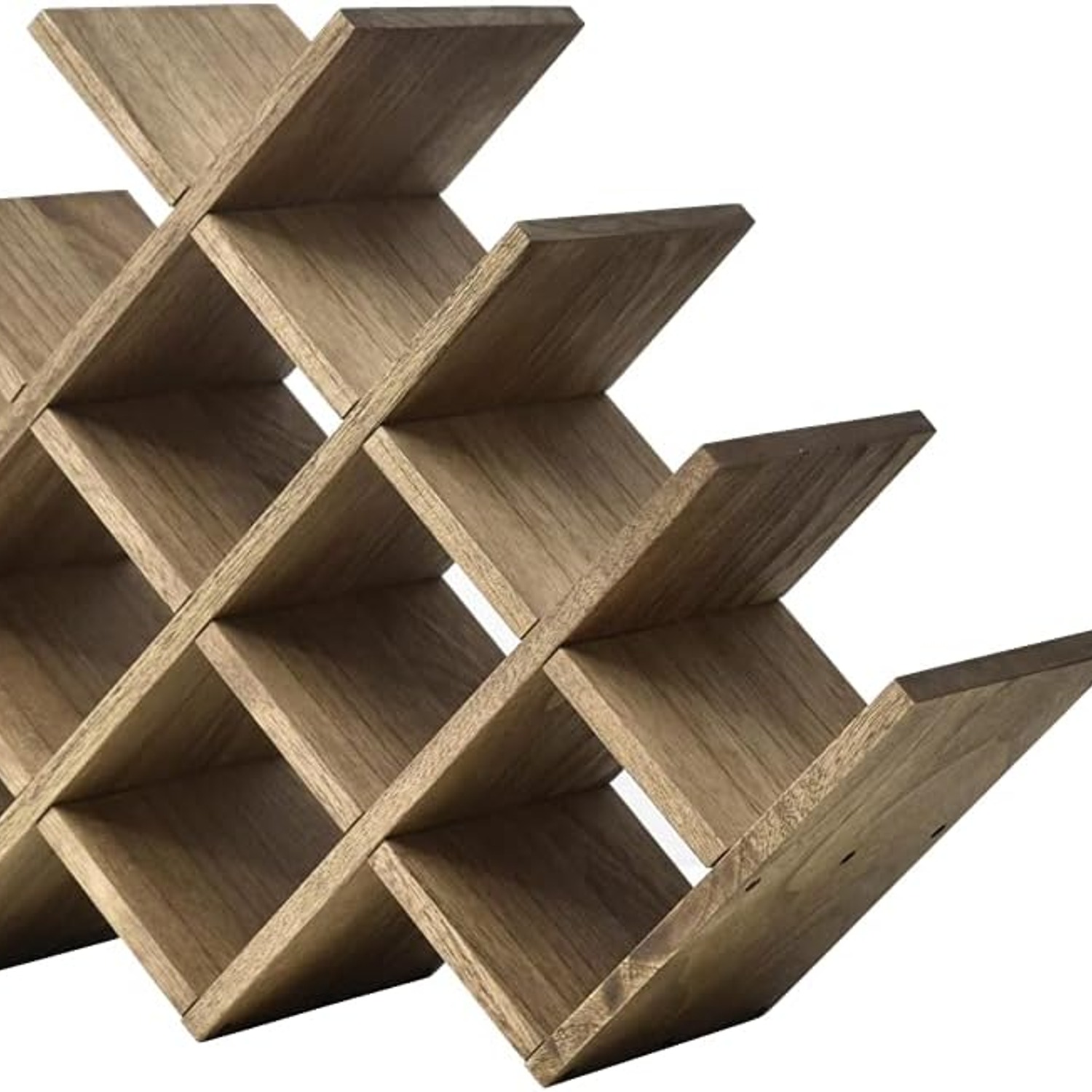
The natural wood stain finish does a lot of quiet work here. Warm neutral timber sits comfortably against white cabinetry, black handles, stainless appliances and marble or laminate worktops. It does not demand a particular style the way painted colours or polished chrome can.
If your kitchen is already heavy on timber, the rack blends in and reads as part of the joinery. If your kitchen is all hard surfaces and cool tones, it adds a softer texture that stops the space feeling clinical.
The style is listed as modern, which here means clean lines and no decorative scrollwork. That tends to age better than trend-driven detailing.
The short version
Eight standard bottles. Three tiers. A 42.5 by 15 by 28.3 cm footprint in natural-stained wood, sitting freestanding on a worktop, a shelf or inside a cabinet. It needs assembly, which takes a few minutes with a screwdriver, and it needs a dry cloth now and then.
Before you buy, do two things. Measure the space it is going into, including internal cabinet height if that is where it lives. And measure your widest regular bottle against the roughly 3.5 inch openings.
Get those two numbers right and the rest takes care of itself. Your bottles stop cluttering the worktop, you can read every label from across the room, and the corks stay where they should be.