

The complete guide
How To Choose And Fit A Four Row Wine Glass Rack
The problem with storing stemware
Wine glasses are badly suited to cupboards. The bowl is wide, the stem is thin, and the whole thing is top heavy when it stands upright. Put six of them on a shelf and you lose a surprising amount of space, because you need the full height of the glass plus clearance to lift it out. Above the rims, that space does nothing.
Then there is the handling. Reaching past four glasses to get the one at the back is how most stemware gets chipped. People grab by the bowl because the stem is hard to reach, knuckles bump neighbouring rims, and eventually one goes over. If the glasses are stored upright, dust settles straight into the bowl as well, so there is a rinse before every pour.
A hanging rack fixes all of that at once by moving the glasses to a place nothing else wants: the underside of a cabinet.
How an under cabinet rack works
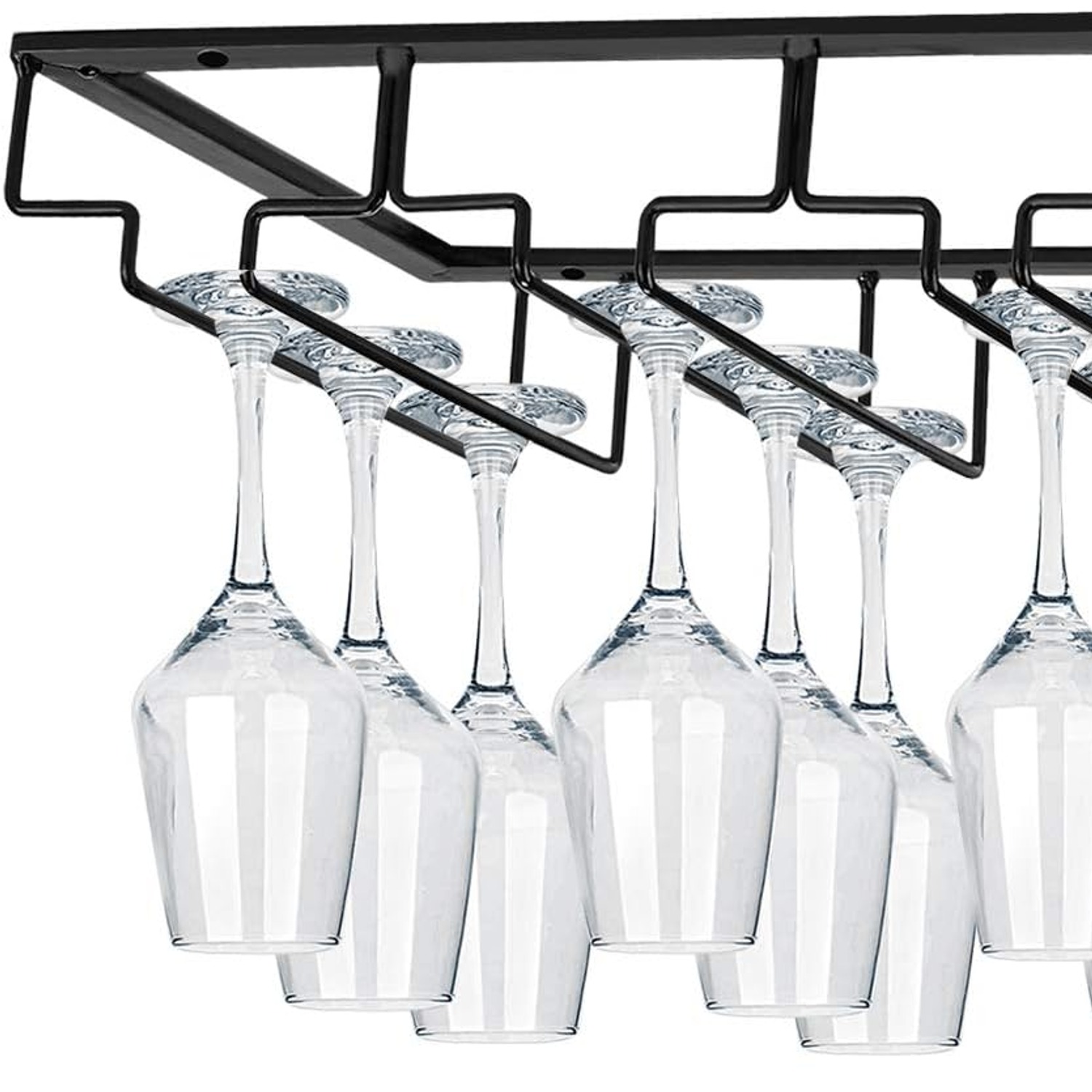
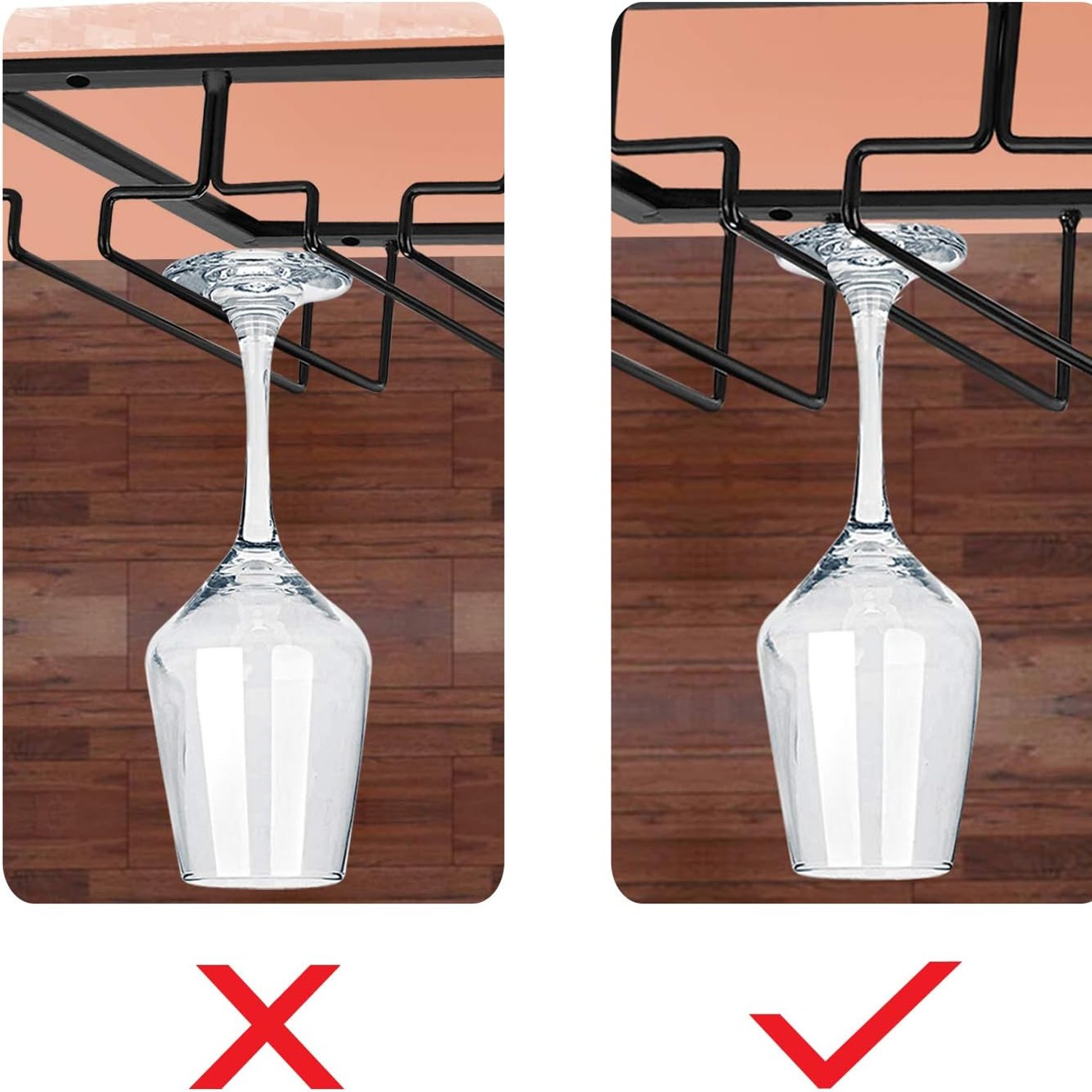
The design is simple on purpose. Four parallel rails run front to back, with a slot between each pair. The stem of the glass drops into the slot and the foot rests on the rails on either side. Slide the glass in from the open front, and it stays there until you pull it back out.
Because the glass hangs bowl down, the opening faces the worktop. Dust lands on the foot, which you are going to rinse anyway. The bowls never touch each other, so there is no clinking and no chip risk from neighbours. And the whole arrangement sits in dead space, roughly 6 cm of height under a cabinet that was otherwise empty air.
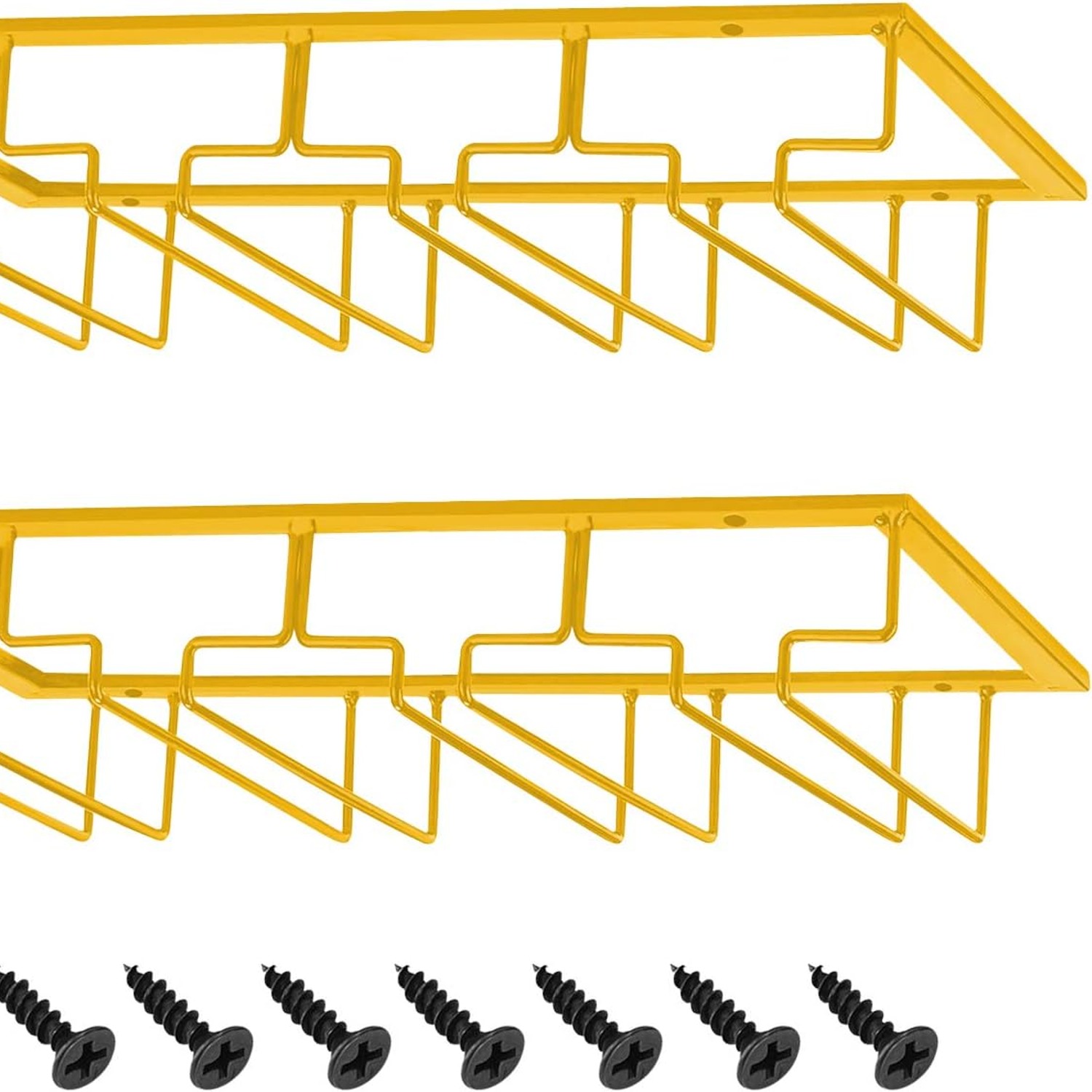
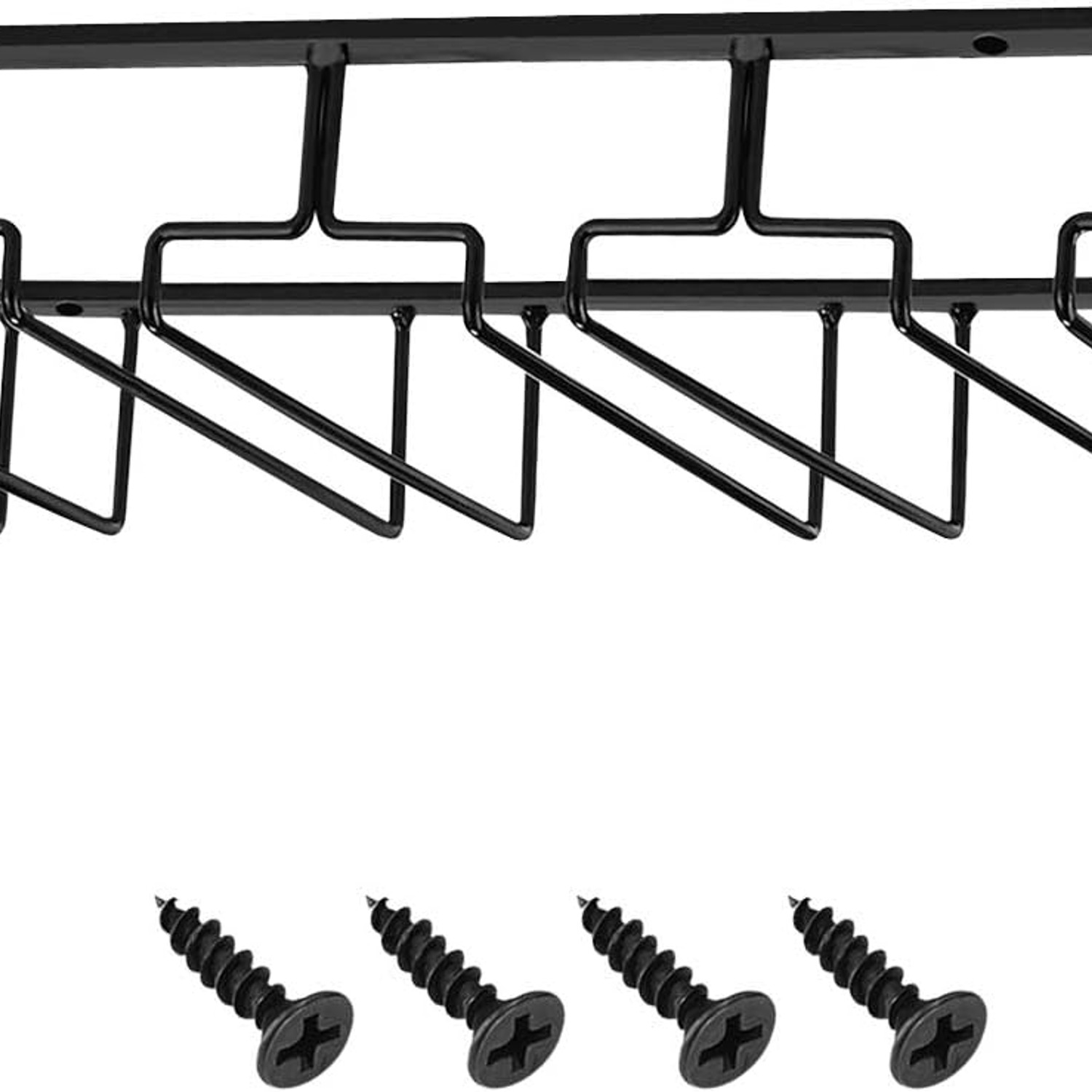
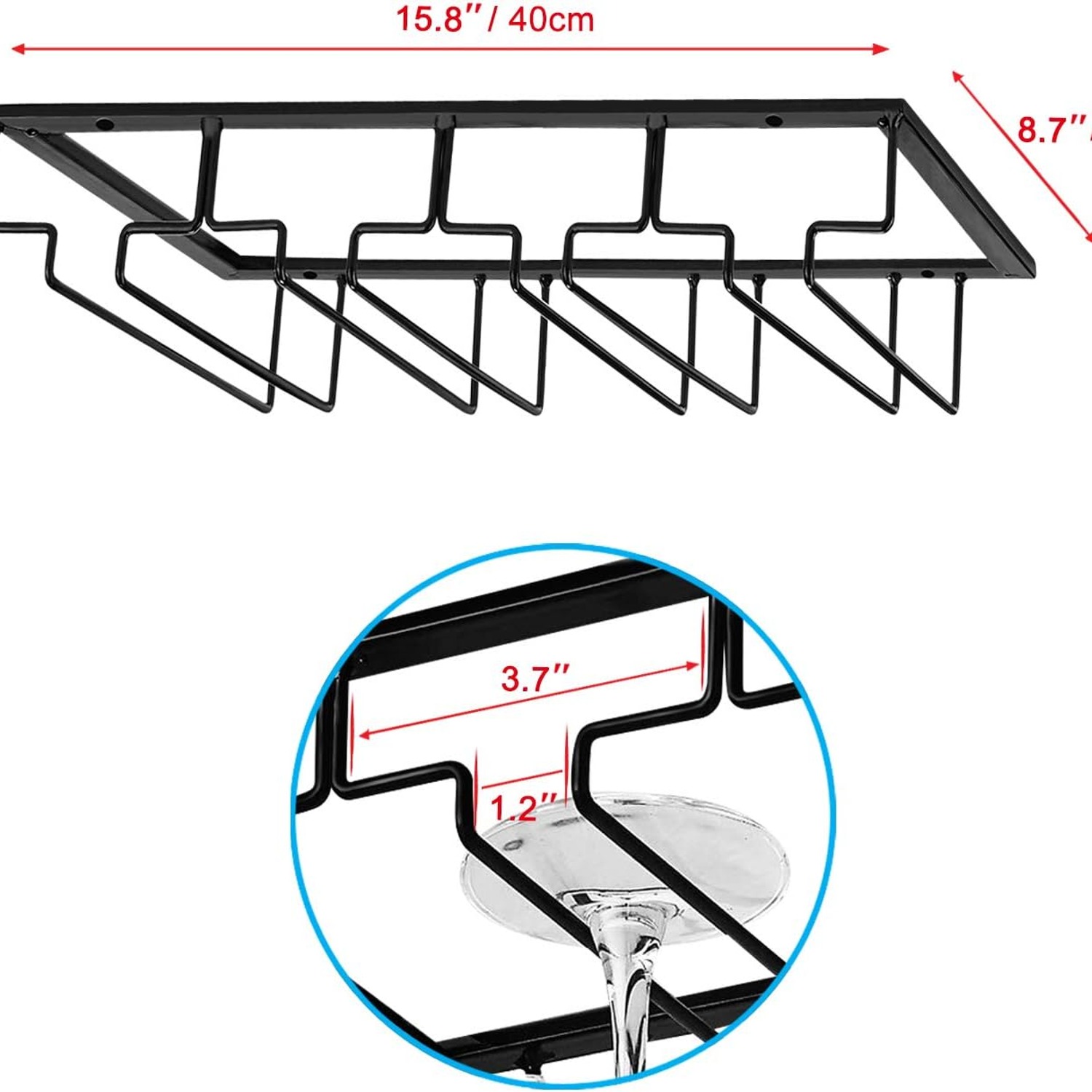
This rack measures 6 cm deep by 22.1 cm wide by 6 cm high, and weighs 454 g on its own. It arrives assembled with screws in the box, so there is no flat pack stage. A screwdriver is the only tool most people need.
Who it suits
Small kitchens are the obvious case. If your cupboards are already full and your worktop is the only clear surface left, a rack like this adds storage without taking anything away. Renters like it too, because four screw holes in a cabinet underside are easy to fill when you move out.
It also works for people who entertain but do not have a dedicated bar. Mount it above a drinks trolley or at the end of a run of cabinetry and your glasses are visible, reachable and out of harm's way. There is a quiet pleasure in seeing a row of clean stems hanging ready rather than buried behind the mugs.
If you own stemless glasses, tumblers, or very heavy crystal with unusually thick stems, this is not your product. A hanging stemware rack only works with a genuine stem and foot. Measure before you commit.
Checking the fit before you buy
Take two measurements. The first is the clear width available under your cabinet. You need at least 22.1 cm of flat, solid underside, ideally with a little either side so you can get a screwdriver in.
The second is the drop. Measure from the cabinet underside to whatever sits below it, usually the worktop or a splashback shelf. Then measure your tallest wine glass from foot to rim. Add the 6 cm height of the rack and a couple of centimetres of clearance so you can lift the glass out without tilting it awkwardly. If the numbers are tight, a shorter glass or a different mounting point is the answer.
Also check the stem. Hold a glass sideways and look at the thickest part of the stem, usually where it meets the foot. Very chunky stems can be too wide for a standard rail slot. A quick test with one glass on arrival tells you more than any spec sheet.
Mounting it properly
The fixing is where most people go wrong, so take your time.
Start by checking what the cabinet underside is made of. Solid timber and good quality board both hold screws well. Thin veneered panel or a hollow base needs more care, and in some cases a different fixing than the supplied screws. If you can see or feel flex when you press up on the base, reinforce it or pick another spot.
Hold the rack in position and mark the screw holes with a pencil. Use a small level or just sight along the front edge of the cabinet to check it is square. A rack mounted slightly out of line looks worse than you expect once it is loaded. Start each hole with a bradawl or a fine drill bit so the screw bites cleanly and the board does not split.
Drive the screws until the rack sits flush and does not rock. Do not over tighten, because stripping the thread in board is easy and hard to fix. Give the rails a firm pull downward before you load anything. Then hang one glass, look at it, and only then hang the rest.
Come back in a month and check the screws again. Timber moves with humidity and a slight loosening is normal. Ten seconds with a screwdriver keeps things solid.
Loading it well
Group by glass type. Put your everyday glasses on the row nearest the front where you reach most often, and the occasional pieces at the back. If you have two sizes, keeping them in separate rows makes it easier to grab the right one without looking.
Leave a small gap between glasses so rims never touch. It costs you one or two glasses of capacity and saves you the cost of replacing a chipped one. Slide glasses in and out along the rail rather than lifting them at an angle, which puts an unnecessary twist on the stem.
If you need more room than one rack gives, two units mounted side by side work well. Leave a finger's width between them so you can still load the end slots, and line the front edges up carefully so the run reads as one piece.
Keeping it clean
Kitchen air carries grease, and a rack above a cooking zone will pick some up over time. A soft damp cloth and a dry wipe afterwards handles it. Avoid scourers, wire wool and strong solvents, since a powder coated finish is tough but not invincible. Once the coating is scratched, the mark will not buff out.
If you go a long stretch without using the glasses, run them through a rinse before pouring. Hanging bowl down keeps most dust out, but nothing in a kitchen stays pristine forever.
The short version
A four row under cabinet wine glass rack takes stemware out of your cupboards and puts it somewhere that was doing nothing. Glasses stay cleaner, they stop knocking into each other, and your shelves get their space back.
This one is white, powder coated, 6 x 22.1 x 6 cm, and comes assembled with screws. Measure your clear width and your drop, check your stems are a normal thickness, and fix it into solid material. Do those three things and it will sit there quietly doing its job for years.