
The complete guide
How to Choose and Hang a Wall Wine Rack with Glass Holder
The problem with storing wine in a small kitchen
Wine has a habit of collecting. You buy a couple of bottles for dinner, someone brings one over, you grab a case on special, and suddenly there are bottles lined up along the splashback and a cardboard box sitting by the pantry door. Glasses are worse. They take up a whole cupboard shelf because you cannot stack them, and the ones at the back gather dust until you rinse them before pouring.
Worktop are the most expensive real estate in any kitchen. Every bottle parked there is space you cannot use for chopping, kettle, toaster or school bags. The obvious fix is to move storage up, onto the wall, where almost nothing is competing for room.
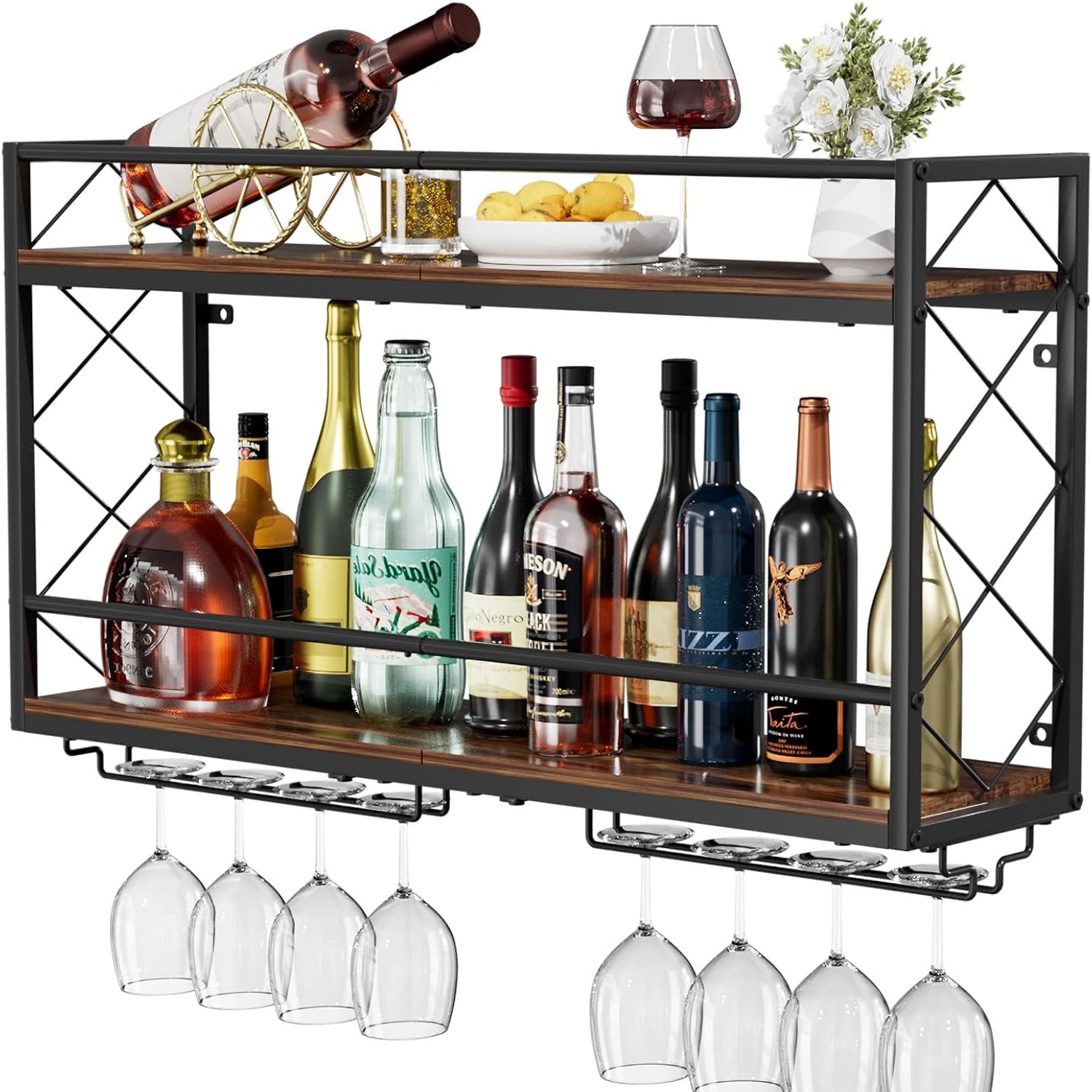
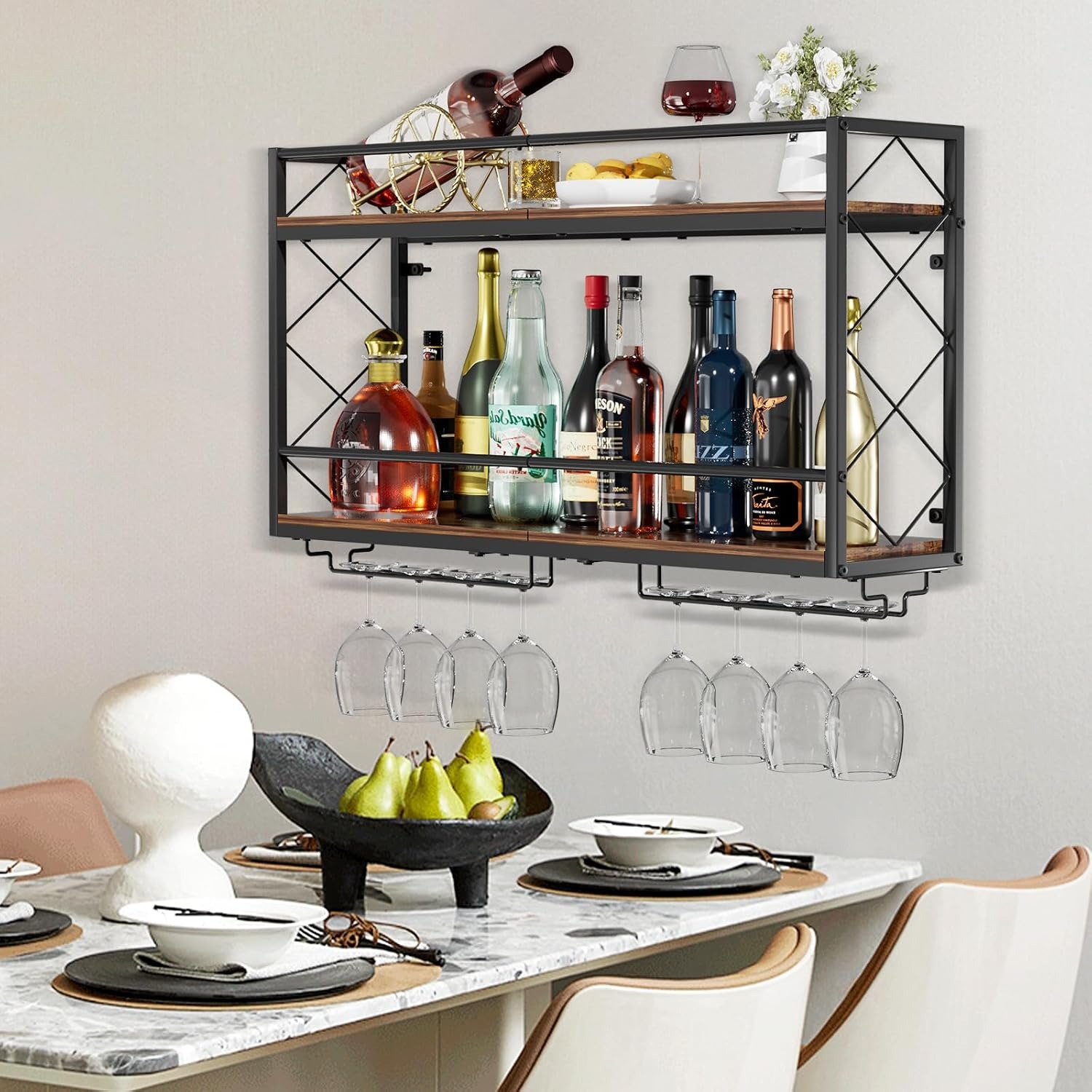
That is what a wall mounted wine rack does. This one goes a step further by adding a wine glass holder underneath, so the bottles and the glasses live in the same spot instead of two different cupboards on opposite sides of the room.
How this rack works
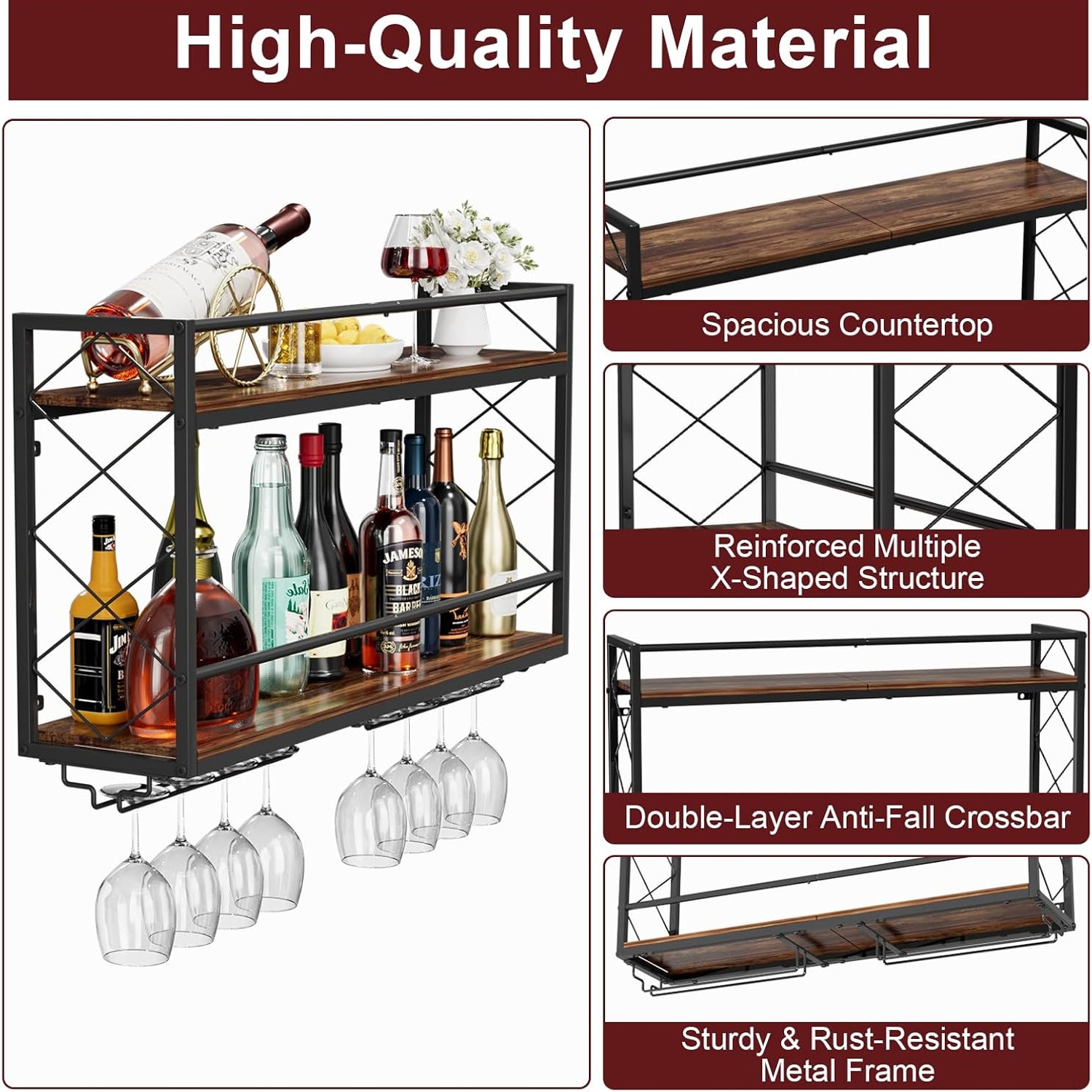
The build is simple. A painted metal frame carries two engineered wood shelves. Bottles rest on their sides across those shelves, twelve in total, which happens to be a full case. Under the shelves, metal rails run the width of the unit. Stemware slides onto a rail by the foot and hangs upside down.
Hanging glasses that way is not just for looks. Upside down means the bowl is closed off, so dust and kitchen grease settle on the base instead of the inside of the glass. It also saves you shuffling glasses around inside a cupboard, which is where most chips and breakages happen.
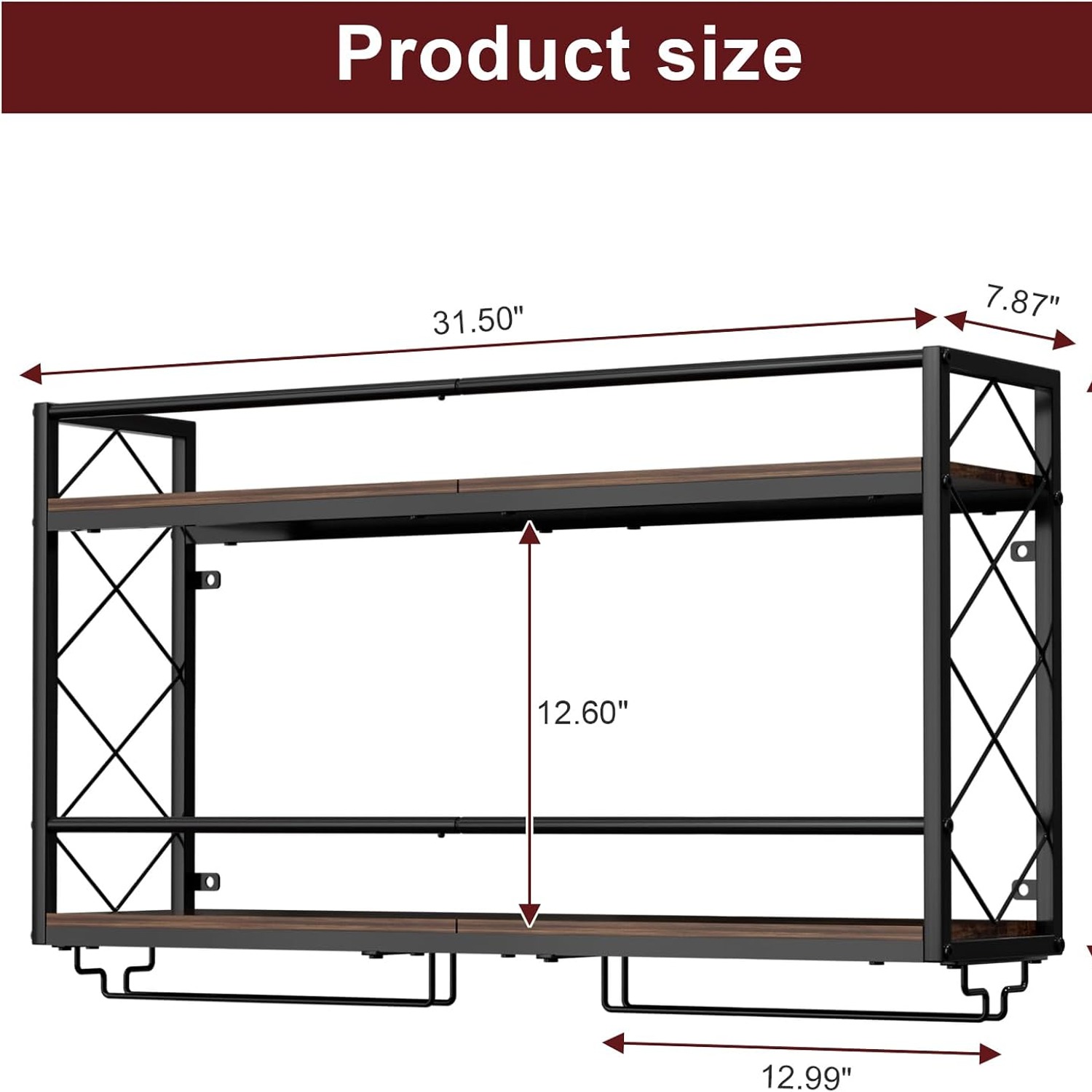
The whole unit measures 31.5 inches wide, 16.93 inches high and 7.87 inches deep. In metric, the product dimensions are listed as 49 deep by 80.5 wide by 20 high centimetres. Empty, it weighs 4.54 kg. That depth of under eight inches matters, because it means the rack sits close to the wall and does not jut into a walkway.
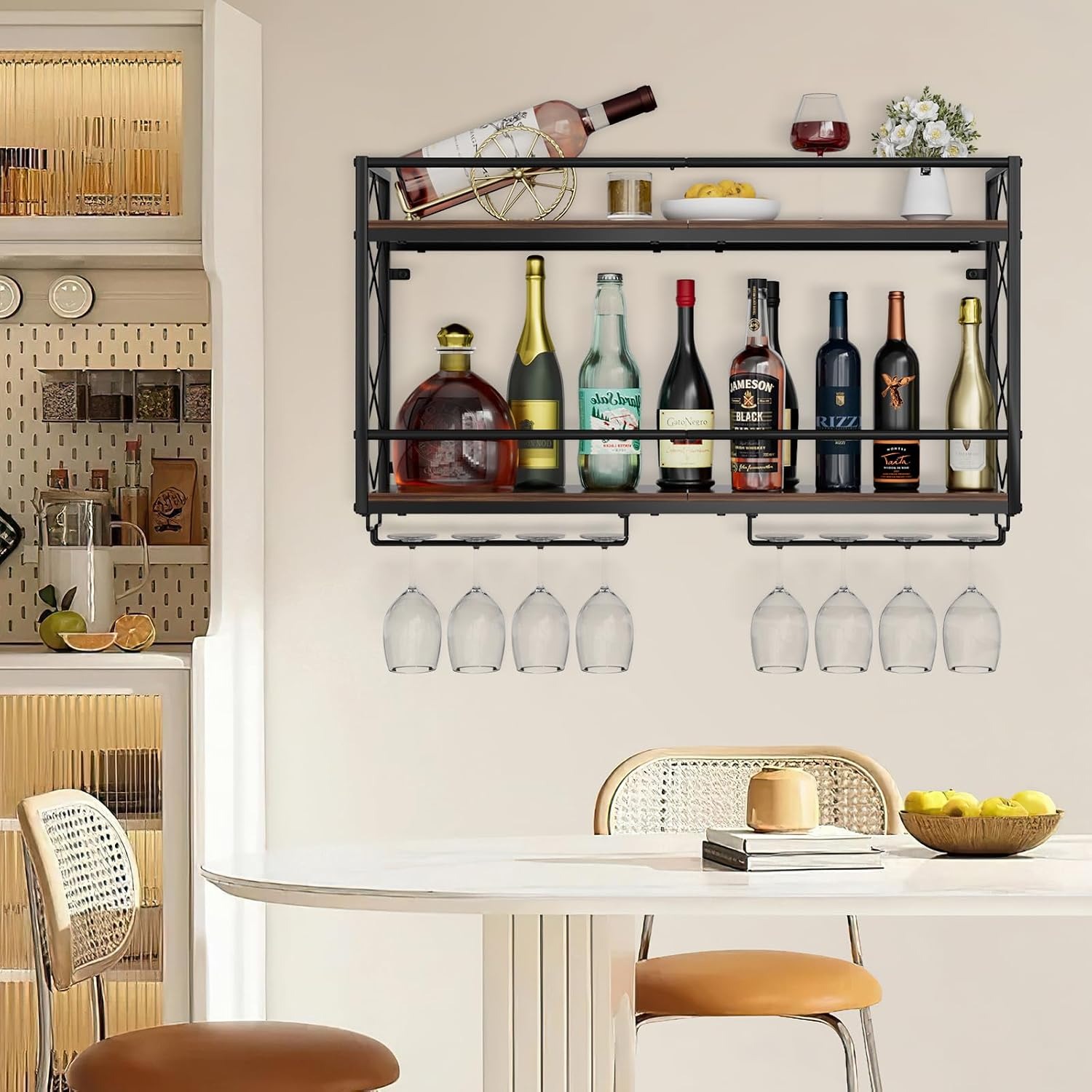
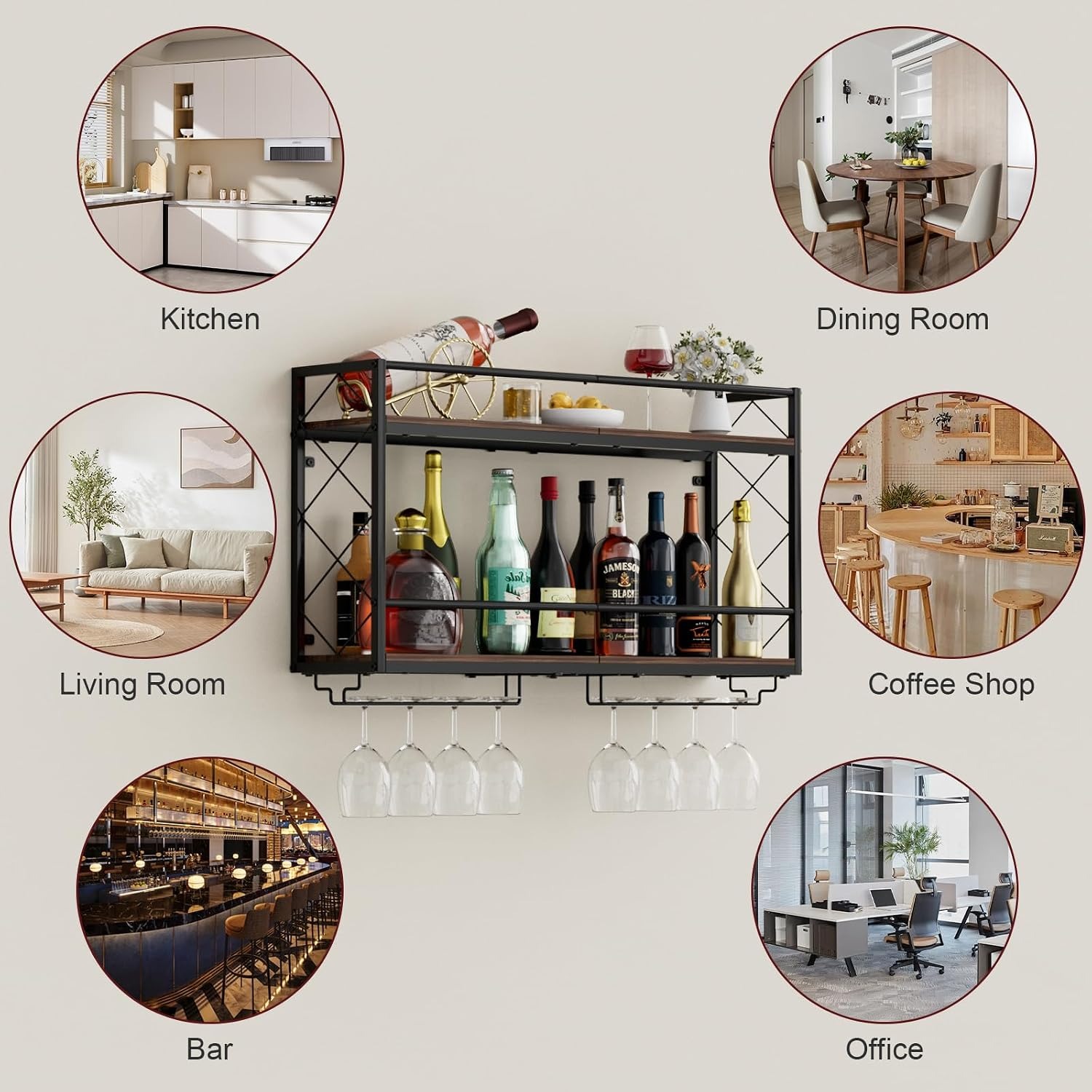
The finish is brown with a vintage look, which blends with timber worktops, darker joinery and most neutral paint. It reads as a piece of decor rather than a storage unit, which is why people put it in dining rooms and hallways as often as kitchens.
Who it suits
Apartment dwellers get the most out of it. When the kitchen is three metres long and every cupboard is already full, a hanging wine rack is one of the few ways to add storage without losing floor area.
It also works for anyone setting up a small home bar. Put it above a sideboard or a narrow console, add a couple of glasses on the rail, and you have a drinks corner without buying a cabinet. Cafes, small bars and restaurants use the same idea, because a wine display rack on the wall is both storage and signage.
Gift buyers do well with it too. It is a useful present for someone who has just moved in, or for the friend who keeps buying wine faster than they drink it.
Who it does not suit: anyone who cannot drill. The rack is wall mount only, and there is no freestanding option. If drilling is off the table, a floor standing rack is the better route.
Choosing the right spot
Start with the wall, not the rack. Walk around the room and look for a blank stretch at least a metre wide. Common winners are the gap beside a fridge, the run above a sideboard, the space between a doorway and a corner, or a hallway wall that currently holds nothing.
Then check what is behind it. In plasterboard, find the studs with a stud finder and aim to land at least one fixing into timber. If the studs do not line up, use heavy-duty cavity anchors rated well above the load you expect. A full case of wine plus glasses is not light, and this is the one part of the job worth getting right.
On brick or masonry, use proper plugs and a masonry bit. On tile, drill slowly, start small, and let the bit do the work rather than pushing hard.
Height is the other decision. Most people hang the rack so the glass rails sit around shoulder height. High enough that nobody walks into hanging stemware, low enough that you can lift a bottle off the top shelf without stretching. Hold the rack against the wall, mark the corners in pencil, step back and look at it before you commit.
A few spots to avoid. Direct afternoon sun will cook wine over time. Above a cooktop is hot, greasy and steamy. Next to a door that swings hard is asking for a cracked glass eventually.
Putting it up
Assembly is required and the instructions are in the box. Lay the parts out on the floor first and check everything is there before you start. Build the frame and shelves flat, then handle mounting as a separate step.
A spirit level is not optional. A rack that is a few degrees off looks fine until you put a line of bottles on it, then it is all you can see. Mark your fixing points, drill, fit the anchors and get the unit on the wall before you load anything.
Give it a light push and pull once it is up. There should be no movement at all. Load the lower shelf first, then the upper, then hang the glasses last so you can see how much rail space you actually have.
Living with it day to day
Loading matters more than people expect. Spread the bottles across the shelf rather than crowding one end. Balanced weight keeps the load even on the fixings and stops the rack from looking lopsided.
Cleaning is quick. A soft dry cloth over the wood and metal handles most of it, and a slightly damp cloth takes care of anything sticky. Dry it straight away rather than letting moisture sit on the timber, and keep bleach and abrasive pads away from the painted finish.
Keep the glass rails clean and free of polish or oil. A greasy rail is a slippery rail, and stemware does not survive a fall onto a worktop.
Every few months, give the wall fixings a check and re-tighten anything that has loosened. This takes a minute and is the main piece of maintenance a wall rack ever needs.
If you are storing wine for more than a few weeks, think about conditions rather than just the rack. A cooler, shaded wall away from vibration is kinder to bottles than a sunny one. Bottles on their side keep corks moist, which the shelf design handles for you.
The short version
This is a wall wine rack with glass holder that takes 12 bottles on two engineered wood shelves and hangs stemware on metal rails below. It measures 31.5 inches wide by 16.93 inches high by 7.87 inches deep, weighs 4.54 kg empty, comes in brown with vintage styling, and needs assembling with the included instructions.
Pick a blank wall, find your studs or use strong anchors, hang it level at roughly shoulder height, and load it evenly. Wipe it down now and then and check the fixings every few months. Do those things and you get back a chunk of worktop and a cupboard shelf, and the wine ends up looking like it was meant to be there.