
The complete guide
The Buyer's Guide to Under Cabinet Wine Glass Racks
The problem with storing wine glasses
Wine glasses are awkward. They are tall, they are fragile, and the part that breaks first is the rim, which is exactly the part that touches the shelf when you store them upright. Stack them in a cupboard and you end up playing a game where every glass has to come out before you can reach the one at the back. Leave them on the worktop to dry and they take over the kitchen for the rest of the night.
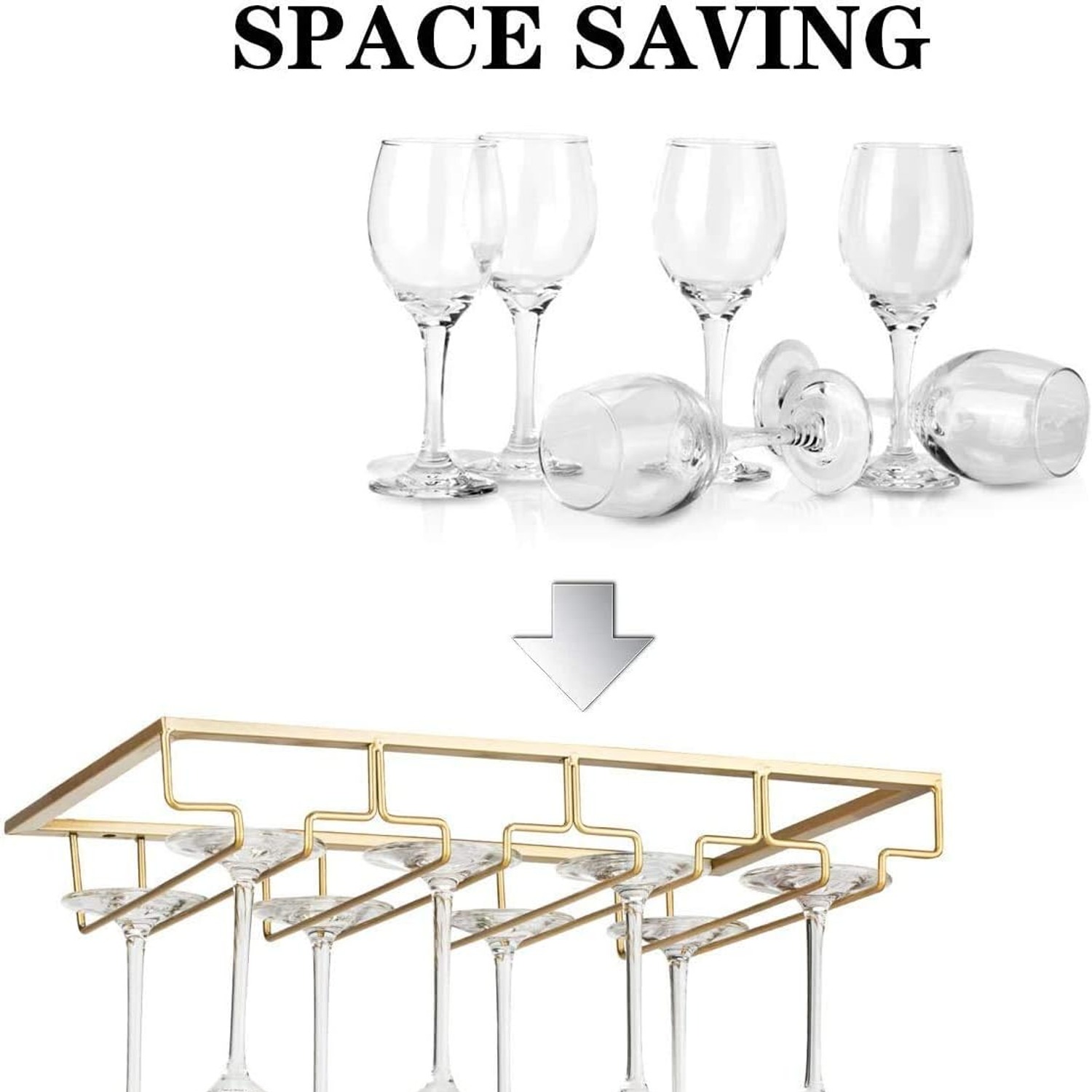
Then there is the cupboard itself. Stemware eats vertical space. A single shelf of wine glasses can swallow a section of cabinet that would otherwise hold a stack of plates, a few bowls and a mixing jug. For anyone in a small kitchen, that is an expensive trade.
An under cabinet wine glass rack solves all of this by moving stemware out of the cupboard and into the empty strip of air underneath it. That space has always been there. Most people never think to use it.
How an under cabinet rack actually works
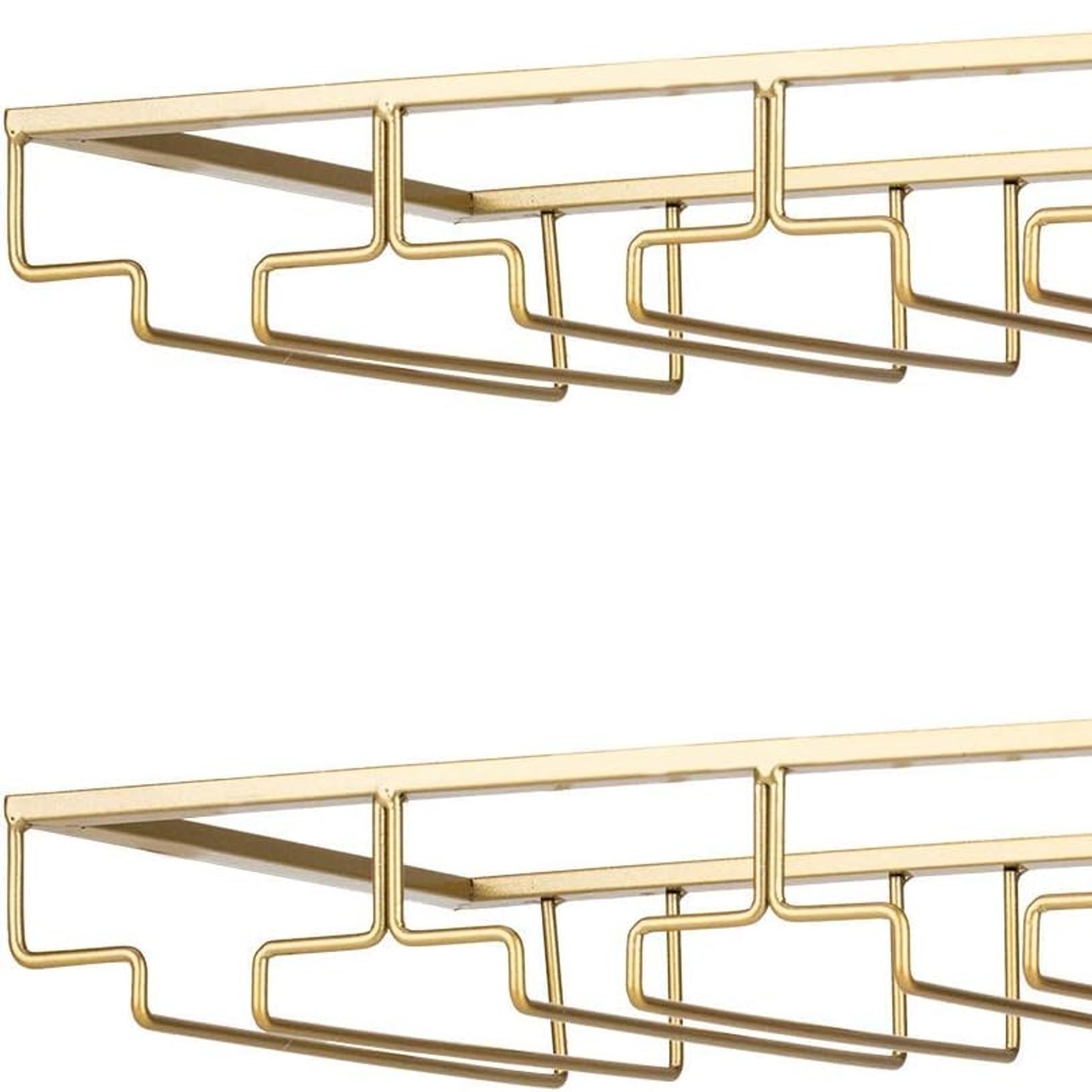
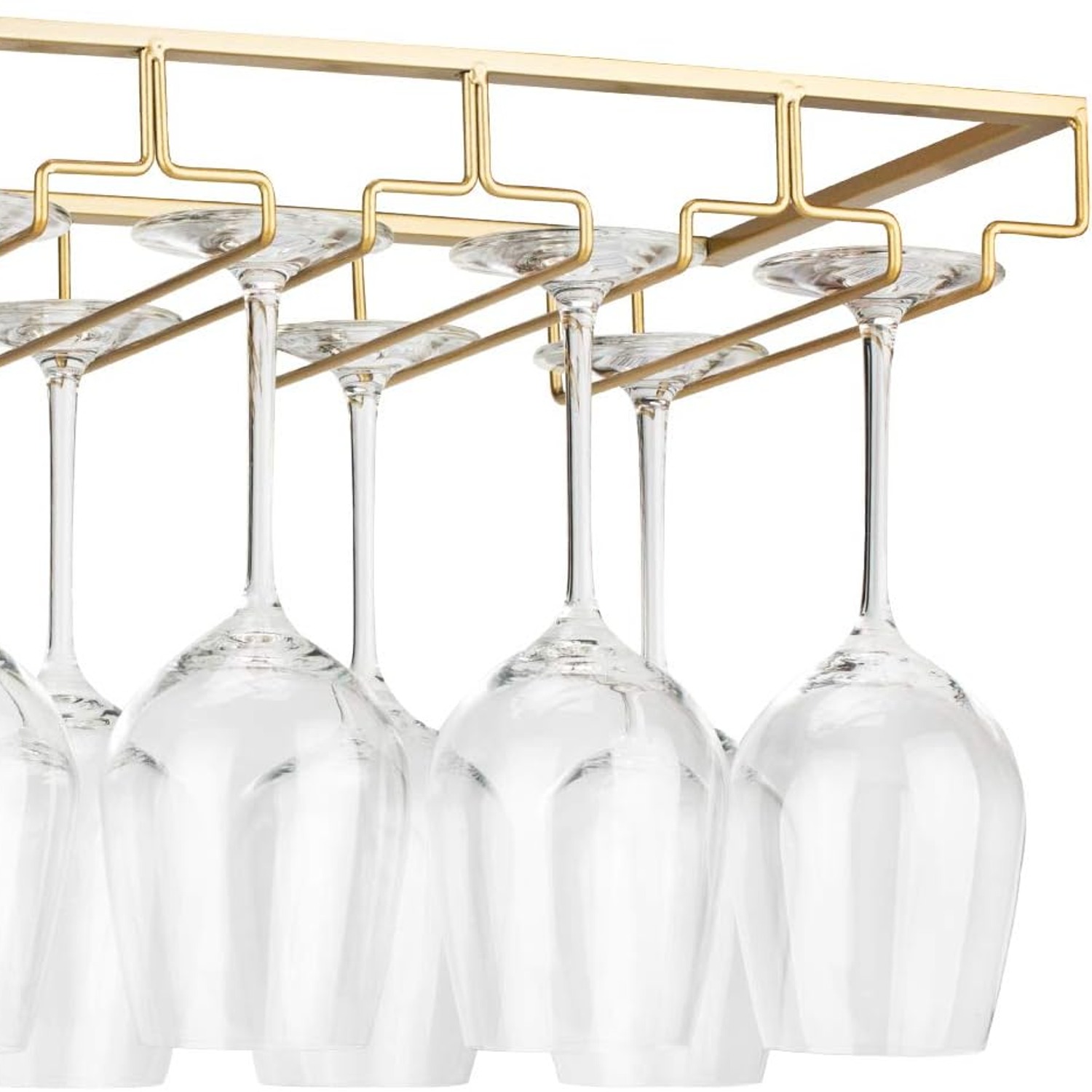
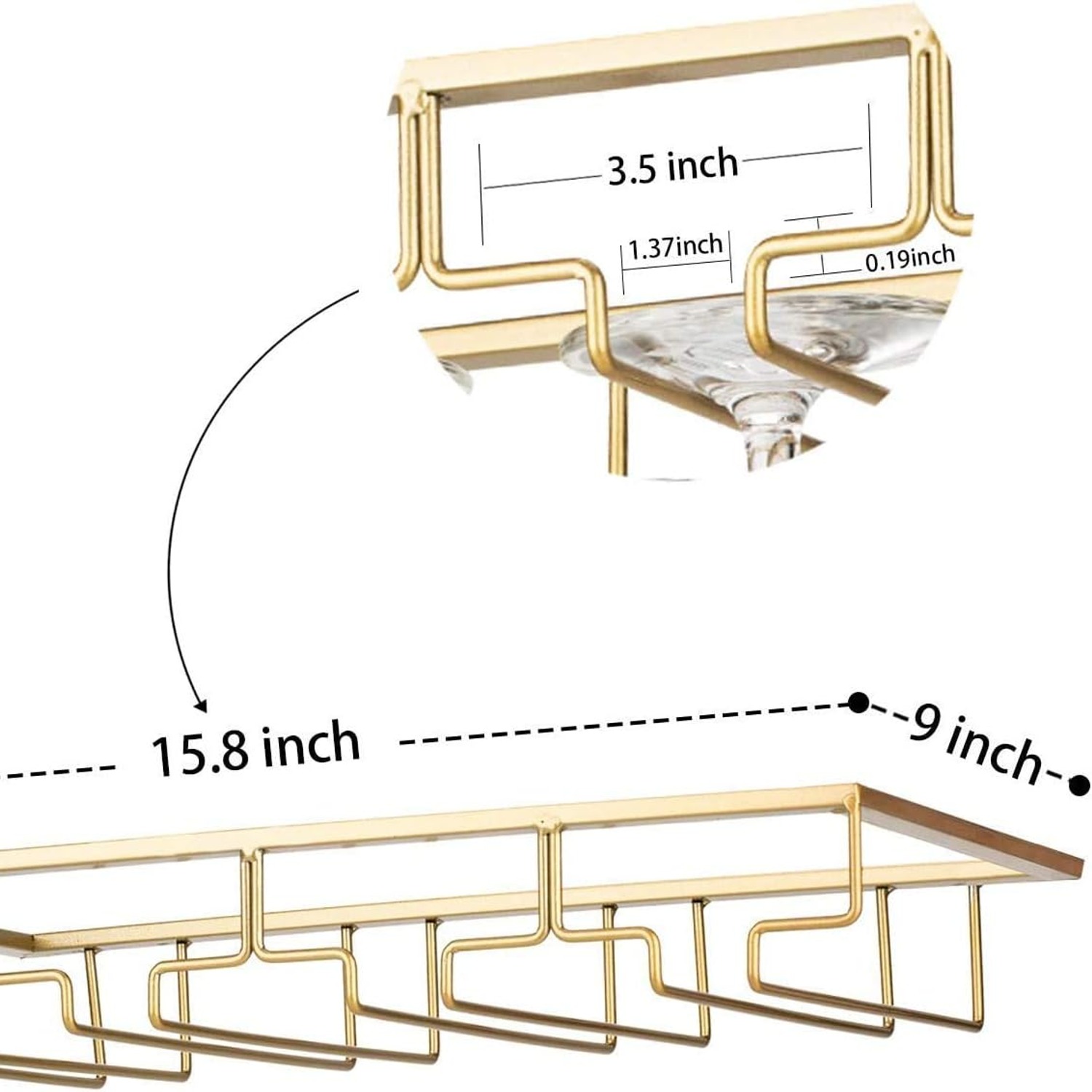
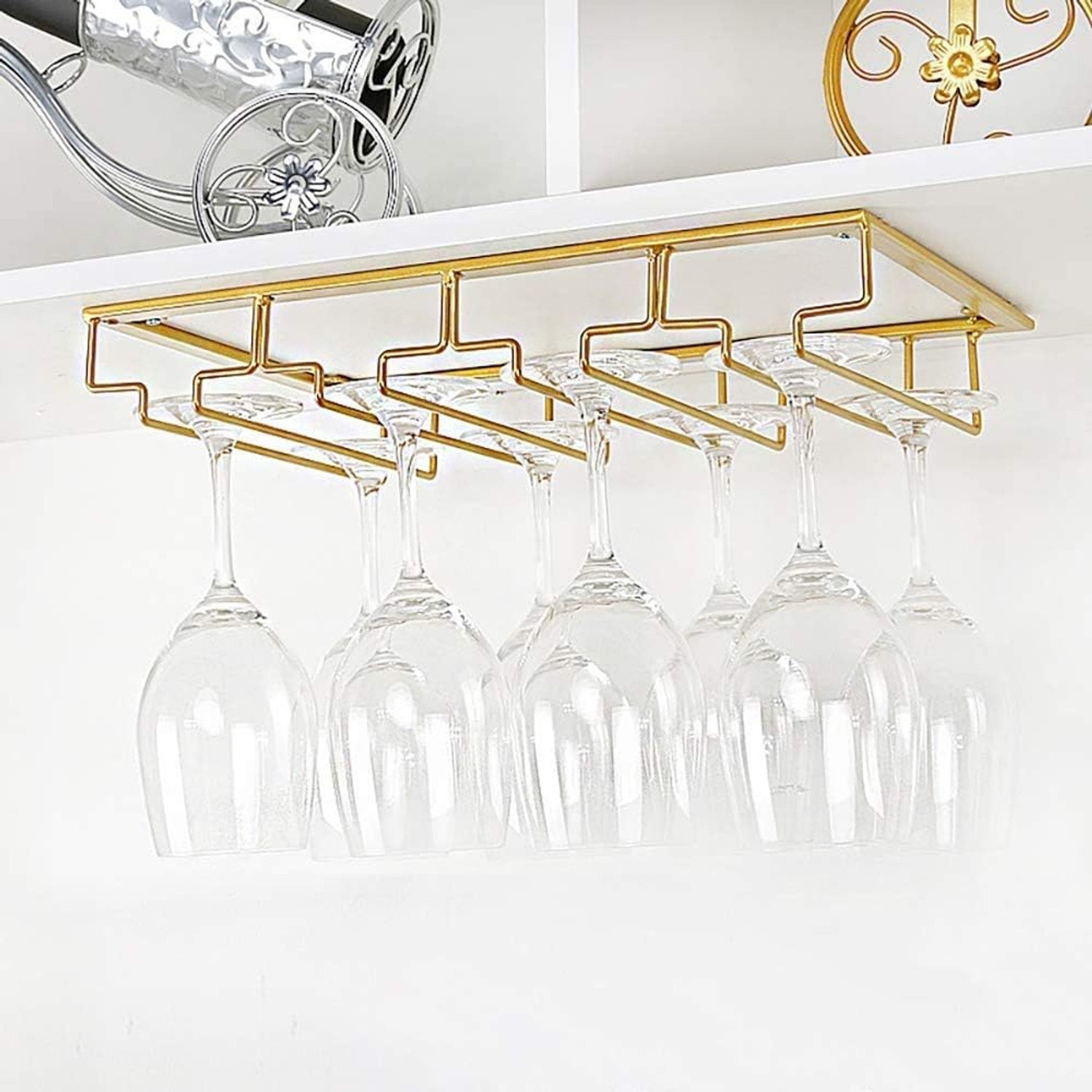
The design is simple. The rack is a frame with parallel channels, and it screws to the underside of a wall cabinet. You slide a wine glass in upside down so the foot rests on top of the rails and the stem sits in the gap. The bowl hangs below, touching nothing.
That inverted position does three useful things at once. It keeps the rim away from any hard surface, which is where chips start. It keeps dust out of the bowl, since anything settling lands on the flat base instead. And it lets water drain down and off, which turns the rack into a wine glass drying rack as well as storage.
This particular model is a hanging shelf in powder-coated metal with a gold finish. Powder coating is a dry powder sprayed on and then cured with heat, so it bonds harder than brushed paint. In a kitchen, where steam and splashes are constant, that matters more than it sounds.
Each rack measures 34.3 cm deep, 24.3 cm wide and 8.2 cm high, and the stated shelf weight capacity is 816 grams. Two racks come in every pack.
Who this suits
Small kitchens benefit most. If your cupboard space is already spoken for, a mounted stemware shelf gives you storage without giving anything up.
It also suits people who entertain. When six or eight glasses come out of the dishwasher at once, a rack above the sink gives them somewhere to go immediately instead of colonising the worktop. They drain, they dry, they stay where they are until next time.
Home bar setups are a natural fit too. Mounting a pair under a bar shelf puts glassware at arm's reach of whoever is pouring, and the gold finish looks intentional rather than utilitarian.
Who it does not suit: renters who cannot drill, anyone with only stemless glasses, and households where the cabinet base is too thin or too flimsy to take a screw. Those are worth checking before you buy rather than after.
Measuring before you order
Two measurements decide whether this works in your kitchen.
The first is cabinet depth. Your wall cabinet base needs to be at least as deep as the rack, which is 34.3 cm. Most standard wall cabinets land in that range, but older or custom cabinetry varies. Run a tape measure from the wall to the front edge of the cabinet base.
The second is clearance. Hold your tallest wine glass upside down under the cabinet and see how far the bowl reaches. Add the 8.2 cm height of the rack itself. If the result hangs low enough to interfere with your kettle, your splashback shelf or your forehead, pick a different cabinet. Over a sink is usually the winner, because nobody stands directly under that spot and the drips go somewhere useful.
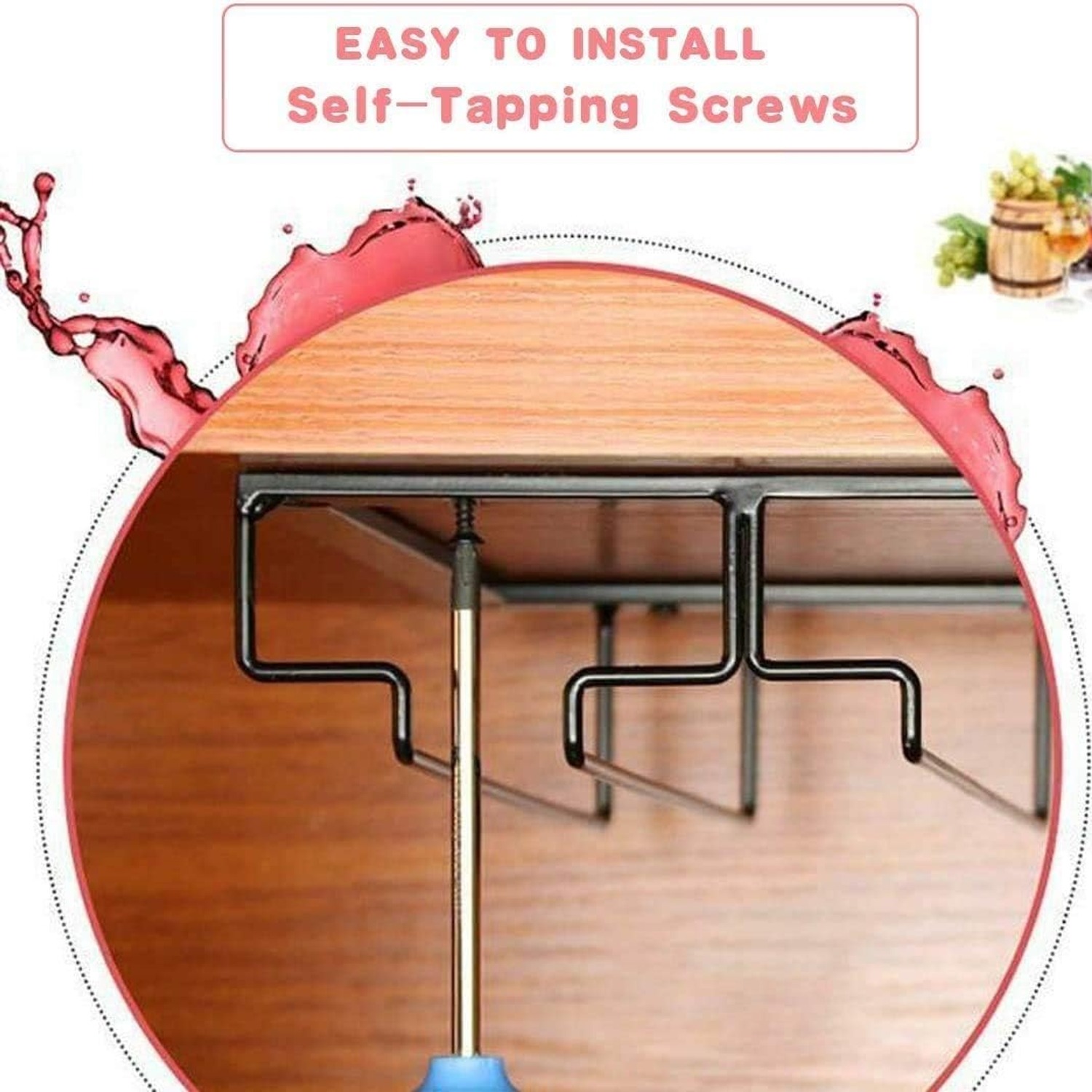
Also check the thickness of the cabinet base before you drill. Thin laminate or plywood panels can be shallower than the supplied screws, and a screw point poking up through the inside of a cupboard is a nuisance to fix.
Fitting it properly
Assembly is required and mounting hardware is included. The job itself is short. Mark your screw positions in pencil, check them with a small level so the rack hangs straight, and drive the screws into the cabinet base. A straight rack matters more than you would think, because a slight tilt means glasses want to creep toward one end.
If you are mounting both racks in a row to make one long run, leave a small gap between them. That gap gives you a buffer so the end glass on one rack does not touch the end glass on the other.
Give everything a final tighten, then load one glass and give it a gentle nudge to confirm the rack holds. Build up from there rather than filling it all at once.
Loading it without breaking anything
Work to the weight limit, not to the available width. The rack is rated at 816 grams per shelf, so weigh a typical glass and work out how many you can sensibly hang. Everyday stemware is light. Thick-walled crystal goblets are not, and this is not the rack for them.
Leave a gap between bowls. A finger-width is plenty. Glasses that touch will clink whenever the cabinet door shuts, and over months that contact is how chips happen.
Slide glasses in and out rather than lifting them straight up, and always support the bowl with your free hand while the foot clears the rails. It takes an extra second and saves the occasional disaster.
Keeping it looking good
Maintenance is light. Wipe the frame with a soft damp cloth every couple of weeks, and dry it afterwards so water does not sit on the coating. Kitchen grease is the main thing that builds up, especially if the rack is near a cooktop, and it comes off far more easily when it is fresh.
Stay away from scouring pads, steel wool, bleach and strong solvents. Those will dull or scratch a powder-coated surface, and once the coating is broken the metal underneath is exposed.
Every few months, give the mounting screws a quick turn to check they are still snug. Cabinet doors open and close thousands of times a year, and the small vibrations can loosen hardware over time. Thirty seconds with a screwdriver prevents the only real failure mode this product has.
One more habit worth building: let glasses drip dry fully before closing a cupboard door on them. Trapped moisture in a closed space is how musty smells start.
Choosing between styles
If you are comparing options, the main decision is mounted versus freestanding. A mounted rack uses dead space and keeps the worktop clear, but it needs a cabinet and a drill. A freestanding stemware rack goes anywhere and needs no tools, but it sits on the surface you were trying to free up.
Within mounted racks, finish is mostly about the rest of your kitchen. Gold reads warm and works with timber, cream and darker cabinetry. Chrome and matte black read cooler. There is no performance difference, only how it looks against your doors and handles.
Capacity is the last variable. More channels mean more glasses, but also a wider rack and a heavier load. Two moderate racks spread across a cabinet run usually works better than one very long one, and it gives you the option of splitting them across rooms later.
The short version
This is two powder-coated metal racks, gold finish, each 34.3 cm by 24.3 cm by 8.2 cm, rated to 816 grams per shelf, mounting under a kitchen cabinet with the hardware supplied. Assembly is required.
They take stemware out of your cupboard, off your worktop, and put it somewhere you can reach with one hand. Glasses drain dry, rims stay protected, and you get back a shelf you can use for something else.
Measure the depth of your cabinet base and the clearance for your tallest glass. If both check out, this is a cheap fix for a problem most kitchens quietly put up with for years.