


The complete guide
Buying a 20 Bottle Timber Wine Rack: A Practical Guide
The problem with bottles on a shelf
Wine collections sneak up on people. You buy a case because it was good value, someone brings two bottles to dinner, and a trip to a cellar door adds four more. Before long there are bottles standing upright in the pantry, two on the worktop, and one in the cupboard above the fridge where it is quietly cooking.
That is not just untidy. Upright bottles with corks dry out over months. Warm cupboards age wine faster than you want. And bottles stacked loosely knock together every time you reach past them, which chips labels and, occasionally, does worse.
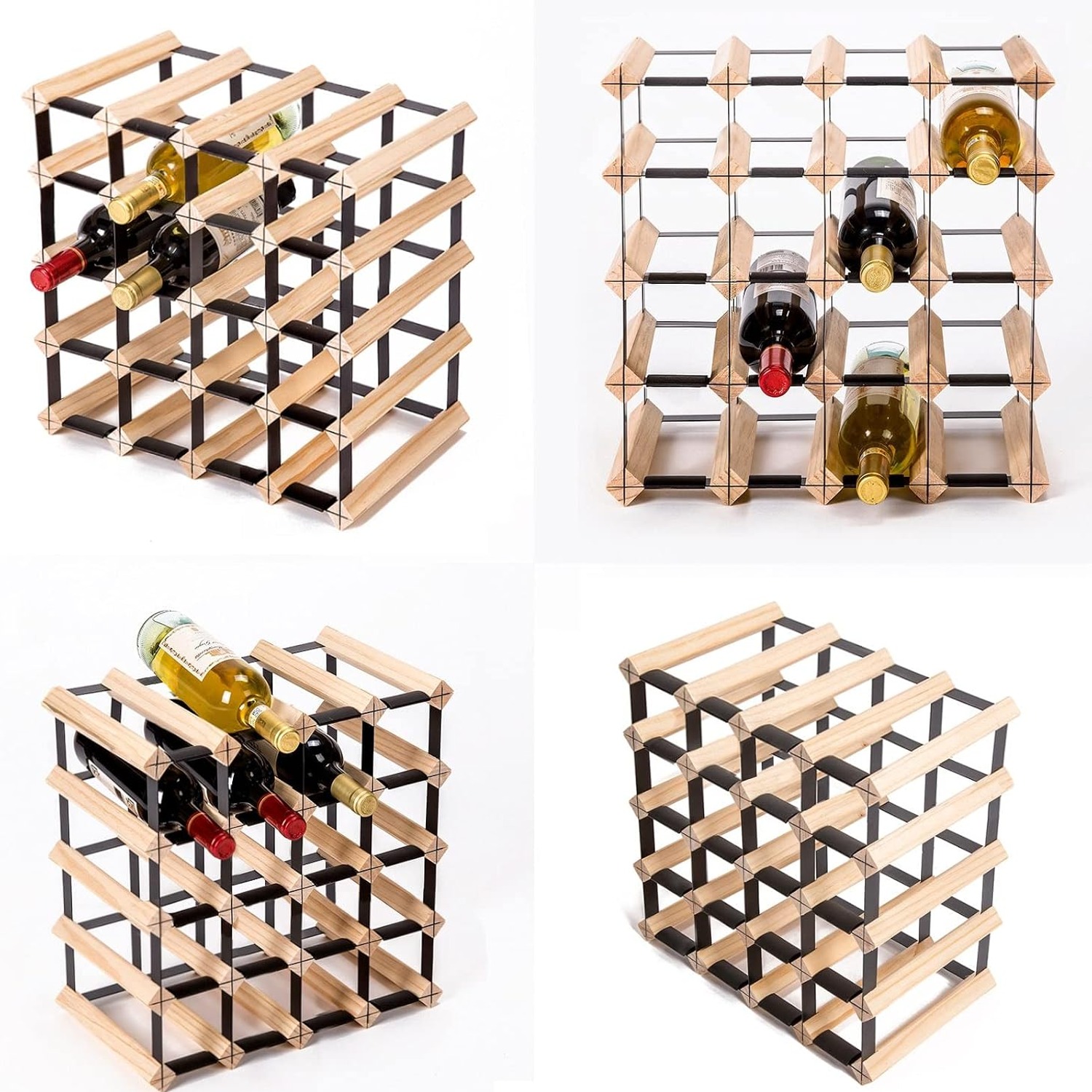
A wooden wine rack solves all of that in one go. Twenty slots, twenty bottles, each one lying flat with its label facing out. You can see what you have, grab what you want, and stop treating good wine like tinned food.
What this rack actually is
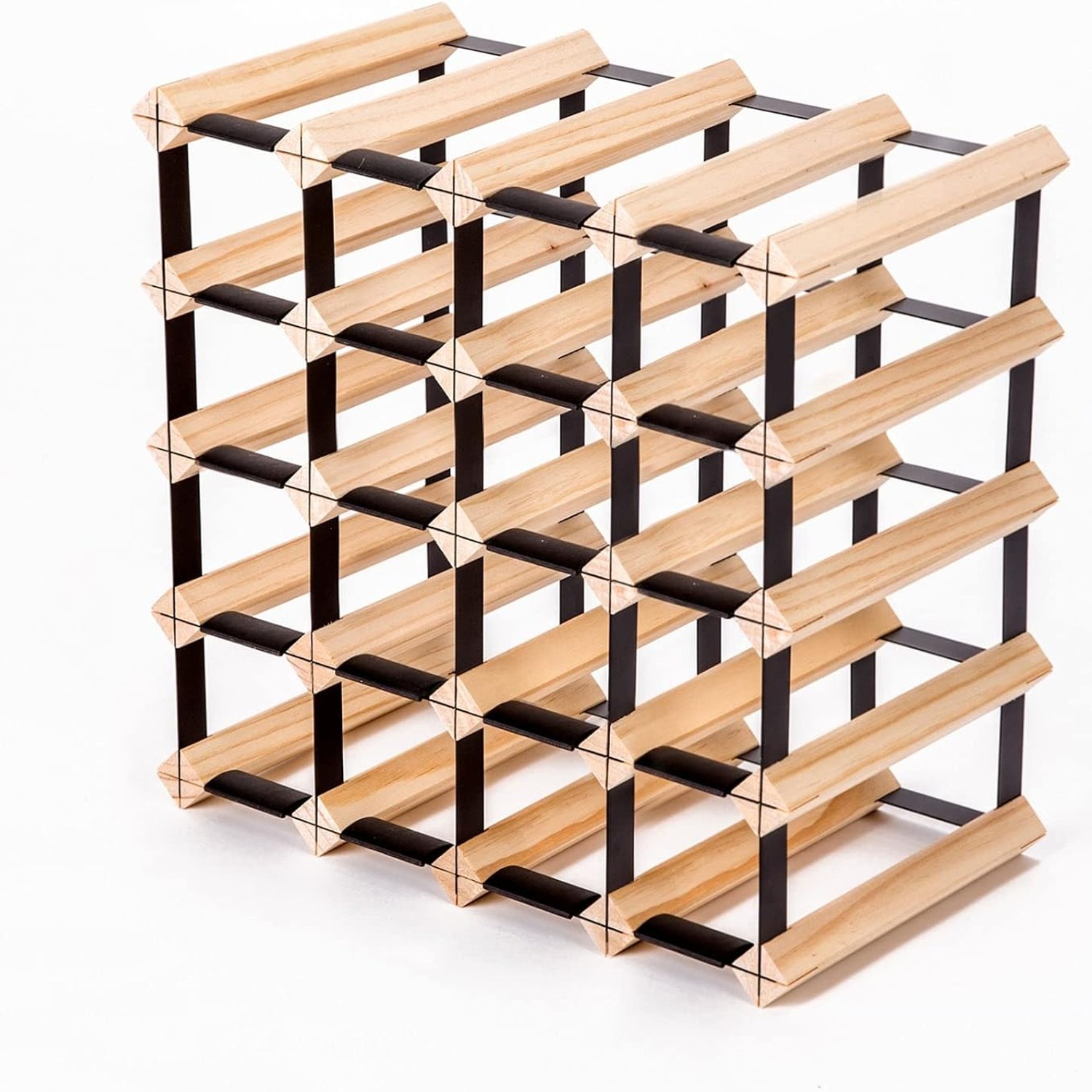
This is a 20 bottle timber wine rack from Home Ready, model FT-WWR03-20. It is built from pine in a natural finish, and the shape is a simple square grid. The supplier describes the style as industrial, which here means clean lines and visible structure rather than carved detail or fancy trim.
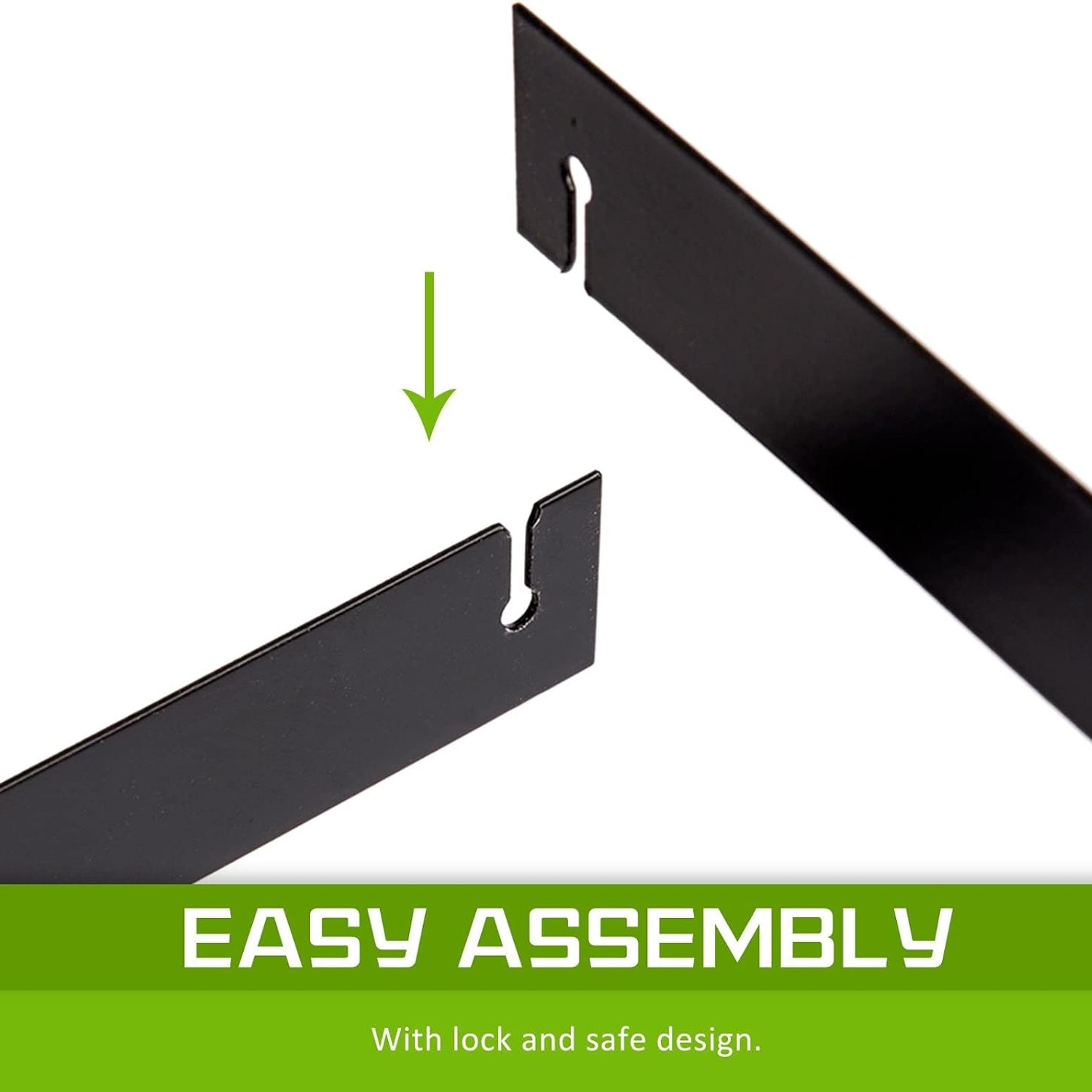
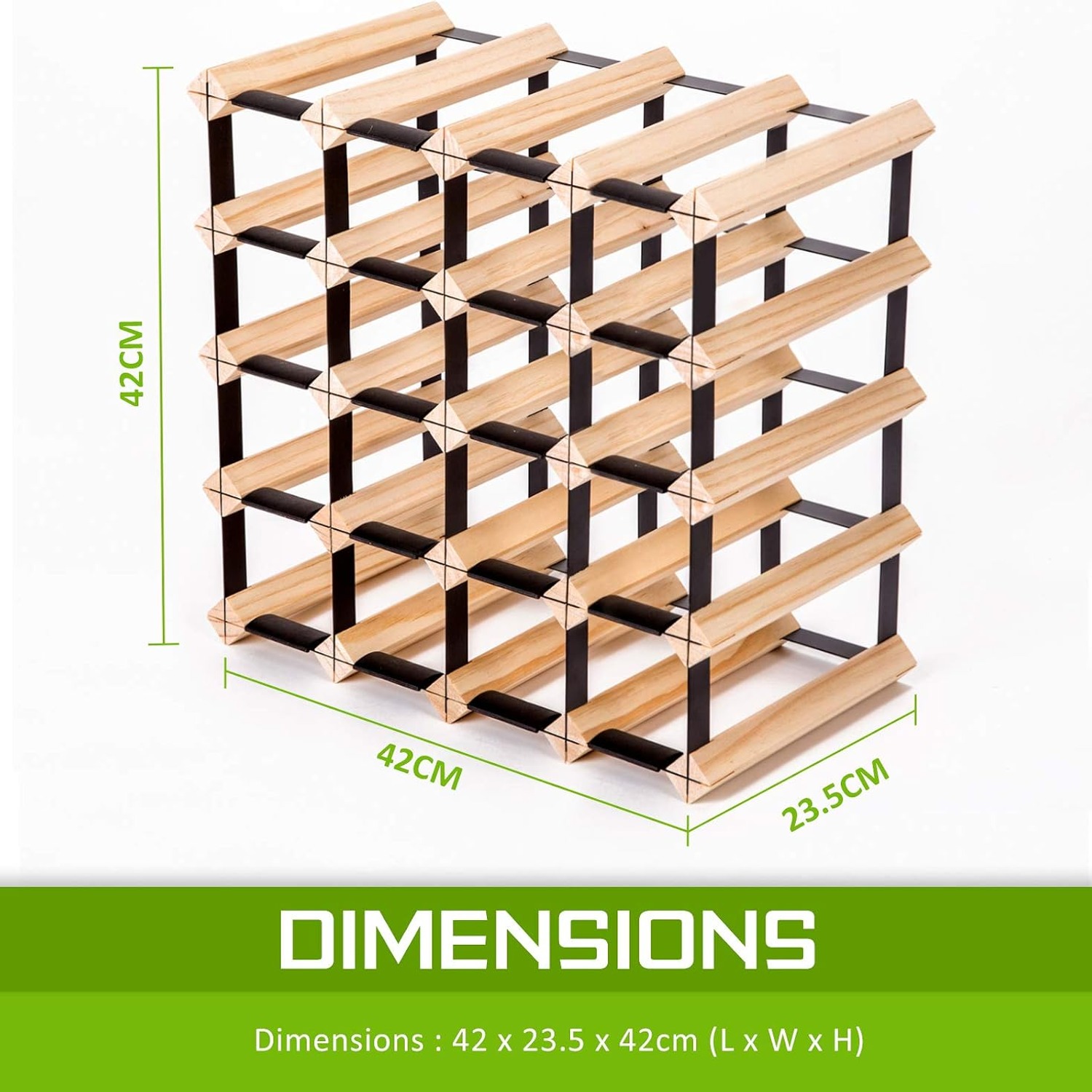
The measurements are 23.5cm deep, 42cm wide and 42cm high. Empty, it weighs 3.6kg. It ships flat packed with a user manual, and assembly is required. The listed mounting type is wall mount, so read the manual and decide where it will live before you start building.
That is the full picture from the supplier's record. Colour is natural, material is pine, care is a dry cloth. If a spec is not on that list, we have not made one up.
Why the footprint matters more than the capacity
Most people shop by bottle count. Twenty sounds right, forty sounds better, so they buy the bigger one and then discover it does not fit anywhere sensible.
Depth is the number that usually catches people out. A wine bottle is about 30cm long, so a rack that stores bottles front to back needs serious depth. This one is 23.5cm deep, which tells you bottles sit across the width rather than straight in. The practical result is a rack that fits on a standard kitchen worktop with room behind it, or inside a pantry shelf, or on top of a sideboard without hanging over the edge.
Height matters too. At 42cm it will usually clear the gap under overhead kitchen cupboards. Measure from your worktop to the underside of the cupboard. If you have 45cm or more, you are fine, with a bit of room to tilt bottles in and out.
And width is the easy one. 42cm is roughly the width of a dish rack. If you can picture a dish rack sitting somewhere, this fits there.
Who it suits
This size works best for people with a working collection rather than a serious cellar. Twenty bottles is about a case and a half. It covers the everyday drinking wine, a few bottles you are saving, and whatever came home from the last weekend away.
It suits renters, because nothing permanent has to happen to the room if you use it on a worktop or shelf. It suits small kitchens, because the footprint is modest. It suits home bars and sideboards, because it looks like furniture and not like storage equipment. And it suits anyone building a cellar slowly, because you can line up a second unit beside the first when you outgrow twenty.
Who it does not suit: someone with eighty bottles and growing. At that point you want a floor-standing wine storage rack with a much bigger grid, or a proper cellar fitout. Buying four of these would work, but a single larger unit is tidier.
How to choose between timber and metal
Timber and metal racks do the same job in different ways.
Pine is light, warm in tone, and quiet. It does not clink against glass. It takes a finish if you ever want to stain or paint it. It also ages, which some people love and others do not. Pine is a softwood, so it will pick up knocks over the years, and that becomes part of the character or an annoyance depending on your temperament.
Metal is thinner, which means more bottles in the same space. It also runs cold and can transmit vibration more readily. In a kitchen, metal racks tend to read as appliance. Timber tends to read as furniture.
If your kitchen already has timber worktop, open shelving or a brick or render wall, natural pine slots in without any effort. If everything is high gloss white and chrome, a timber rack still works as a contrast piece, but go in knowing it is a contrast rather than a match.
Getting the setup right
Three things decide how well any rack holds up over time.
First, the surface. Twenty full bottles plus the rack is well over 25kg. Put that on a cheap flat-pack shelf with a thin back panel and it will sag. A worktop, a solid sideboard, the floor of a sturdy pantry, or a properly fixed shelf are all fine.
Second, the spot. Keep it out of direct sunlight, which fades labels and heats wine. Keep it away from the oven, the dishwasher and anything that runs hot. A cool, dark, dry corner is what wine wants, and timber agrees.
Third, the build. Follow the manual, tighten everything properly, and check the fixings again a few months later. Timber moves slightly with humidity, and a quick re-tighten keeps the frame square.
Loading it properly
Lay every bottle on its side, including screw caps. Corks need the contact to stay sealed, and screw caps lose nothing by lying down. Labels face out so you can read them.
Put the bottles you drink soonest in the easiest slots, usually the middle rows. Keep anything you are cellaring at the bottom, where it is coolest and least disturbed. Avoid pulling bottles out and shoving them back repeatedly if you are aging something, because vibration is not a friend to sediment.
If you have a mix of shapes, note that Burgundy and some sparkling bottles are wider than a Bordeaux shape. In a 20 slot grid, a handful of wide bottles might mean you fit 18 rather than 20. That is normal across every rack of this style.
Looking after pine
The supplied care instruction is simple. Wipe with a dry cloth.
For anything stickier than dust, a barely damp cloth works, but dry it immediately. Untreated timber absorbs standing moisture and can mark or swell. Skip the bleach, the spray cleaners and the scouring pads. None of them do pine any favours.
If a bottle ever leaks or breaks, clean up quickly and let the timber dry completely before reloading. And if the rack lives somewhere humid, check it every few months for any movement in the joints.
The short version
This is a 20 bottle pine wine rack measuring 23.5 x 42 x 42cm, weighing 3.6kg empty, shipped flat packed with a manual. It stores bottles flat, fits in spaces a bigger rack cannot, and asks for nothing more than a dry cloth now and then.
If you have a case and a half of wine living in the wrong places around your house, this is the straightforward fix. Measure your gap, check the depth, and build it somewhere cool and out of the sun. Your corks will thank you, and so will your labels.