
The complete guide
How to Choose a Countertop Wine Rack That Actually Fits Your Kitchen
The problem with a few loose bottles
Almost nobody sets out to collect wine. It happens by accident. Someone brings a bottle to dinner, you pick up two on special, a gift arrives at Christmas, and suddenly there are five bottles living in awkward places. One on the worktop near the kettle. Two in the pantry behind the pasta. One lying flat in a cupboard where it rolls every time the door opens.
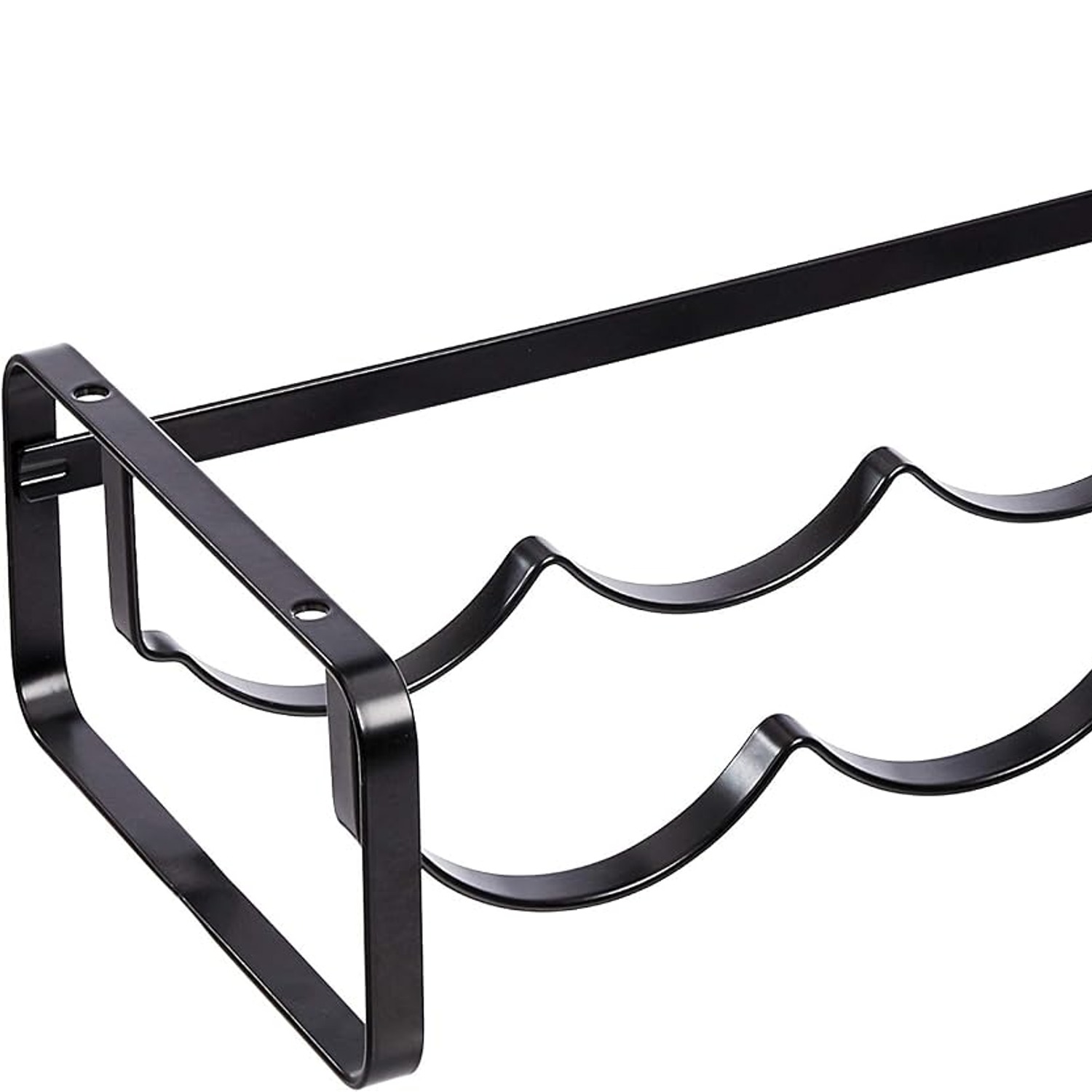
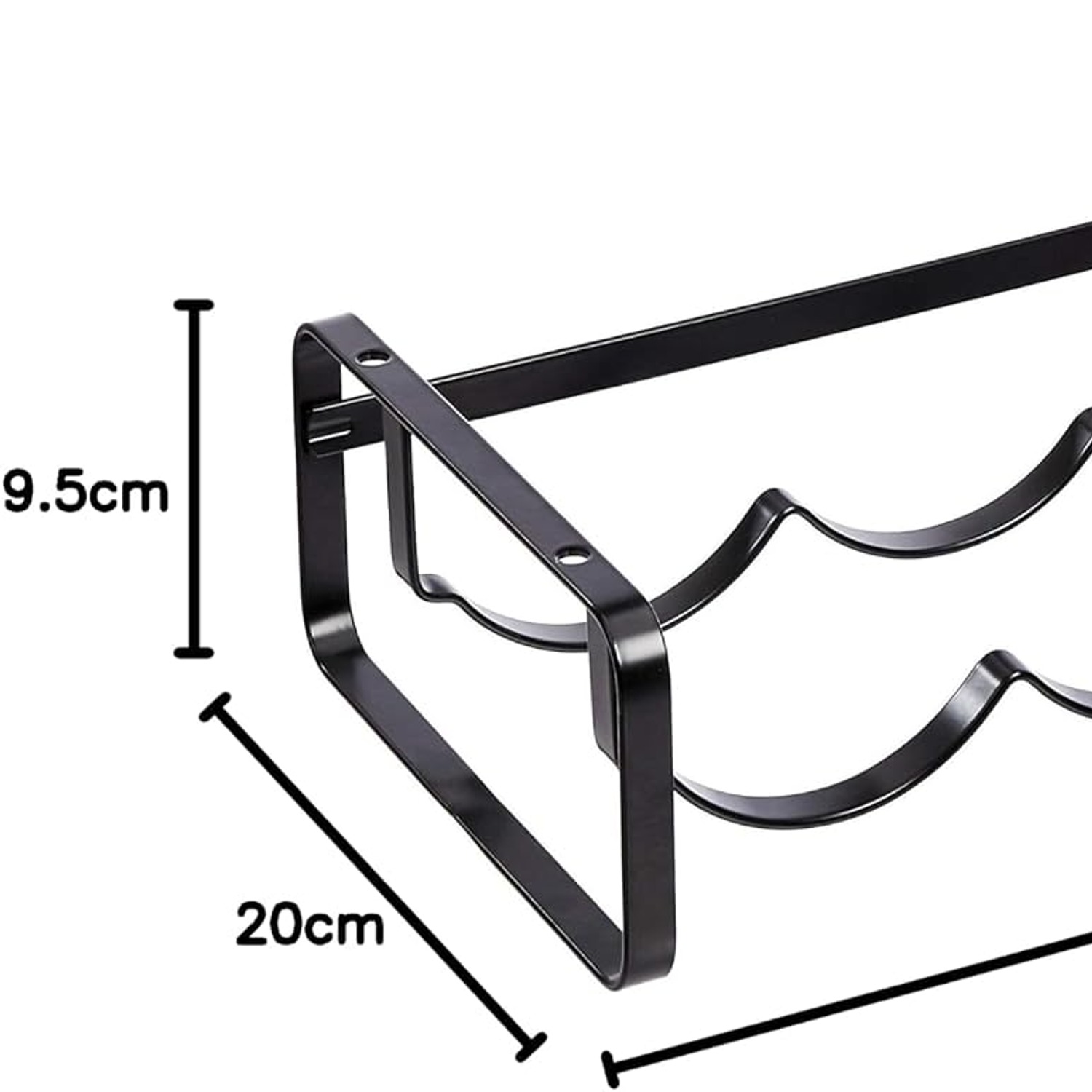
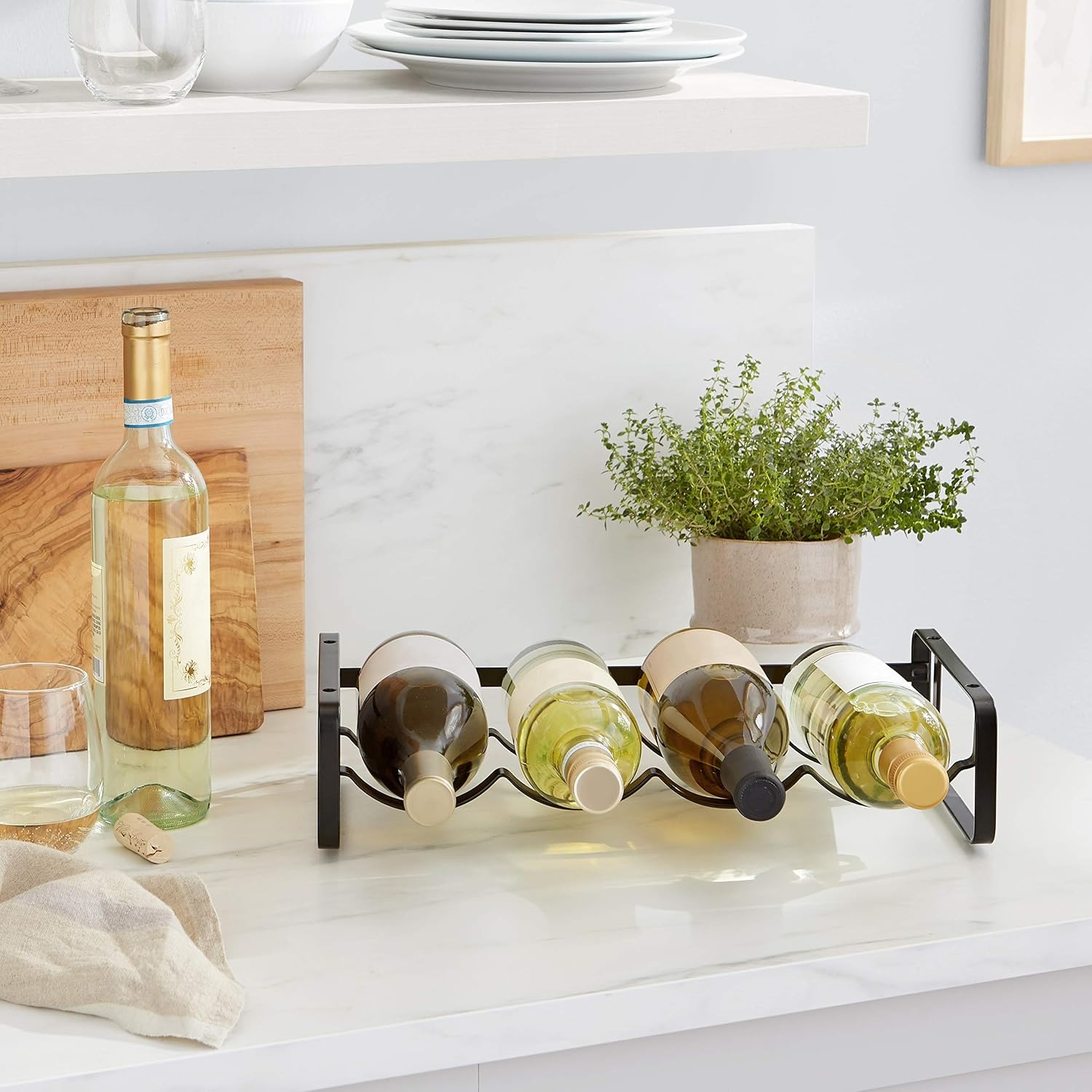
That is the situation a countertop wine rack solves. Not a wine fridge, not a cellar, just a small frame that gives each bottle a proper place to sit. The rack here holds four bottles, measures 40cm wide and 20cm tall, and sits on any flat surface you can spare.
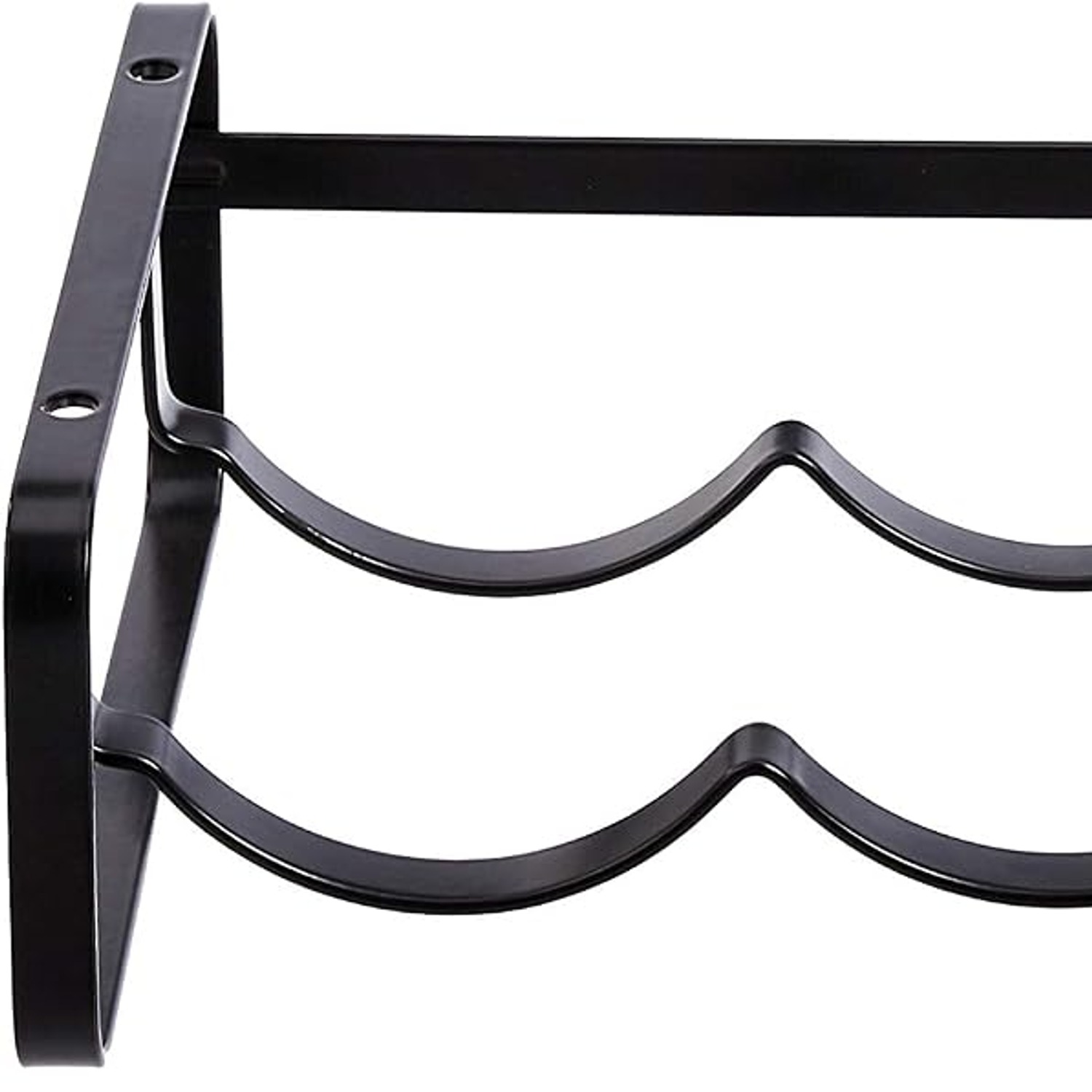
The reason it works better than a cupboard shelf comes down to the shape. The steel is bent into a wave, and each dip in that wave is a cradle. A bottle laid into one settles down and stops. It cannot roll toward the edge, it cannot slide when you pull out its neighbour, and it is not going to tip because it is already lying down.
How the wave design holds bottles
Lay a wine bottle on a flat shelf and it is unstable by nature. The body is a cylinder, the neck tapers, and the weight is uneven. Give it the slightest nudge or a surface that is not perfectly level and it moves.
A recessed cradle fixes that with geometry. The curve of the steel matches the curve of the bottle, so gravity holds the bottle in the lowest point of the dip. Pushing it out takes a deliberate lift rather than an accidental bump. That matters on a kitchen worktop where people are reaching past, wiping surfaces and setting down shopping bags.
Four cradles across 40cm means the bottles sit with a small gap between them. You can pull one out from the middle without disturbing the others, which sounds minor until you have fought with a packed rack and had bottles clatter together.
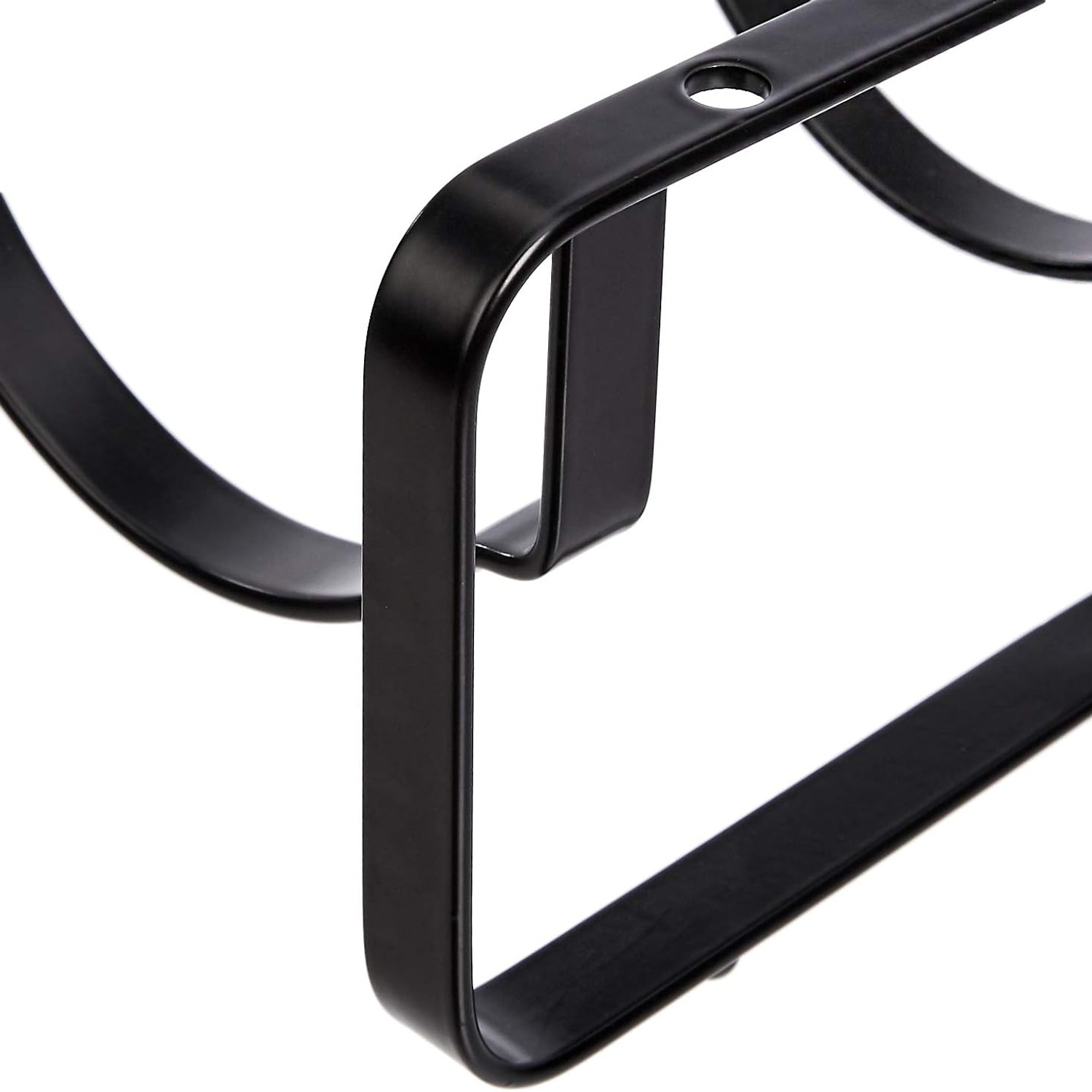
The frame is metal alloy steel with a black finish. Steel matters here because four full bottles is roughly six kilograms. A plastic or thin wire rack flexes under that load. Steel holds its shape, and the black finish is forgiving about fingerprints and dust in a way polished chrome never is.
Why stacking changes the maths
Most wine racks are a fixed decision. You buy a twelve bottle unit, and for the first six months you have six empty slots taking up worktop space. Or you buy a small one, fill it, and then buy something bigger and have a redundant rack in the garage.
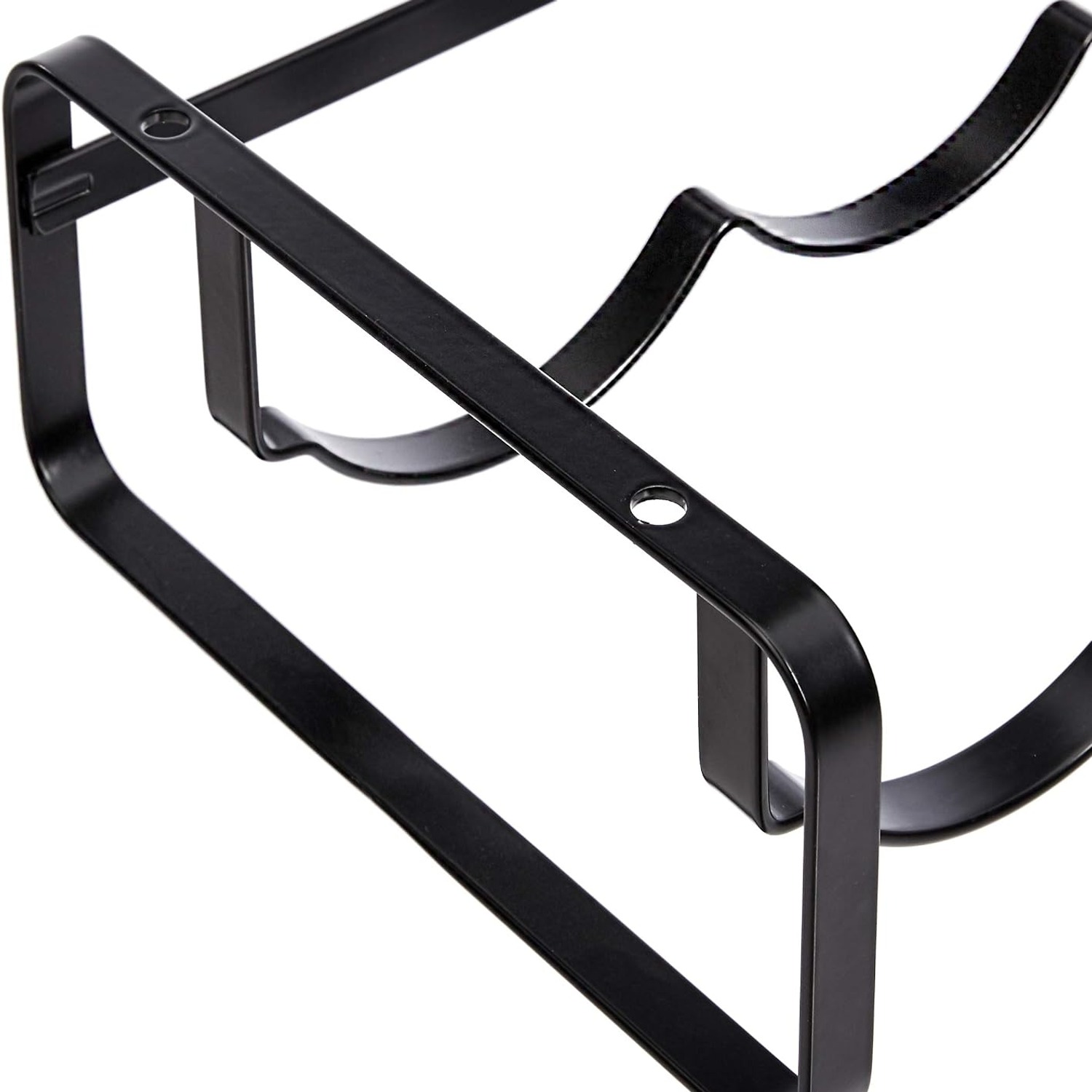
Stackable racks work differently. Start with one, use all four spaces, and when that stops being enough you add a second identical rack on top. Eight bottles, same footprint on the worktop. Need more, add a third. The storage grows with the collection rather than ahead of it.
This suits renters and small kitchens particularly well. You are not committing worktop space to capacity you do not need yet. It also means that if you move house and the new kitchen has less room, you can split the stack and put one rack in a cupboard.
When you do stack, keep the base on a level surface and resist going too tall. A tower of four or five tiers loaded with full bottles gets heavy and top heavy at the same time. Two or three tiers on a solid worktop is the sweet spot for most homes.
Where to put it
Three things age wine badly, heat, light and movement. A countertop rack cannot control temperature the way a cellar does, but you can avoid making things worse by choosing the spot carefully.
Keep it away from the oven, the dishwasher vent and the top of the fridge. All three throw out heat that cycles up and down through the day, and that cycling is harder on wine than a steady warm temperature. Direct sunlight through a window is the other one to avoid, because UV light degrades wine even through tinted glass.
Good spots include a shaded corner of the worktop, a pantry shelf, an open shelf on an interior wall, or inside a cupboard with at least 20cm of clearance. A cupboard is actually ideal from the wine's point of view, dark and stable, and the rack still earns its keep by stopping bottles rolling about when the door shuts.
If your worktop is polished stone or a soft timber, lift the rack when you move it rather than dragging. A thin felt pad or a placemat underneath is cheap insurance.
How to choose between rack types
There are four or five common styles of small wine rack, and they suit different situations.
Wire grid racks are the cheapest and they look it. They also tend to flex under load and leave marks on labels where the thin wire presses in.
Timber racks look warm and solid but take up far more depth, usually 25cm or more. In a shallow kitchen worktop that is often the deciding factor.
Wall mounted racks save worktop space entirely, but you are drilling into a wall and committing to that position. Renters usually rule them out.
Stackable steel racks like this one sit in the middle. The 9.5cm depth is shallow enough for a standard worktop, the steel carries weight without flexing, and nothing is permanent. When you want it somewhere else, you pick it up and move it.
The thing to check before you buy is the width. 40cm sounds compact until you measure your actual available run of worktop and find the toaster and the knife block have already claimed it. Measure first, then decide whether the rack goes on the worktop or on a shelf.
Looking after it
Care is about as simple as it gets. Wipe the frame with a dry cloth to lift dust. If wine or something sticky spills, use a barely damp cloth and dry the steel straight afterwards rather than leaving moisture sitting on it.
Avoid abrasive pads and scouring powders. They will dull and scratch the finish, and once the coating is broken on a steel item it is harder to keep looking tidy.
Every month or so it is worth lifting the rack off and cleaning the surface underneath. At 635 grams empty it is a one hand job once the bottles are out. This is also a good moment to check nothing has worked its way into a cradle, like a stray bread tag or a bottle cap.
Keep the rack out of genuinely damp spots. A laundry, a garage without climate control or the splash zone beside a sink will all shorten the life of any steel item over time.
A few practical habits
Rotate your bottles as you buy. Put new arrivals at one end and drink from the other, so nothing sits forgotten at the back for three years.
Turn the labels out so you can read them without lifting each bottle. It sounds obvious but most people load a rack without thinking about it and then have to pull bottles out one by one to find the one they wanted.
Keep heavy sparkling bottles spread across the rack rather than bunched at one end. Even weight distribution is better for stability, especially if you are stacking.
The short version
This is a four bottle steel rack, 40cm wide, 20cm tall and 9.5cm deep, in black, weighing 635 grams. The wave shape gives each bottle its own cradle so nothing rolls or tips. It needs no assembly and it stacks with matching racks when four spaces are no longer enough.
It is a good fit if you keep a handful of bottles around, you are short on worktop space, and you would rather expand storage gradually than buy a big rack you cannot fill. Check your 40cm of width, keep it away from heat and sunlight, wipe it with a dry cloth now and then, and it will do its job quietly for years.