

The complete guide
How to Choose a Small Countertop Wine Rack
The problem with five loose bottles
Wine has a habit of arriving in ones and twos and then quietly taking over. One bottle on the worktop from last weekend. Two in the pantry behind the pasta. Something a friend brought over that nobody has opened. Before long you own a small collection that nobody can see, and the bottle you actually wanted is lying on its side behind a bag of rice.
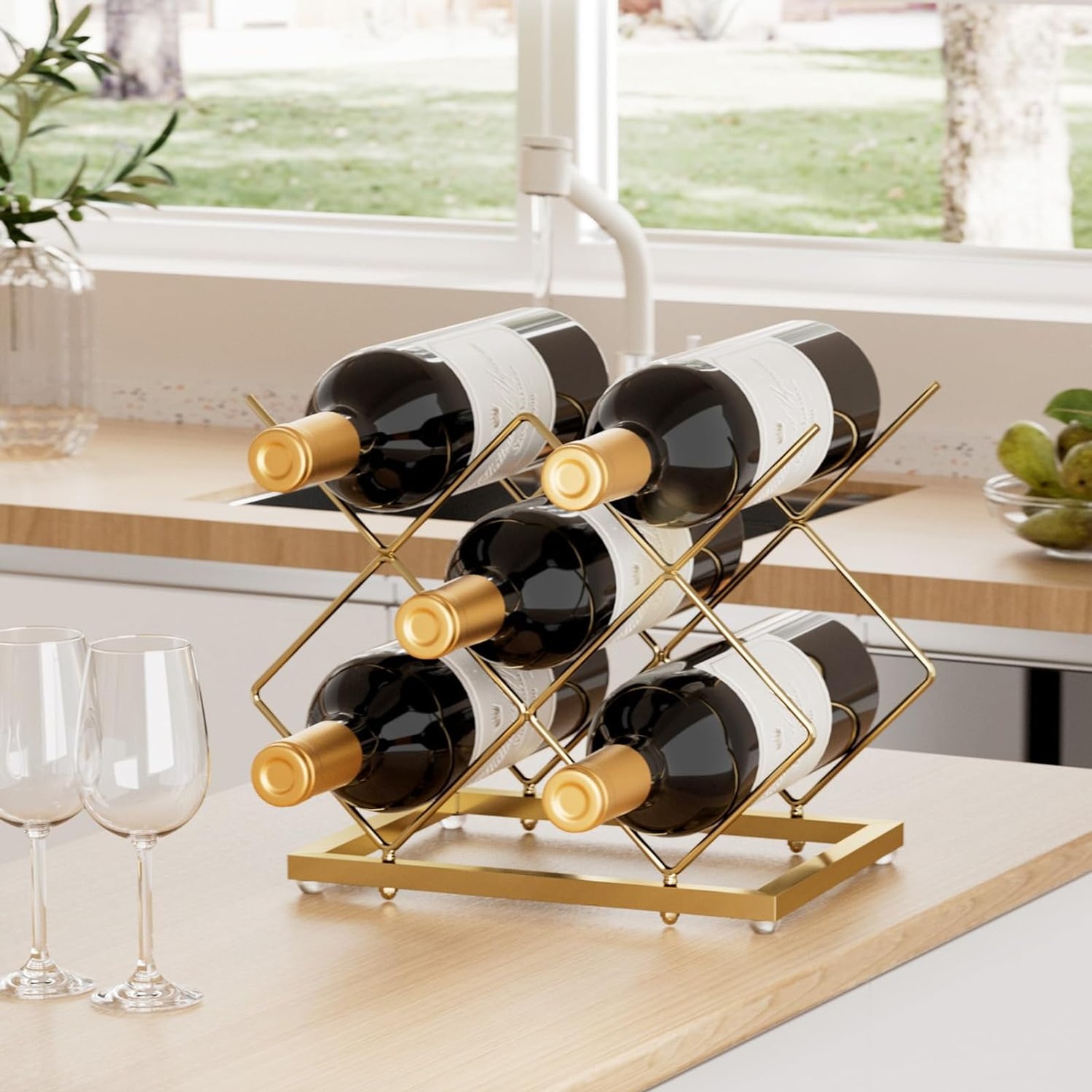
This is not a cellaring problem. It is an organising problem, and it needs a small answer rather than a large one. A five-bottle countertop rack takes the bottles you are realistically going to drink in the next month or two and puts them somewhere visible and stable. That is the entire job. Done well, it also stops the worktop looking cluttered, because five bottles in a frame read as a deliberate arrangement rather than a pile.
How a countertop rack actually works
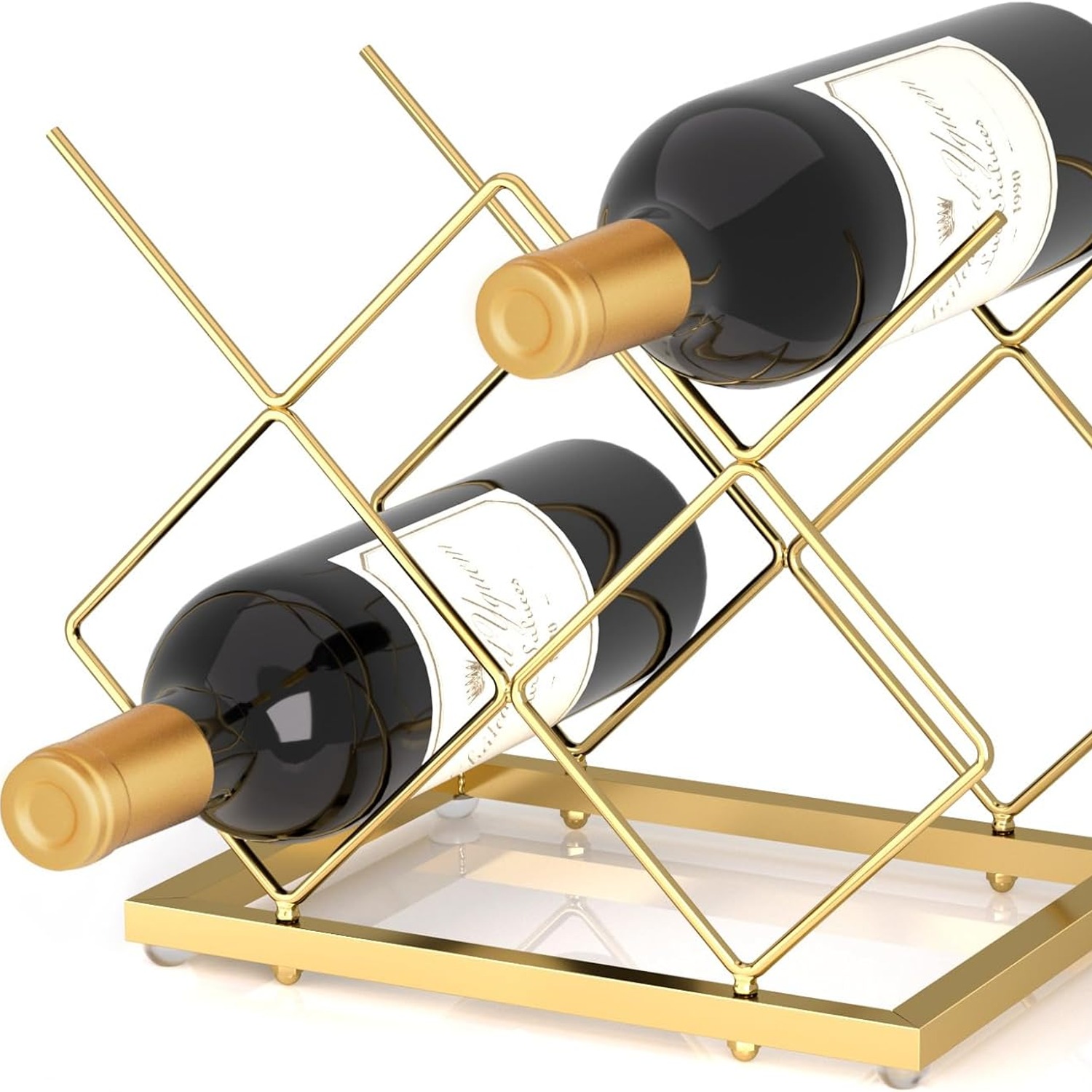
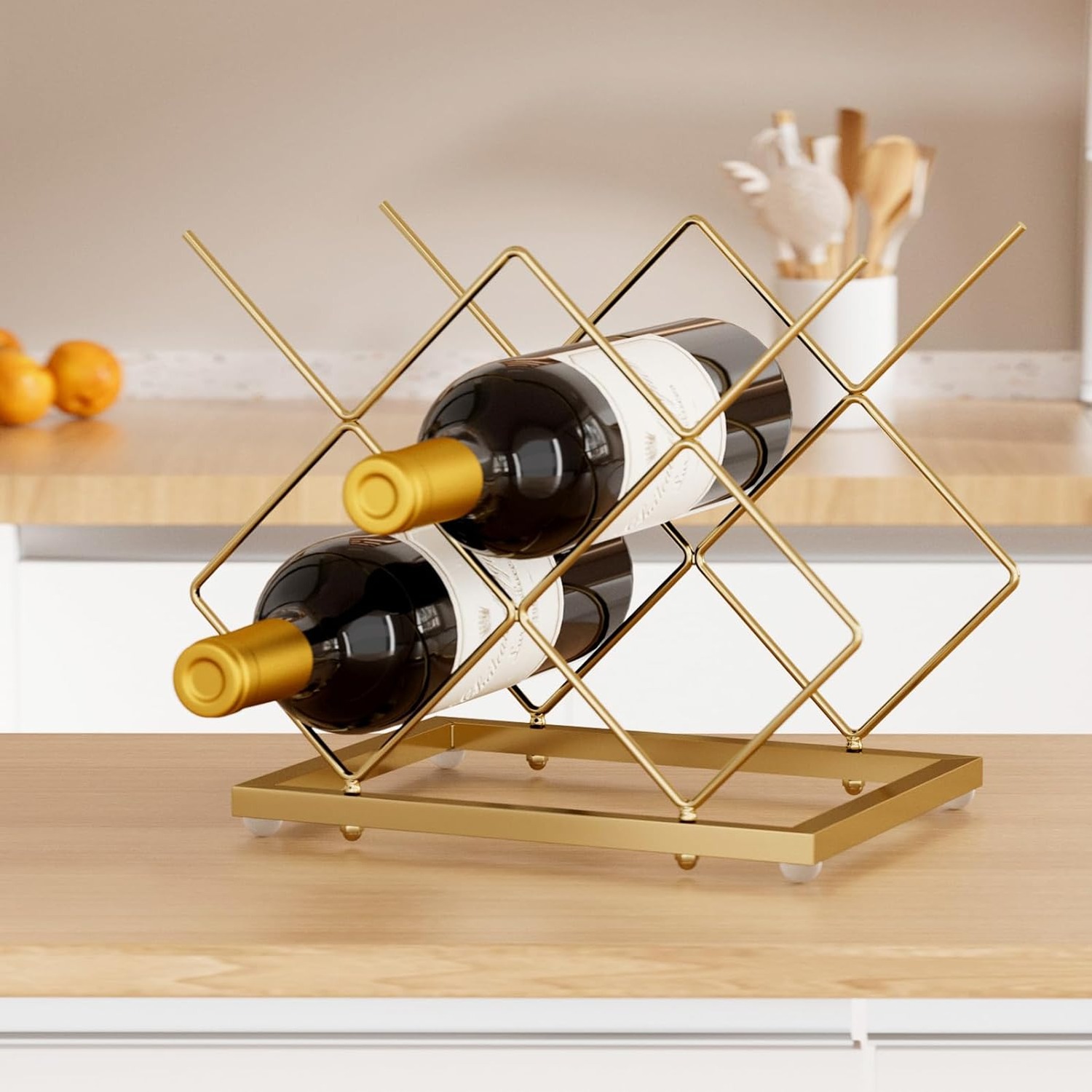
The mechanics are simple. Bottles lie horizontally in cradles formed by the metal frame, stacked so each one is supported along its length. Horizontal storage is the convention for corked wine because the liquid stays in contact with the cork, which keeps the cork from drying out and shrinking. If your bottles are screw-cap, orientation matters far less, but horizontal is still the most efficient way to fit five bottles into a small area.
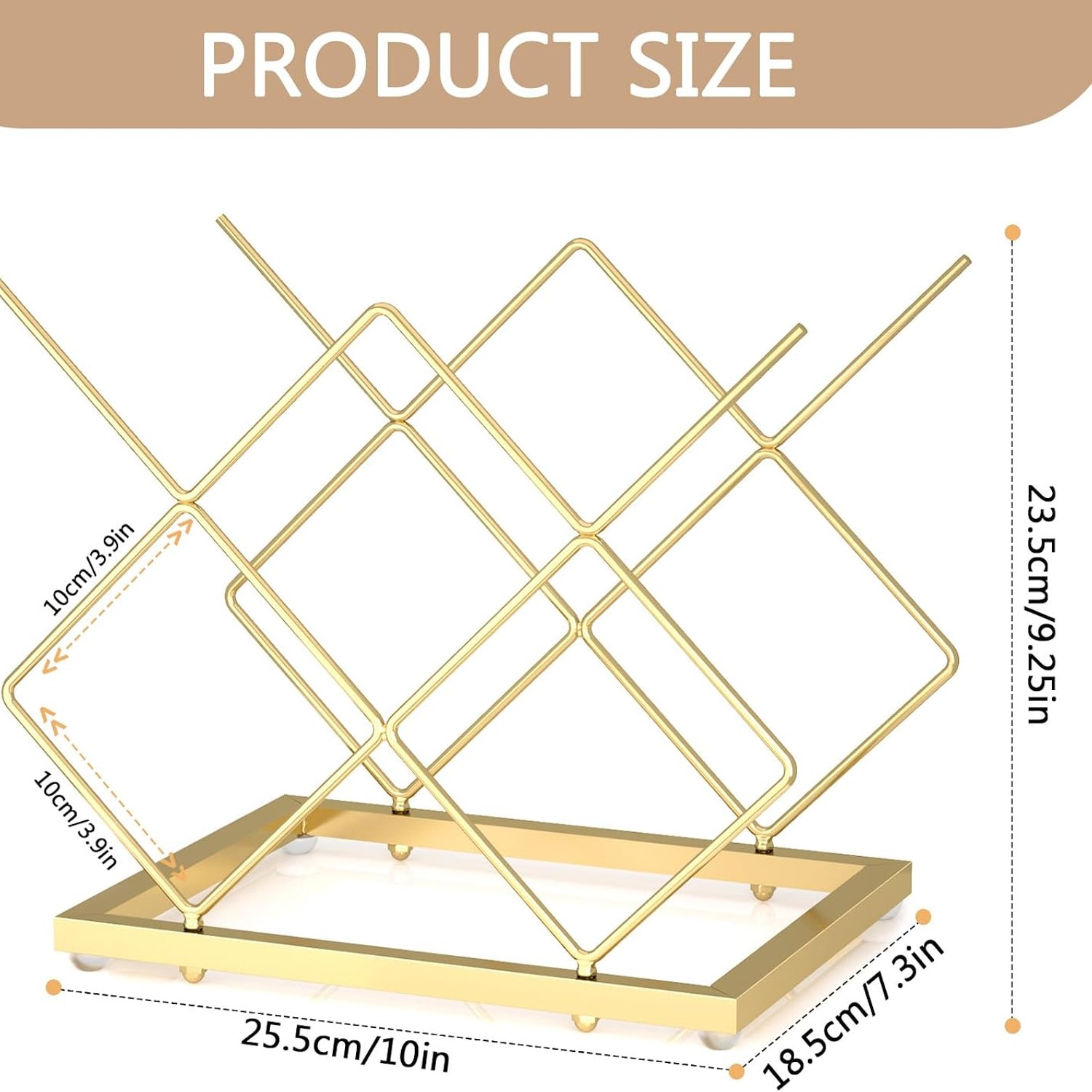
The second thing to understand is footprint. Vertical bottle holders look tidy but need height clearance, and they waste the space between bottles. Horizontal racks use depth instead, which is usually the cheaper dimension on a kitchen worktop. This rack is 25.5 cm deep, 18.5 cm wide and 23.5 cm tall. In practical terms that is slightly smaller than a toaster in width and about the same in height.
Because it is a tabletop mount design, there is no installation. No brackets, no wall anchors, no stud finder, no holes to patch later if you move. You unpack it, assemble it, put it down and load it. Assembly is required, which is worth knowing before it arrives, though with a wire frame of this size it is a short job on the kitchen table rather than an afternoon.
Who this suits
Apartment dwellers get the most out of a rack like this, simply because worktop space is the scarcest thing in a small kitchen. The same goes for renters, since nothing is attached to the building. When you move, the rack goes in a box with everything else.
It also suits people who entertain casually. If you have a bar cart or a sideboard that does double duty on a Friday night, a compact metal rack keeps a few bottles in reach without needing a dedicated wine cabinet. Five bottles happens to be about the right number for a dinner party stock, a couple of reds, a white, something sparkling and a spare.
Collectors with forty bottles are a different case. This is not cellar storage and it does not control temperature or light. If you are laying bottles down for years, you want a cool, dark, stable environment, and a worktop rack is the wrong tool. Think of this as the shelf beside the shelf, the working stock that lives in daily reach.
Gift buyers do well with it too. It is one of those items that is useful to almost anyone who drinks wine, and the brushed gold finish gives it enough of a decorative look that it does not feel like a hardware purchase.
How to choose the right rack
Start with the tape measure, not the photo. Decide exactly where the rack is going to live and measure all three directions. Depth catches people out most often, because worktops look deeper than they are once you account for the splashback and whatever already sits against the wall. You need 25.5 cm of clear depth and 23.5 cm of height. If it is going inside a cabinet, measure the shelf opening rather than the cabinet front.
Next, think about capacity honestly. More capacity is not automatically better. A twelve-bottle rack on a small worktop looks like furniture that wandered into the wrong room. If you typically keep three to six bottles around, five is the right number and the smaller frame will look better. If you consistently have more than that, buy two small racks and place them side by side rather than one oversized one.
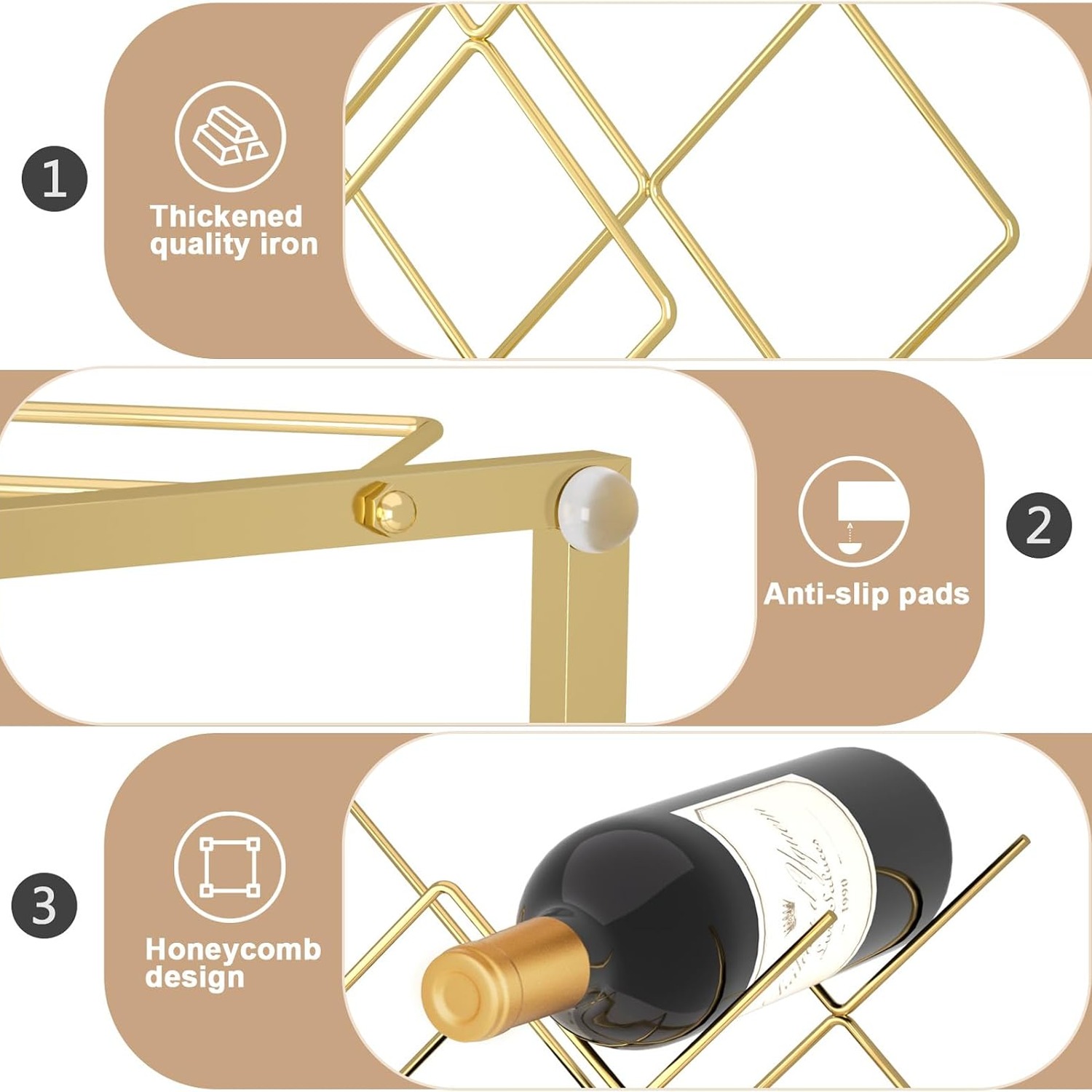
Then consider finish against your room. Brushed gold works with warm timber, white stone, matte black fittings and most neutral cabinetry. It is a softer look than polished brass and less stark than chrome. Brushed surfaces also hide fingerprints better, which matters on something sitting in the middle of a working kitchen.
Material is worth a thought. Metal racks hold their shape, resist moisture better than untreated timber and tend to look cleaner in a small space because the frame is thin. This one is metal, described with a brushed finish. Weight is only 0.55 kg empty, so it is easy to lift and reposition, but remember that five full bottles add real mass once it is loaded.
Finally, check whether you need expansion. This model is not extendable, which keeps the structure simple and stable. If growth is a certainty, factor that in now rather than being surprised later.
Placement makes a difference
Where you put a wine rack affects both how it looks and how the wine keeps. Heat and light are the two enemies. Avoid the spot beside the oven, the top of the fridge where warm air rises, and any surface that gets direct afternoon sun through a window. None of these will ruin a bottle you plan to drink next week, but they are hard on anything you keep for a few months.
A shaded corner of the worktop, an interior shelf, a sideboard in the dining room or the lower deck of a bar cart are all better choices. Keep the rack back from the edge so a brushing hip does not catch it, and make sure the surface is level. A slightly tilted worktop is enough to make bottles roll uneasily in their cradles.
If you are loading it, work from the bottom up. Putting the heaviest bottles low keeps the centre of gravity where it belongs, which is the same reason you do not pack a backpack from the top.
Looking after it
Care here is almost nothing. Wipe the frame with a dry cloth when it gets dusty. If something sticky lands on it, a barely damp cloth followed by an immediate dry-off will handle it. Skip the scouring pads and the aggressive spray cleaners, because abrasives and strong chemicals are what dull a brushed metal finish over time.
Lift bottles in and out rather than dragging them, which keeps both the glass and the frame unmarked. Every few months, give the assembled joints a quick check to confirm nothing has worked loose. That is the whole maintenance routine.
The short version
This is a small, light, metal rack that holds five standard wine bottles on a flat surface. It measures 25.5 by 18.5 by 23.5 cm, weighs 0.55 kg empty, comes in a brushed gold finish with a hexagonal modern shape, and needs assembling before first use. There is no wall mounting and no tools required for installation.
Buy it if you keep a handful of bottles around and want them visible, tidy and within reach. Measure your space first, keep it out of direct sun and heat, and wipe it with a dry cloth now and then. For a kitchen worktop, a bar cart or a sideboard that needs to look sorted without taking up much room, it does exactly what you need and not much else.