
The complete guide
How to Choose a Countertop Wine Rack That Actually Fits Your Kitchen
The pile of bottles problem
Most people do not have a wine cellar. What they have is a few bottles on the pantry floor, one on top of the fridge, two standing up in a cupboard behind the pasta, and a bottle of something nice they are saving that they cannot currently find.
That is the problem a countertop wine rack solves. Not grand storage. Just getting a handful of bottles into one place where you can see them, reach them, and not knock them over with the vacuum cleaner.
The trouble with a lot of racks is that they fix the problem and create a new one. They are permanent. Once a rack lands on your worktop, that worktop space is gone whether there are bottles in it or not. A folding wine rack sidesteps that. Bottles in, rack out. Bottles gone, rack folded and in a cupboard.
How this rack works
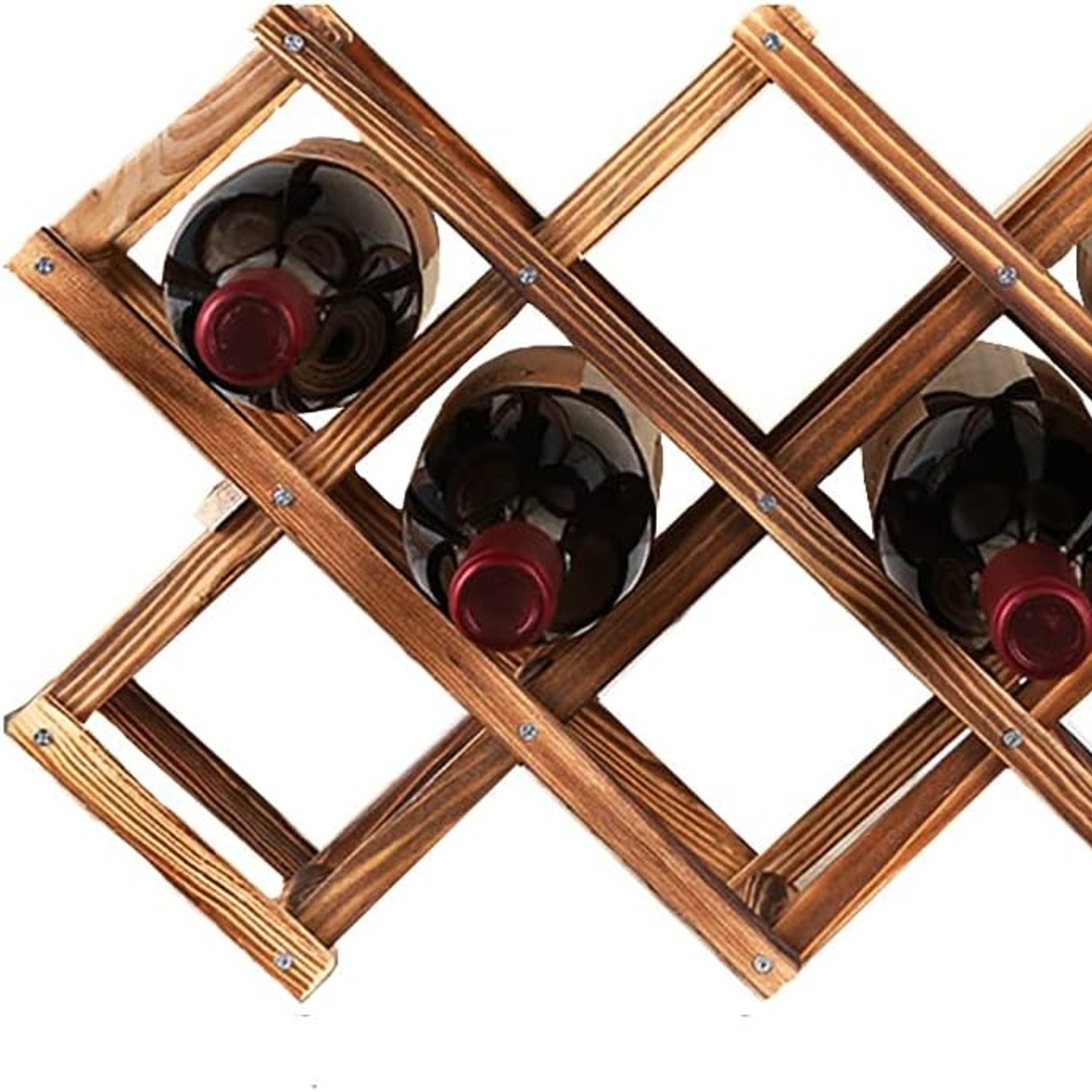
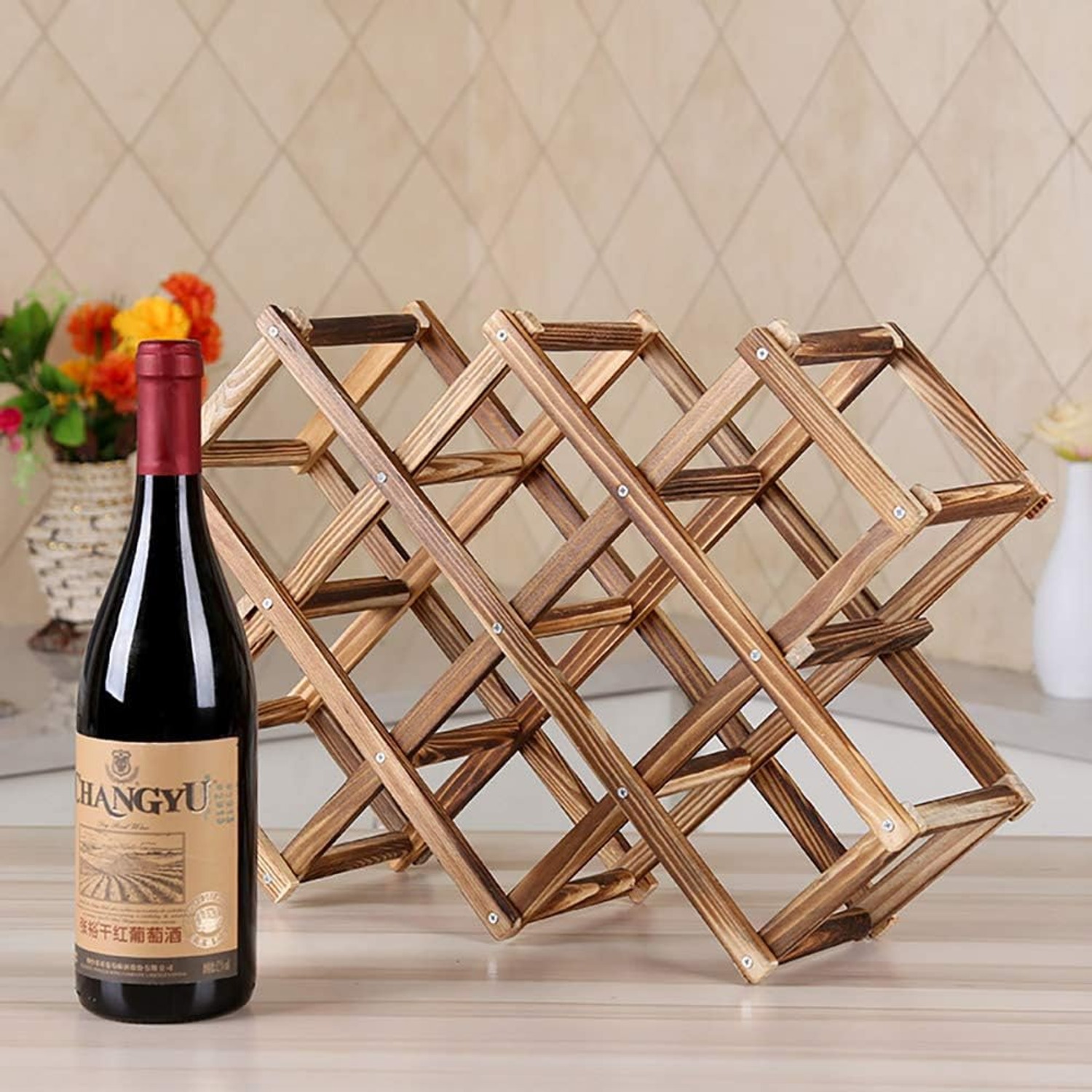
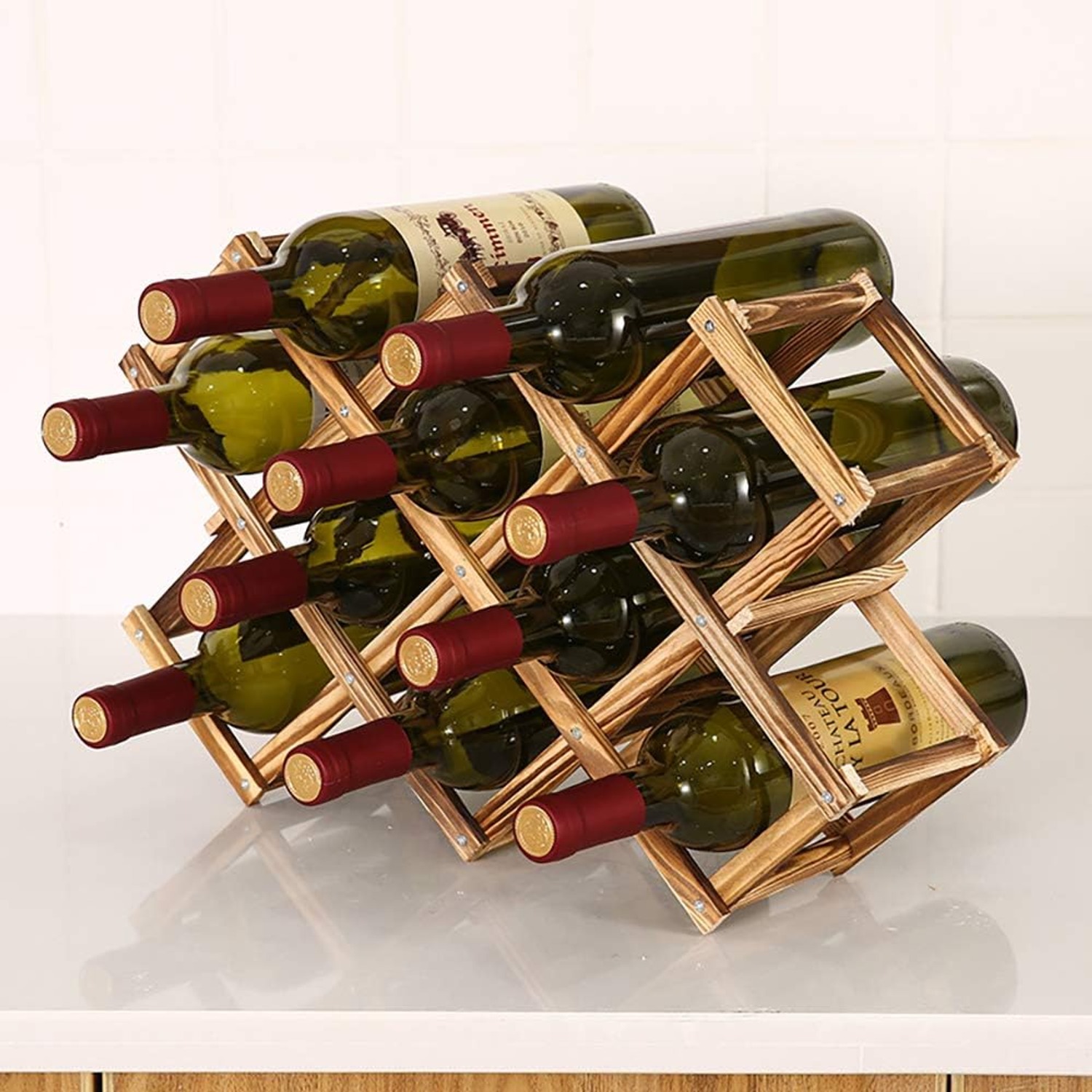
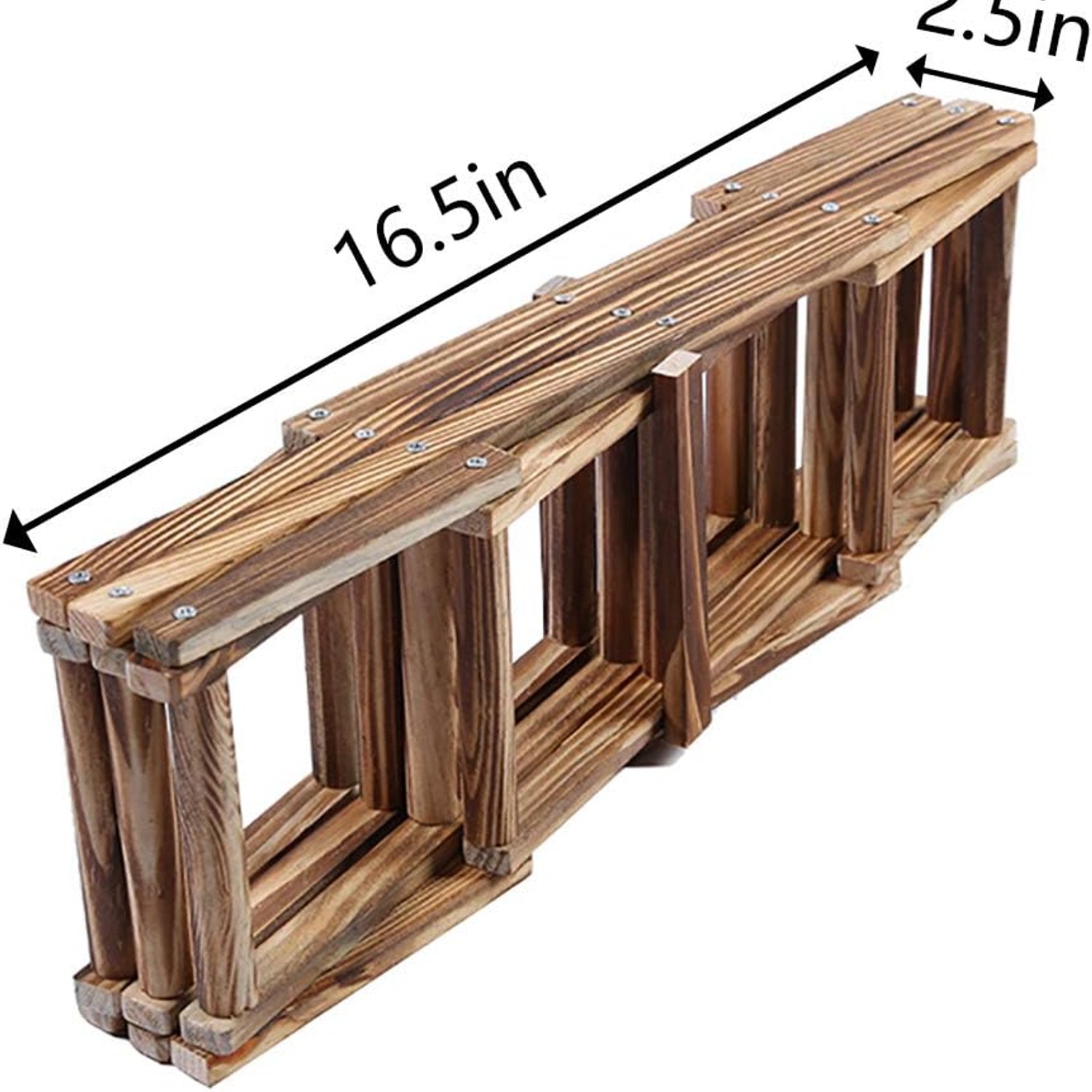
The design is simple. Eight slots in a hinged timber frame, holding up to ten bottles when loaded. Bottles lie on their side rather than standing up. The whole frame opens out like a concertina, and when you are done it closes flat.
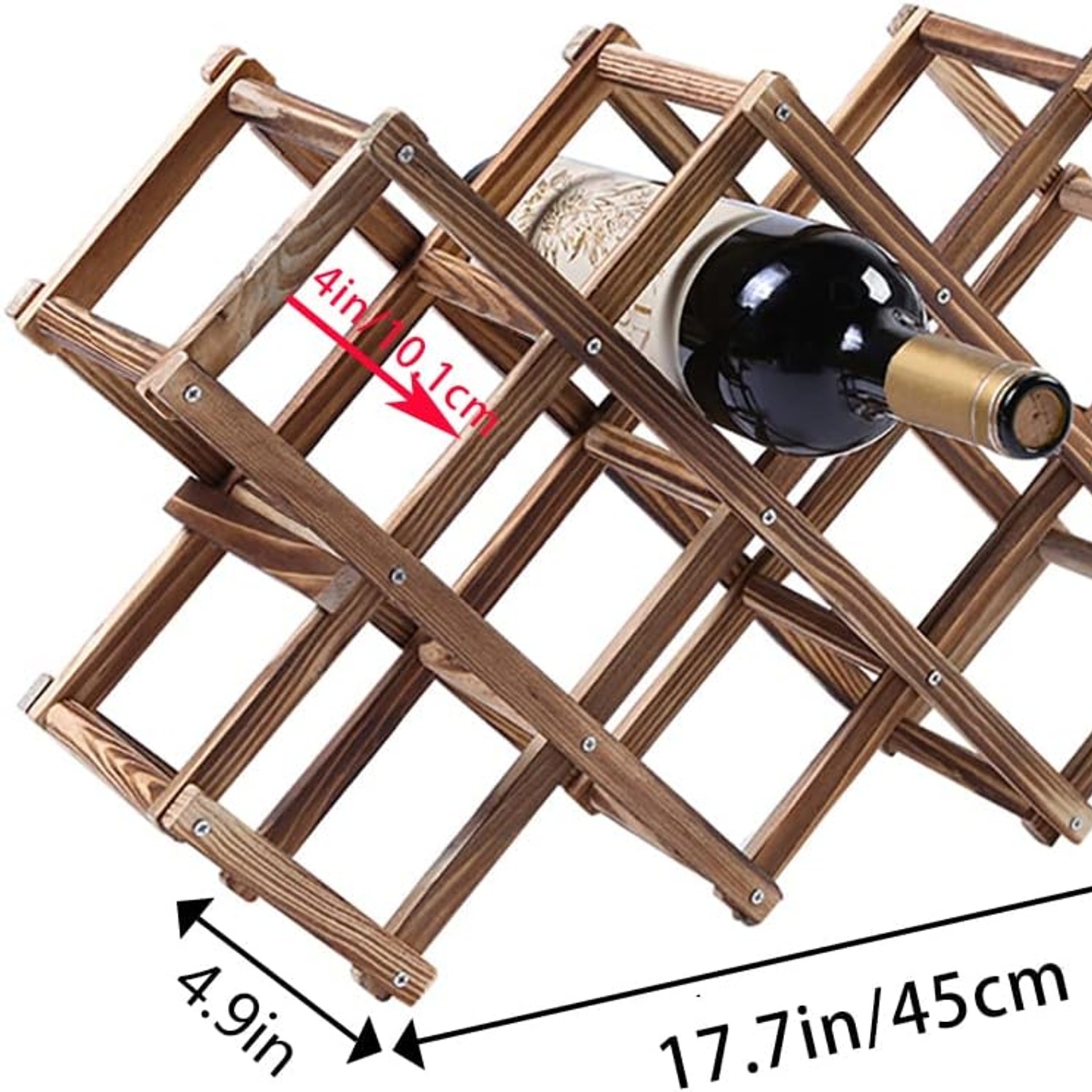
Set up, it measures 12.7 cm deep, 30.5 cm wide and 44.5 cm high. The listing also quotes a size of 12.2 x 17.7 x 4.9 inches. Those two sets of numbers describe the same product in different orientations, so the practical takeaway is this: it is roughly a third of a metre across and does not need much depth. That matters on a narrow worktop or a shallow shelf.
It weighs 540 grams empty. Add ten full bottles and you are looking at around twelve to thirteen kilos sitting on whatever surface you chose, so pick something solid. A sturdy sideboard or a stone worktop is fine. A flimsy folding side table is not.
There is no assembly. It comes folded, you open it, you load it. That sounds like a small thing until you have spent an evening with an allen key and a set of instructions translated by somebody who had never seen the product.
Why bottles lie down
If you have ever wondered why wine shops and restaurants rack bottles on their side, it comes down to the cork.
Natural cork is bark. It stays flexible and airtight while it is damp. Stand a bottle upright for a long stretch and the cork dries out, shrinks slightly, and lets a trickle of air into the bottle. Air is what turns wine flat and dull. Lay the bottle down and the wine stays in contact with the cork, so the cork stays swollen and the seal holds.
For a bottle you will drink this weekend, none of this matters. For anything you are keeping for months, it does. Horizontal wine bottle storage is the cheap insurance policy.
Screw caps do not care either way. If your collection is mostly screw cap, lay them down anyway because the rack is designed for it and they will be easier to read and grab.
Who this suits
This is a rack for people with a small to medium number of bottles and not much room to spare.
Apartment kitchens are the obvious fit. So are share houses, where a worktop wine rack gives everyone a clear place to put their own bottles instead of leaving them in random cupboards. People in rentals like the folding design because there is nothing to mount and nothing to patch when they move out.
It also works well as a floor stand. Tuck it inside a pantry, in the bottom of a cupboard, or against a wall in a dining room. The mounting type covers both table top and floor use.
Beyond homes, small bars, cafes, restaurants and hotel rooms use racks this size for a short display list, the bottles the staff reach for most or the ones a guest might buy from the room. The brown timber and brushed finish keep it looking like a piece of furniture.
And it is a reliable present. A wine rack gift is one of the few homewares items that almost nobody already owns two of. It folds flat for wrapping and posting, and it looks far more considered than another bottle on its own.
How to choose between racks
A few questions sort most of it out.
How many bottles do you actually keep at once? Count the current pile, then add two. If that number is under ten, this rack covers you. If you routinely hold twenty or more, you want either two racks or a cabinet instead.
Does the space need to be reversible? This is the big one. If the surface you are putting it on has a second job, like prep space for cooking, you want a compact wine rack that folds. If the spot is dead space you will never use for anything else, a fixed rack is fine too.
What is the surface like? Depth is the usual catch. A rack that is 12.7 cm deep fits on shelves and narrow worktops where a chunkier unit will overhang. Measure before you order, every time.
How are the bottles shaped? Standard 750 ml bottles are the design target. Wide sparkling bottles and some heavy Burgundy shapes take more room than the slots are built for, so if your collection skews that way, expect to fit fewer than ten.
Will it move around? If the answer is yes, weight and fold matter. At 540 grams this is a portable wine rack you can throw in the car for a weekend away without thinking about it.
Looking after it
Timber care is not complicated. Wipe it with a dry cloth, which is the care guidance given for this product. Dust settles along the top edges of the slots, so a quick pass every week or two is enough.
Spills are the main risk. Wine, water from a chilled bottle, condensation on a summer day. Blot anything wet straight away and let the wood dry fully before you reload. Liquid sitting on timber is what leaves rings and dull patches.
Keep it out of direct sun. Sunlight fades wood finishes and it is also hard on wine, so a shaded corner is better for both. Same with heat. Do not park it next to the oven or above a radiator.
Damp is the other enemy. A humid laundry or an uninsulated garage will not do a timber rack any favours over a year or two. A dry cupboard is the right storage spot when it is folded away.
And when you fold it, clear the bottles first. It sounds obvious, but the hinge is designed to collapse and it will do exactly that if you tip it while loaded.
A note on expectations
This is an open rack, not a wine fridge and not a sealed cabinet. It does not control temperature, it does not block light, and it does not lock. What it does is hold ten bottles neatly in a small footprint and then get out of the way.
If you are building a serious collection of bottles you plan to age for years, you want a cool dark space with stable temperature, and a rack is only one part of that. If you are like most people, with a shelf of nice things you will open within the next few months, this is exactly the right amount of equipment.
The short version
Ten bottles, eight slots, solid wood with a brushed brown finish. Measures 12.7 by 30.5 by 44.5 cm, weighs 540 grams, and needs no assembly at all. Bottles lie flat so corks stay damp. It stands on a counter, a shelf or the floor, and when you want the space back the whole thing folds down and goes in a cupboard.
Measure your worktop, count your bottles, and if the numbers line up, this is a straightforward piece of kit that does one job properly.