

The complete guide
How to Choose a 12-Bottle Freestanding Wine Rack
The pile of bottles problem
Most wine collections do not start as collections. They start as three bottles from a dinner, two from a trip, one a neighbour brought over, and a case someone bought on special. Within a few months there is a cardboard box on the laundry floor and a row of bottles lined up at the back of a worktop.
That arrangement causes small annoyances every week. You cannot see what you have, so you buy another bottle of something you already own. Bottles standing upright dry out their corks. Anything on a worktop is in the way when you need to chop vegetables, and anything in a box gets knocked when you walk past with a basket of washing.
A rack solves this by giving the bottles one address. Twelve is a useful number. It is more than a casual drinker keeps on hand and less than a dedicated cellar, which makes it the size most households actually need.
What this rack is
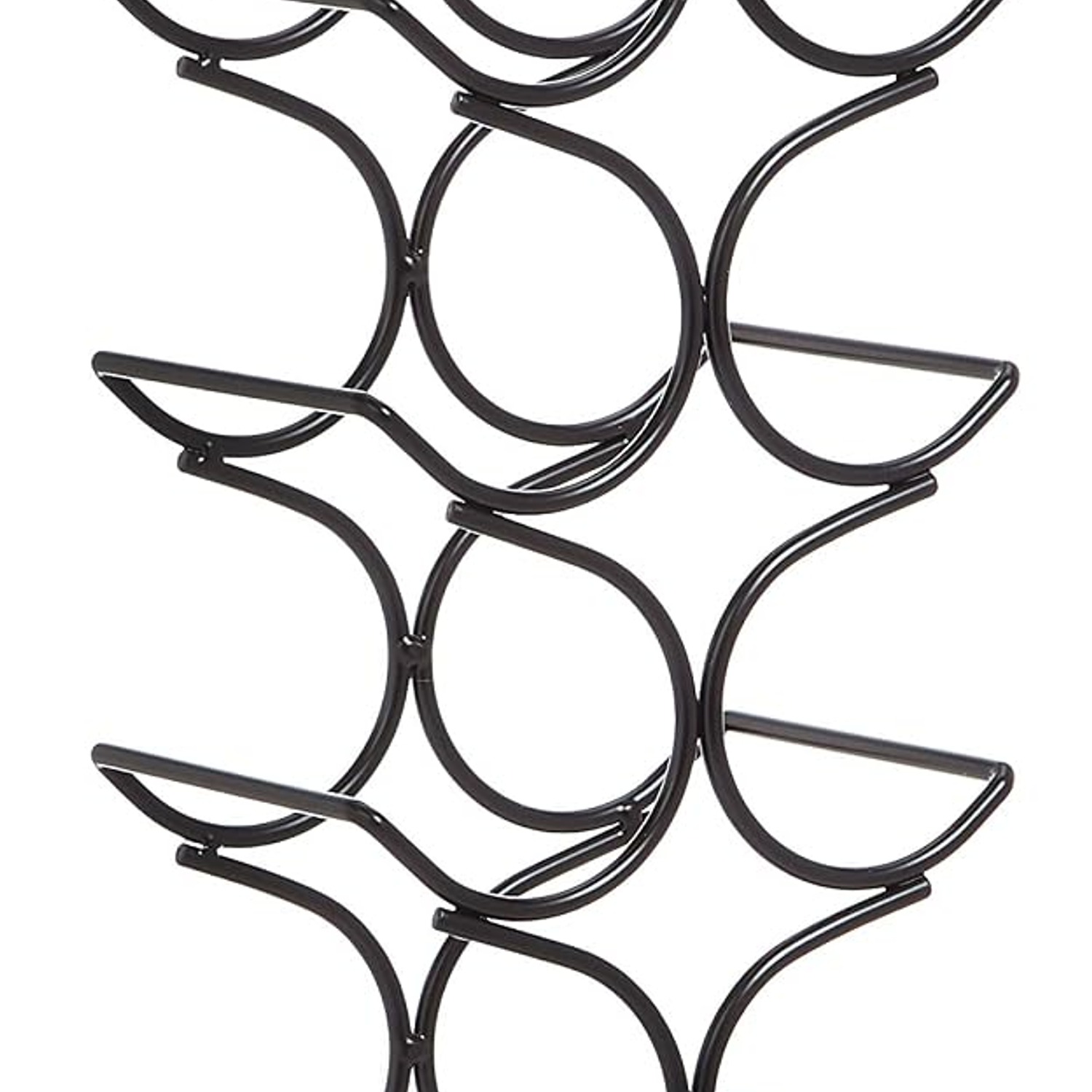
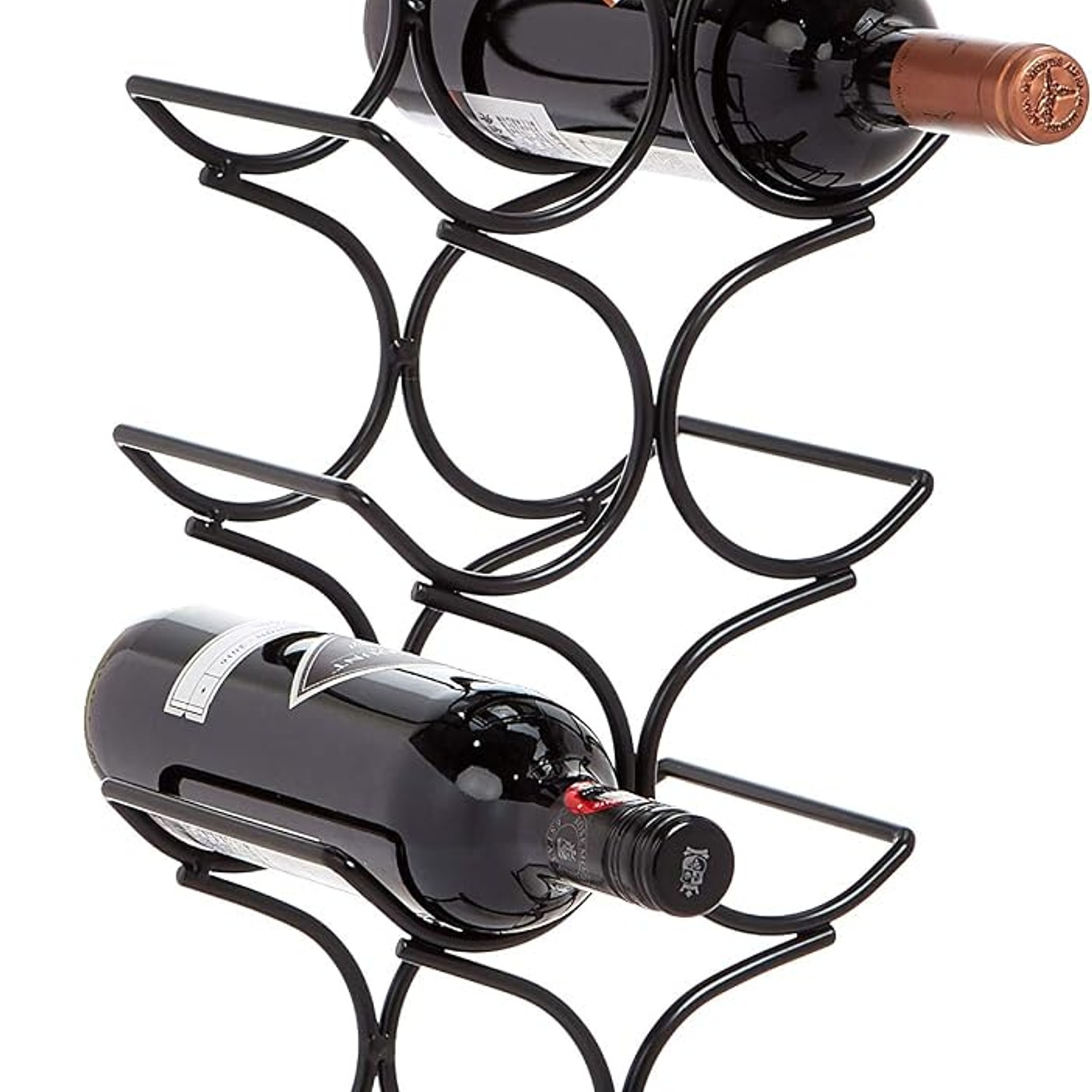
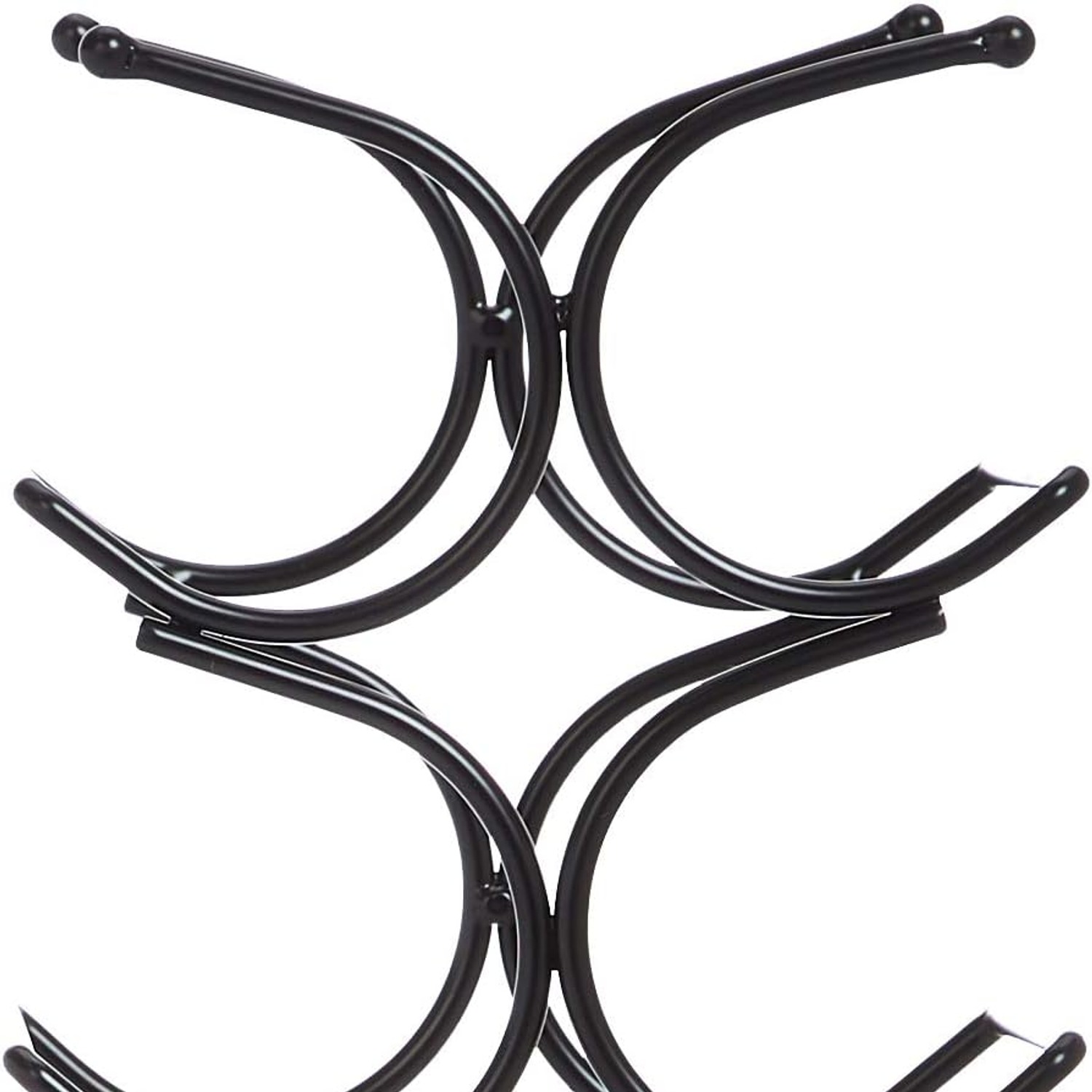
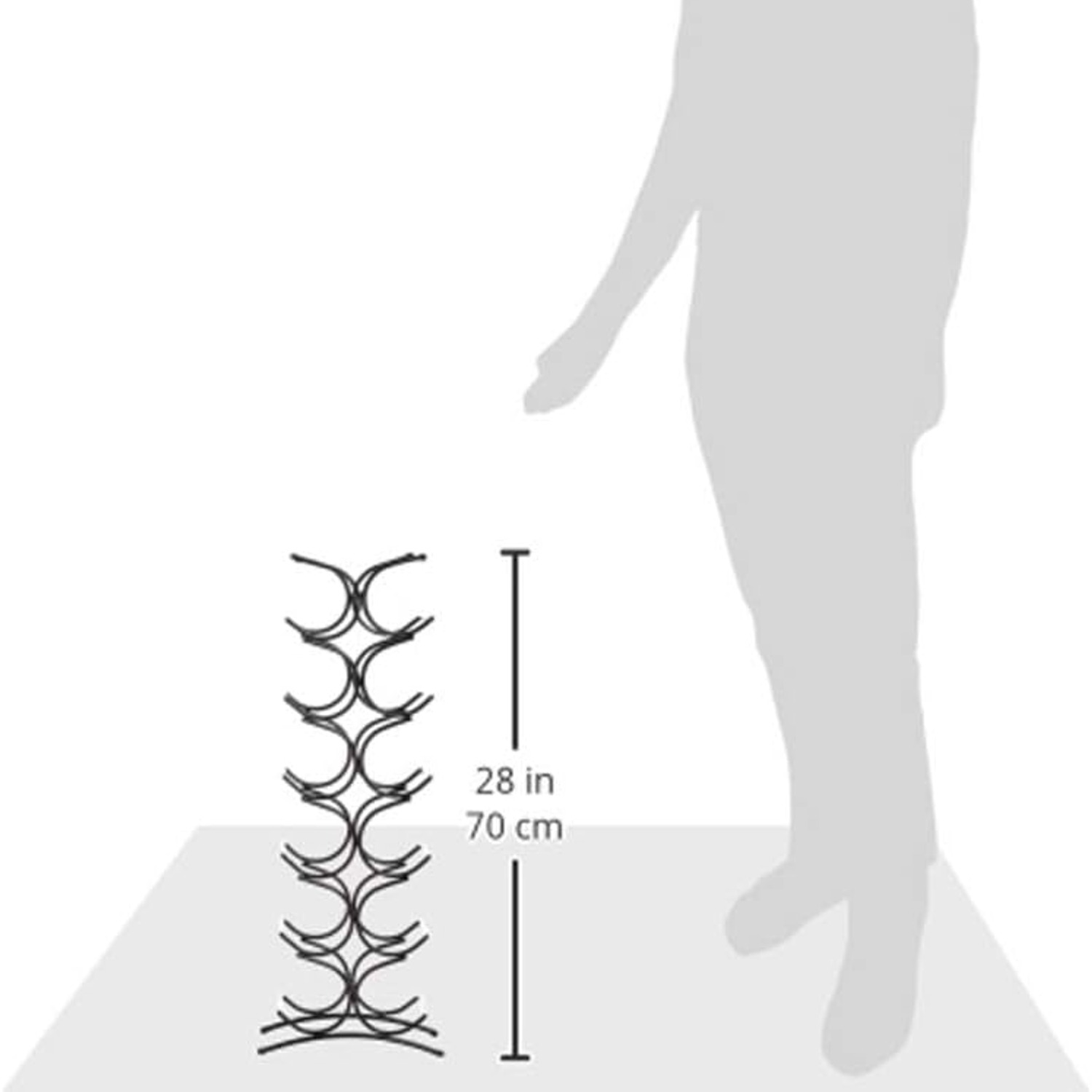
It is a tall, narrow metal frame in black that holds twelve bottles in a vertical stack of cradles. The footprint is 16 cm deep and 24.9 cm wide, and it stands 67.8 cm high. Empty it weighs 2.09 kg.
There is no assembly. It comes out of the carton in one piece, which sounds like a small thing until you remember the last flat-pack item you built on the kitchen floor with an allen key and a diagram.
The finish is black and the style is plain. That combination does a lot of quiet work. A black metal frame does not compete with your cabinetry, your splashback or your dining table. It reads as part of the room instead of a feature.
Where it actually goes
The depth is the number worth paying attention to. At 16 cm, the rack fits in places a wine cabinet never will.
The gap between a fridge and the wall is the classic spot. So is the end of a kitchen worktop, the dead corner of a dining room, the floor of a walk-in pantry, and the space beside a sideboard. Under the stairs works too, provided the ceiling is above 68 cm where the rack will stand.
Before you order, do this. Take a tape measure and mark out 25 cm along the wall, then 16 cm out from it, then check that you have at least 70 cm of clear height above that patch. If all three numbers work, so does the rack. This ten-second check prevents the most common reason people send a wine rack back.
One thing to avoid is a spot right beside the oven, the dishwasher vent or a sunny window. Heat and light are rough on wine no matter how good the rack is.
Worktop or floor
The product details list the mounting type as tabletop, and at under 70 cm high it works that way on a wide worktop or sideboard. The top bottle then sits at a comfortable eye level.
Standing it on the floor also works, and that is how many people use a rack of this height. On the floor the top of the rack lands around hip height for most adults, which is easy to reach into without crouching.
The decision usually comes down to worktop space. If your counters are already full, put it on the floor. If you have a long sideboard doing nothing, the worktop position keeps the floor clear for traffic.
Loading it properly
There is a right order. Fill the bottom cradles first and work up. Keeping the heaviest load low means a tall rack stays planted, especially on a timber floor or a rug.
Bottles rest on their side in the cradles. For anything with a natural cork, that is what you want, because the wine stays in contact with the cork and the cork stays swollen enough to seal. Screw caps do not care either way, so lay those down for the sake of tidiness.
Mixed bottle shapes are worth a thought. Standard Bordeaux bottles are the narrowest. Burgundy bottles and sparkling bottles are wider at the shoulder. A full dozen of standard bottles fits comfortably. A dozen that includes several wide sparkling bottles may be a tighter squeeze, and you might find eleven sits better than twelve.
If you are specifically after the best wine rack for champagne bottles, mix the wide ones through the rack rather than stacking them all together.
How it compares to other storage
A wine cabinet holds more, but it needs serious floor space and usually costs several times as much. A wall-mounted rack saves the floor entirely, but it means drilling into studs or masonry and committing to a position forever.
A countertop rack of four or six bottles is cheap and easy, and it fills up in about a month.
A freestanding rack of this size lands in the middle. It holds a realistic amount, it does not need any fixing, and you can pick it up and move it when you rearrange the room or move house. For renters especially, that lack of drilling matters.
Caring for the finish
The product care instruction is simple. Wipe it with a dry cloth. Kitchen dust and the fine film that drifts off a stovetop settle on everything, and a dry microfibre cloth every couple of weeks is enough to deal with it.
If something sticky lands on the frame, use a cloth that is barely damp and dry the metal straight after. Standing moisture is the enemy of any painted metal. Skip the abrasive pads and the strong solvent cleaners, because both can take the shine off a black finish.
When you move the rack, lift it rather than dragging it. Dragging across tiles or concrete is the quickest way to scratch the feet and the lower frame.
Keep it somewhere dry. The supplier record does not list a corrosion rating, so an outdoor patio or a damp unventilated cellar is not a safe bet.
Who it suits
Apartment dwellers get the most from it, because the narrow depth buys storage where there genuinely is none. Renters benefit too, since nothing has to be fixed to a wall.
It also suits anyone who has just started paying attention to what they drink. Twelve bottles is enough to hold a small range, a couple of everyday reds, something white in reserve, a bottle for a gift and one being saved for a reason.
It is a good gift for the same reason. Someone searching for the best no assembly wine rack is usually buying for a person who will not thank them for a flat pack.
It is not for a serious cellar. If you are storing fifty bottles with temperature control in mind, this is the wrong product category entirely.
What we do not know
Two things are worth being straight about. The supplier record lists the country of publication as China but does not state a separate country of manufacture, and it does not specify the grade or thickness of the metal. There is also no stated warranty.
We would rather flag those gaps than invent details. What is confirmed is the capacity, the dimensions, the weight, the material type, the finish and the fact that no assembly is needed, and those cover the decisions most buyers are making.
The short version
Twelve bottles, 16 cm deep, 67.8 cm tall, black metal, no assembly, 2.09 kg empty. Measure your gap, check the three numbers, load it from the bottom up, keep it out of the sun and wipe it with a dry cloth now and then.
If your bottles are currently living in a cardboard box, this fixes that for less than the price of two decent bottles of what goes in it.