
The complete guide
How to Choose a Countertop Wine Rack That Actually Fits Your Kitchen
The problem with bottles on the worktop
Wine has a way of spreading out. One bottle ends up next to the kettle, two more lean against the back of a cupboard, a gift bottle sits in its box on the floor of the pantry because there is nowhere else obvious. None of it is a disaster, but it does mean you cannot see what you own. People buy a second bottle of something they already have, or forget about a nice one for two years.
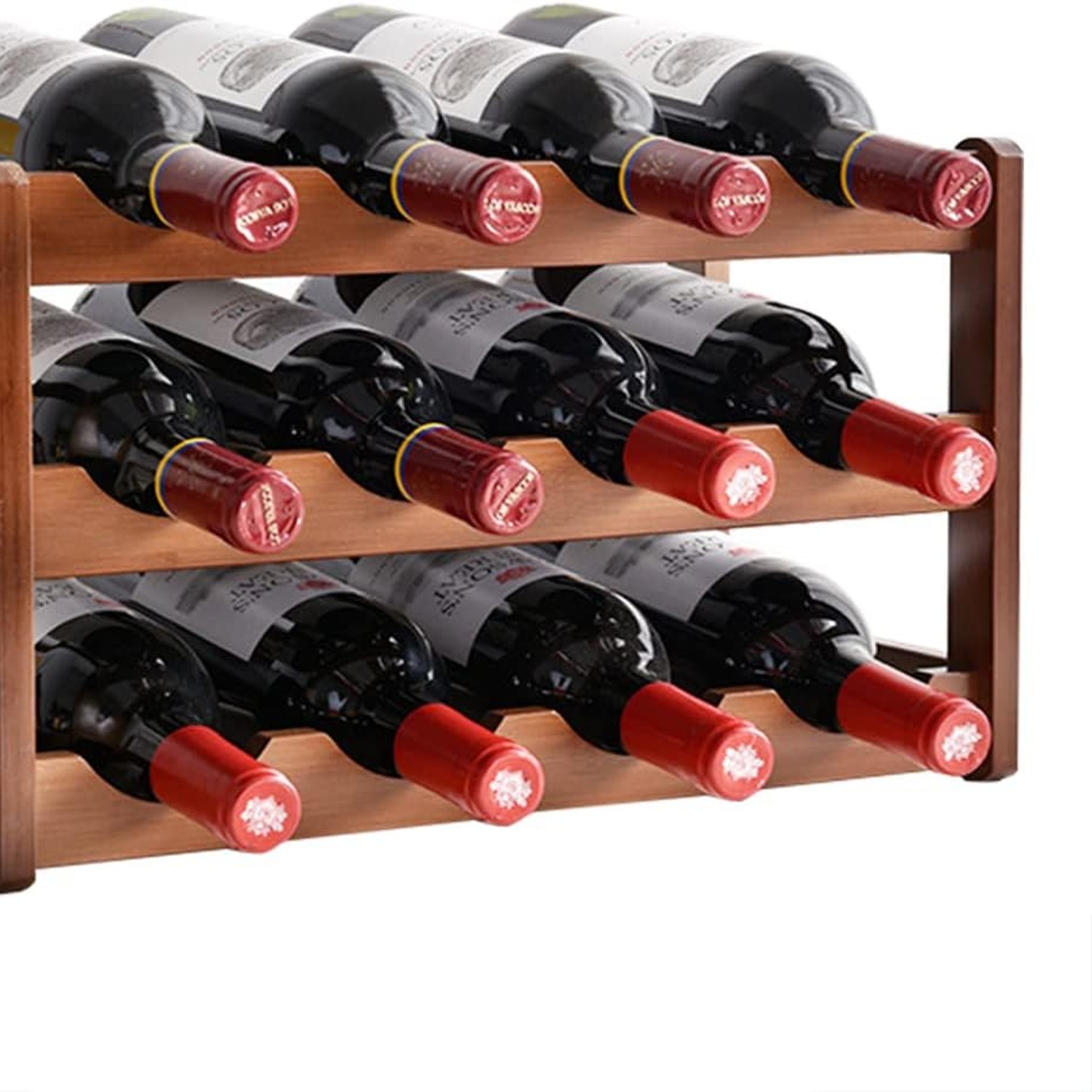
A countertop rack fixes that by giving bottles one address. Twelve bottles on three tiers takes up a patch of worktop about the size of a chopping board, and every label faces out where you can read it. That visibility is the real win. Storage is almost a side effect.
The other thing a rack does is get bottles lying down. Loose bottles tend to stand upright because that is how they come home from the shop. Upright is fine for a week. Over months, a cork that is not touching wine can dry, shrink and let air past. A rack with horizontal cradles solves that without you having to think about it.
How this rack works
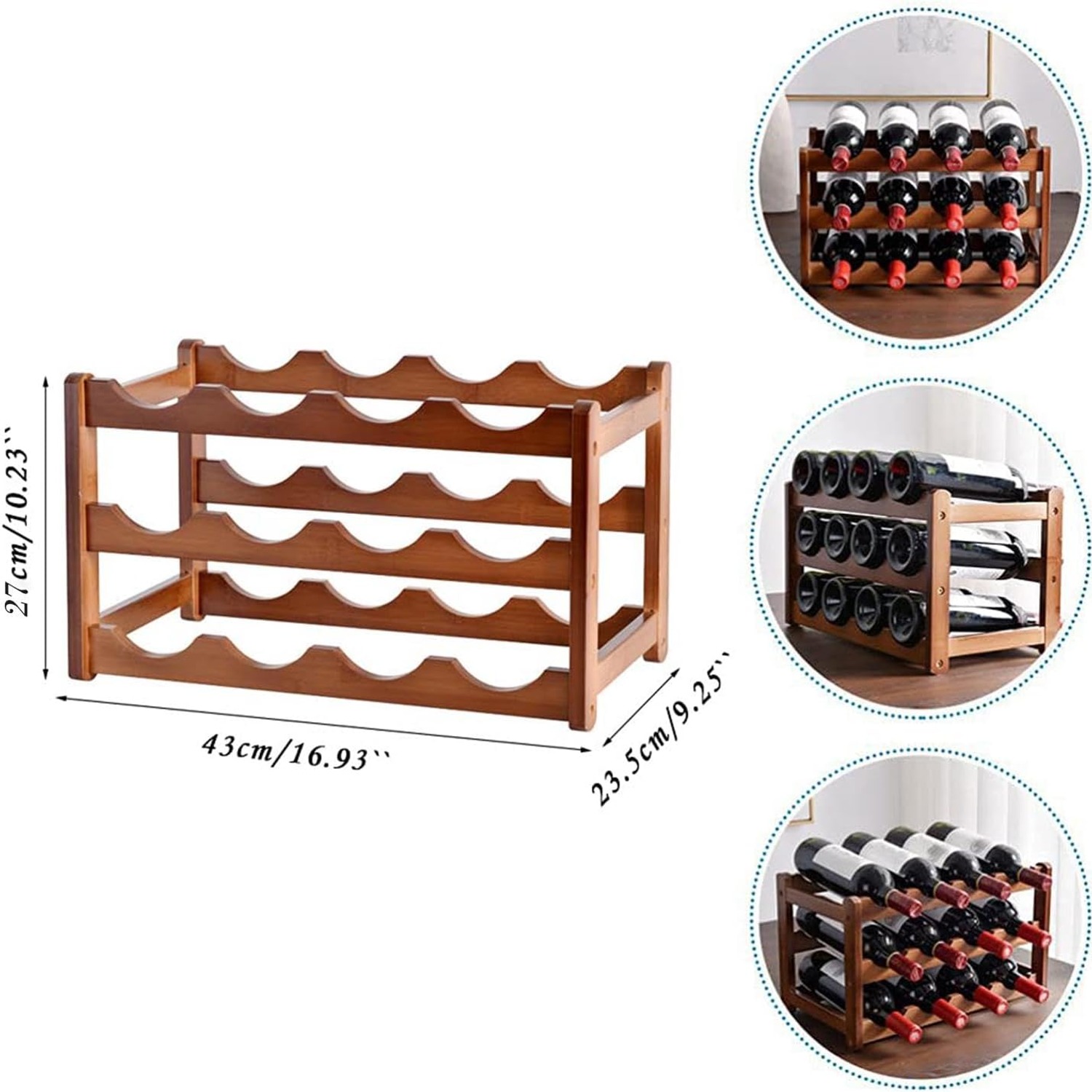
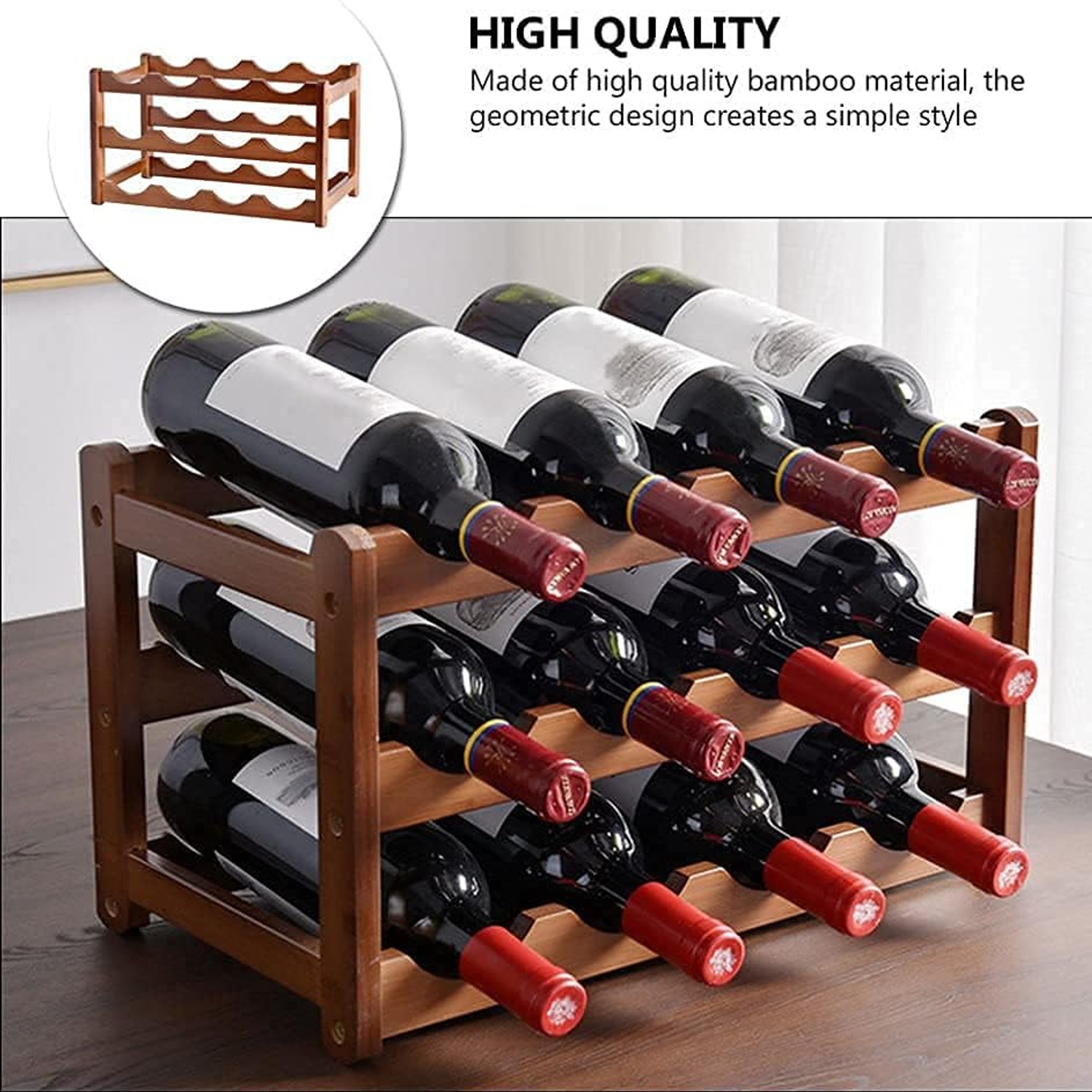
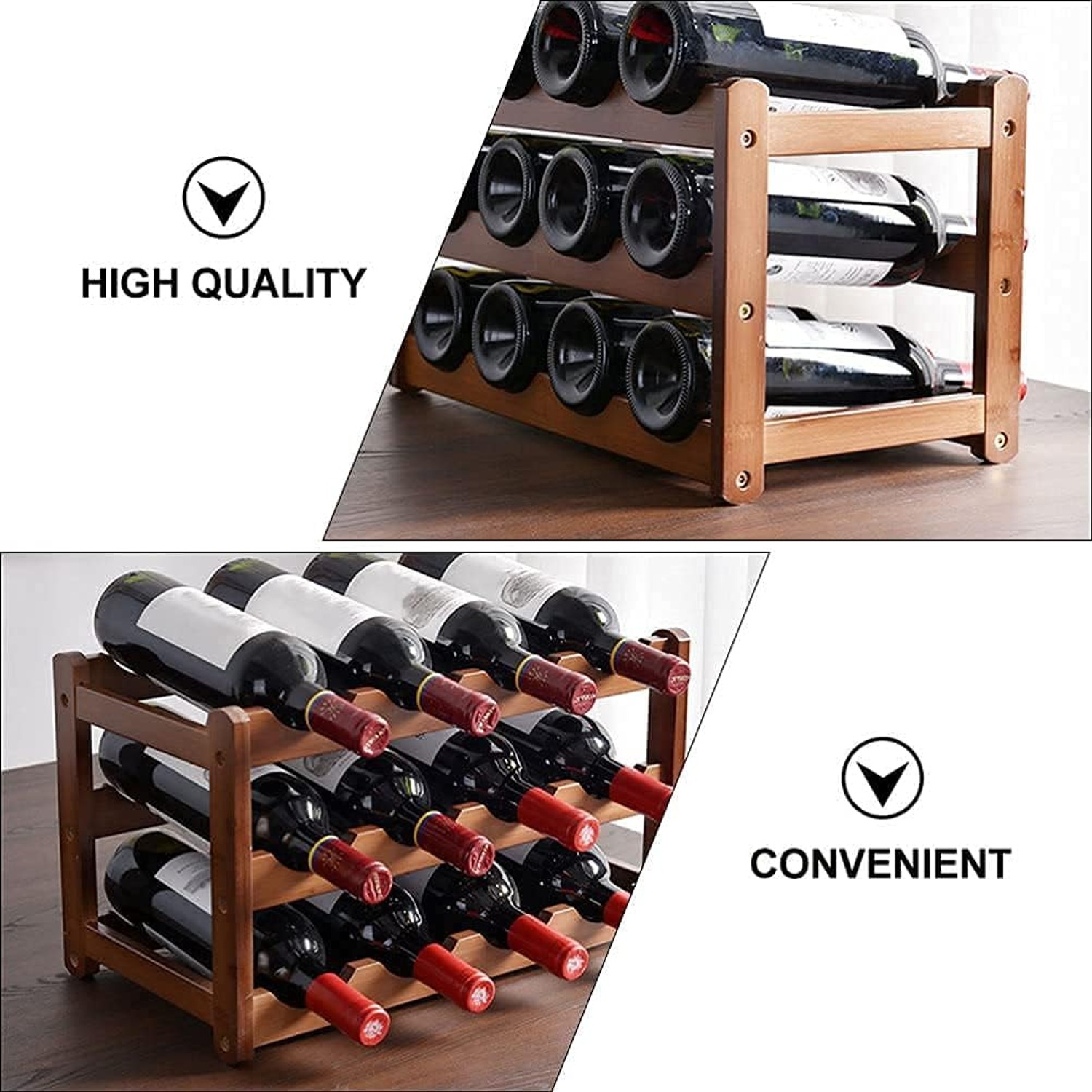
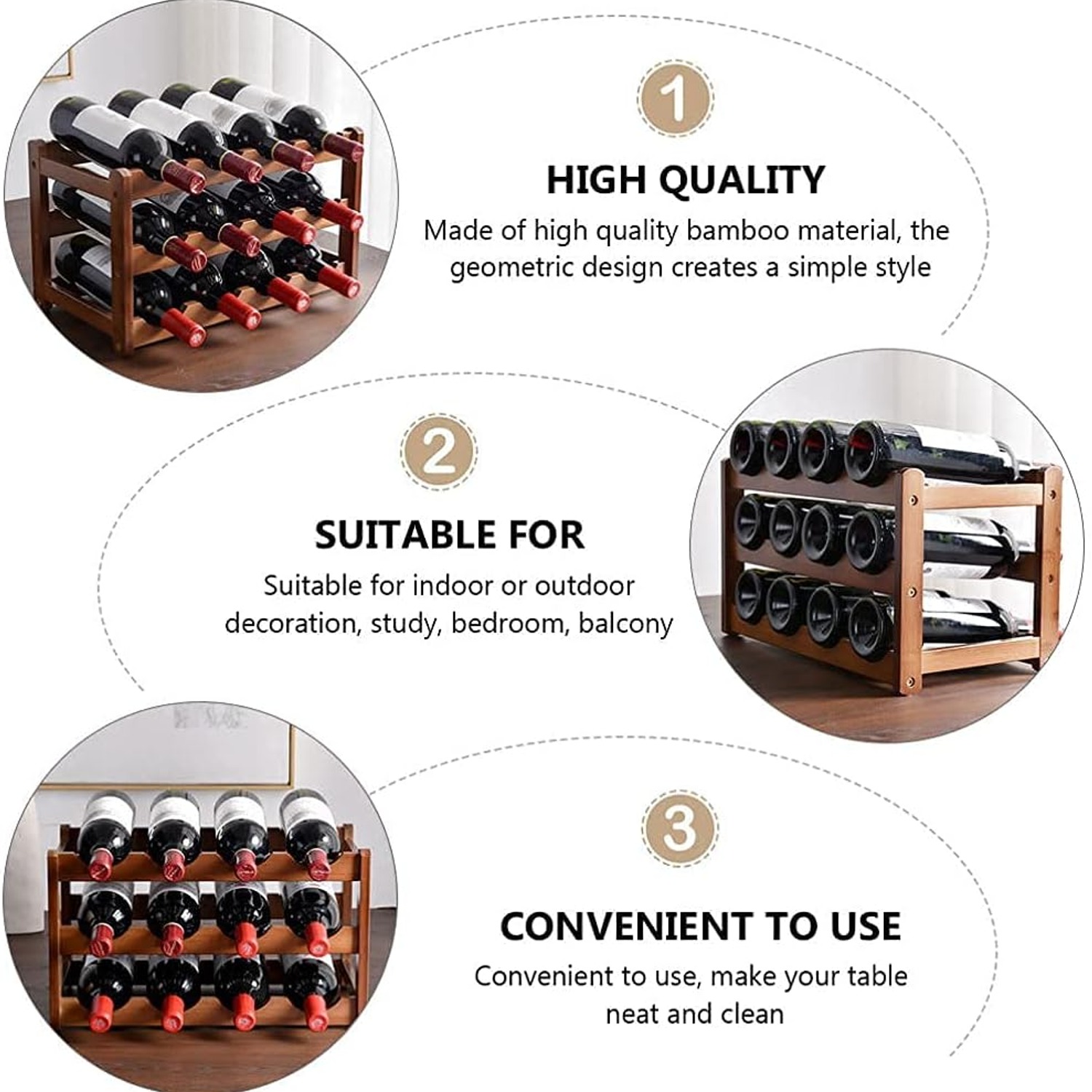
The build is simple on purpose. Bamboo side panels, three tiers, and wave-cut cradles on each tier that hold four bottles lying on their side. Twelve bottles all up. The tiers connect with locating pins at each join, which is the part that stops a loaded rack from racking out of square when you slide a bottle free.
Bamboo suits this job. It is light, it holds a clean edge, and the tone works with most kitchen timbers, laminate worktop and painted cabinetry. The finish here is paint, and care is nothing more than a wipe with a dry cloth. At 1.1kg empty, the rack is no trouble to pick up and carry into the dining room when you have people over.
Assembled it measures 43cm wide, 23.5cm deep and 27cm tall. The 27cm height is worth noting. Most kitchen worktops have around 45 to 50cm of clearance under the overhead cupboards, so a 27cm rack leaves room above, but it pays to check your own gap before you commit the spot.
The bottle opening is 3.5 inches. That is sized around a standard 750ml bottle. Burgundy-shaped bottles with their wider shoulders usually go in fine. Heavy sparkling bottles and some thick-glass Bordeaux bottles can be a squeeze, so if your collection leans that way, measure the widest one you own against 3.5 inches before you assume all twelve slots will fill.
Who it suits
This is a rack for people with a working collection rather than a cellar. A dozen bottles is roughly what a household drinks through in a month or two, plus a few kept for an occasion. If that sounds like you, twelve slots is a sensible number. Buy a 40-bottle floor unit and most of it sits empty, which looks worse than no rack at all.
It also suits renters and anyone who moves around. Nothing drills into a wall. You set it on a surface, load it, and when you move it comes apart or travels whole in the back seat. The low weight helps here too.
Small kitchens benefit from the three-tier layout. Going up instead of across is how you fit twelve bottles into a 43cm footprint. If your worktop is genuinely full, the same rack works on a sideboard, the top of a low bookshelf, or a pantry shelf with enough headroom.
Where it is not the right answer: if you are ageing wine seriously, an open rack in a warm kitchen is not what you need, no matter how good it looks. Temperature swings do more damage than anything else. Use the rack for the drinking stock and keep the special bottles somewhere cool and dark.
Choosing between rack styles
A few things separate one countertop wine rack from the next.
Capacity first. Count what you usually have on hand and add two or three. If you regularly run at twenty bottles, a twelve-bottle rack will overflow and you will be back where you started with bottles on the worktop.
Then footprint. Width and depth are the obvious ones, but height catches people out. Measure from the worktop to the underside of your overhead cupboards. Also check the depth against your worktop. A 23.5cm deep rack on a 60cm worktop leaves plenty of working room in front of it.
Material changes the feel more than the function. Bamboo and timber racks read warm and blend into a kitchen. Metal racks are more industrial and often take up less visual space. Both hold bottles equally well, so it mostly comes down to what else is in the room.
Then there is the cradle shape. Flat shelves let bottles roll. Wave-cut or notched cradles hold them. If you are choosing between two racks and one has shaped cradles, that is the one that will annoy you less over time.
Finally, assembly. Flat-packed racks are cheaper to ship and almost always need building. That is a fair trade as long as the instructions are clear and the parts are pre-drilled. This one arrives flat and goes together with the supplied instructions.
Getting the placement right
Think about three things when you pick the spot.
Light. Direct sunlight through a kitchen window will heat a bottle quickly and fade the label over months. A shaded corner, or a spot where the worktop is in shadow for most of the day, is better.
Heat. Keep the rack away from the oven, the dishwasher vent, the fridge motor and any heating duct. Those are the warmest patches in a kitchen and the ones people most often overlook.
Traffic. A rack on the edge of a busy worktop gets knocked. Push it toward the back, or choose a sideboard where people are not reaching across it. A loaded rack has a decent bit of mass behind it and you do not want it tipping.
One more practical point. Load the bottom tier first and spread bottles across the width rather than piling them at one end. A balanced, bottom-heavy load is more stable, which matters most when the rack is only part full.
Looking after it
Care is minimal. Dust it with a dry cloth every few weeks and wipe spills as soon as they happen. Bamboo does not love standing moisture, so do not leave a wet ring under a bottle and do not take the rack to the sink.
Avoid harsh cleaners and anything abrasive, which can mark the painted finish. If a bit of dust settles in the cradles, a soft brush gets it out faster than a cloth.
Every few months, especially after moving the rack, give the joints a quick check. Locating pins can work slightly loose with handling. Pushing them back home takes a few seconds and keeps the frame square.
Keep it indoors. A covered outdoor table for an afternoon is fine, but bamboo left out in rain, damp or hard sun will not hold up.
The short version
Twelve bottles, three tiers, bamboo, 43 x 23.5 x 27cm assembled, and 1.1kg on its own. It sits on a worktop, sideboard or shelf with no fixing required, holds standard 750ml bottles lying flat so the corks stay wet, and uses wave-shaped cradles with locating pins to keep everything still.
If you keep roughly a dozen bottles around, want them visible instead of scattered, and would rather not drill into a wall, this covers it. Measure your spot first, check your widest bottle against a 3.5 inch opening, and keep it out of the sun. That is about all there is to it.